Why are people on social media so angry?

I have written before about how tolerant people are “on the cut” (by the canals). I meet so many different people with so many different backgrounds and almost without exception they will engage in conversation about how their day is going, where they are heading, and anything to watch out for. Chatting by locks is one of my favourite things.

But I posted something into a boaters’ group on Facebook this week and it got so many angry responses. Here is what I wrote:
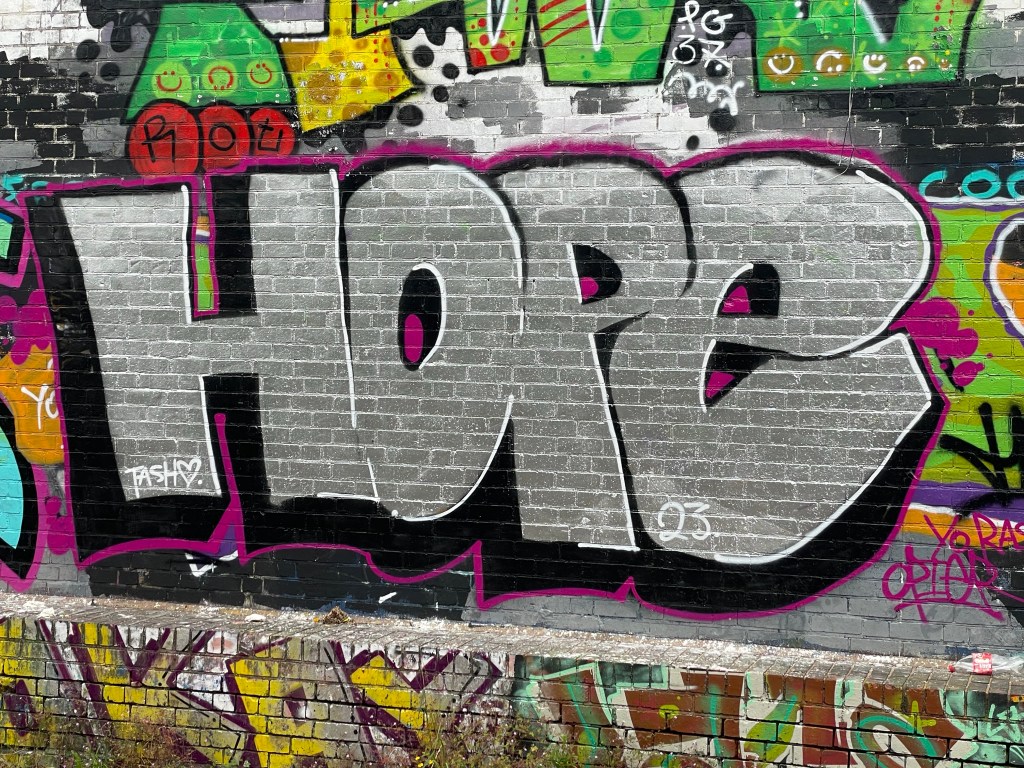
“I am so disappointed with Birmingham. We came through last about 15 years ago and it was a smart city of well maintained canals. Yesterday we boated up the Grand Union amd Birmingham & Fazeley. It was so different. Canals shallow and full of rubbish. Lock gear stiff or broken. Graffiti everywhere including wet paint on the locks. Drug users not even making an attempt to hide. And almost no boats which is not surprising but I guess makes things worse. All towns have their dodgy areas but I am not sure we found any non-dodgy areas. Maybe Gas Street Basin is still nice?”

I had one really useful response noting that the particular route I had chosen went through the most deprived areas and that the west and central canals were much nicer. I had a few helpful comments that people liked the graffiti and that the picture undermined my argument. They are right. My bad. I hadn’t taken pictures of all the paint on the locks, the rubbish in the canals, the druggie inhaling nitrous from a balloon.

But most of the comments were shouty and angry. What did I expect after ten years of Tory underinvestment? It was all the fault of not supporting the police. Why do we not hear English voices anymore (yes really!). And one particularly vituperative diatribe saying that if I was so negative I should go back to living on land. All of this in a Facebook group called “The Friendly Narrowboaters and Waterways Group”.

You know how much I love my life on the waterways of Britain. I see so much beauty, so much variety, so much nature, so many fascinating buildings. And I know that if I met these people on the cut we would have a right old chin wag about how sad it is that this part of the network has run down. So why on social media do they get so angry?

For balance, here is me in my happy place, coming across the longest aqueduct in England this week:

Five good and two bad things about Stratford Upon Avon

This week we completed our journey up a beautiful but sometimes scary River Avon. The heavy storms caused some pretty strong currents but we made it through on our flat bottomed narrowboat, and are now on the much gentler Stratford Canal. Where the river meets the canal, there is a basin with mooring for about sixteen boats, so we stayed a couple of nights in the famous town of Stratford Upon Avon, where Shakespeare wrote his plays.

It was lovely to visit Stratford. My grandma lived here, so at one time I knew it fairly well, but that was over forty years ago. If I had to pick the five best things I would say:

1. Stratford is beautiful. The river and canal basin are the centre of the town, overlooked by the Royal Shakespeare Company theatre. There is a large green park and lots of statues.

2. Everything is Shakespeare themed. Shakee’s icecream barge, Thespians Indian Restaurant, Shakespeare in Love Wedding Boutique, and even the Shakespaw Cat Café.

3. It has real history. You can visit the houses of Shakespeare, his wife Anne Hathaway and his mother Mary Arden. And for boating geeks like me you can find out about Stratford as a port, when boats from Bristol came up the Severn and the Avon before transshipping their goods onto narrowboats for the midlands and the north.

4. Anyone can get on a boat. Lucky narrowboat owners like me are joined by large and small tourist boats blaring their commentary to all and sundry, and land lubbers trying a tiny rowing boat or a paddle board on a pretty wide river.

5. It is full of tourists. People from all over the world come to Stratford, either individually or in organised groups. Hordes of school children swarm the streets, clutching their quiz sheets. All life is here.

But not everything is perfect. Here are just two things I liked rather less:

1. Stratford is noisy. After enjoying the peace of mooring along the river it was quite a shock to be based in a city centre, especially the revellers at midnight, singing and banging a drum.

2. It is full of tourists. We are always happy to answer questions about living on a boat from inquisitive onlookers. But when they climb onto the boat to have a look, or in one case, just to wash their hands in the canal, that is going too far.

So we enjoyed our time in Stratford but were also happy to leave it, and I am writing this moored up in the countryside, with nothing around us. No tourists, no locals, not even another boat. It is lovely.

Do I need physical photographs?

I was looking back at some old photos albums this week of my student days in the 1980s. The world of photography was very different in those days. Digital cameras did not exist, and instead I would take maybe 30 pictures in a year using my film camera. I did not know whether they had been any good till I used up a film, and sent it off to be processed. A week or so later, I would get my pictures back, throw away the rubbish ones and put the others in an album. Every photograph was precious.

My photo album 1964-1982

These days I take maybe a thousand pictures a year on my phone. I often take five or six of the same thing, so that I can choose the best. Because there are so many, they are no longer special. Maybe an interesting one will pop up on a screen saver on my TV, but more often than not, they are looked at briefly and then forgotten.

For many years I tried to manage this situation by choosing my favourite pictures each year and getting them printed off to go in an album, But I realised this week that the last time I did that was 2018.

So I am faced with a conundrum. Should I get some pictures printed off as I did before? Should I find some other way of curating the large numbers into a manageable selection. Or should I just accept that photographs are no longer special, and treat them as a throwaway commodity.

What do you think?

What was my great great great grandfather like?

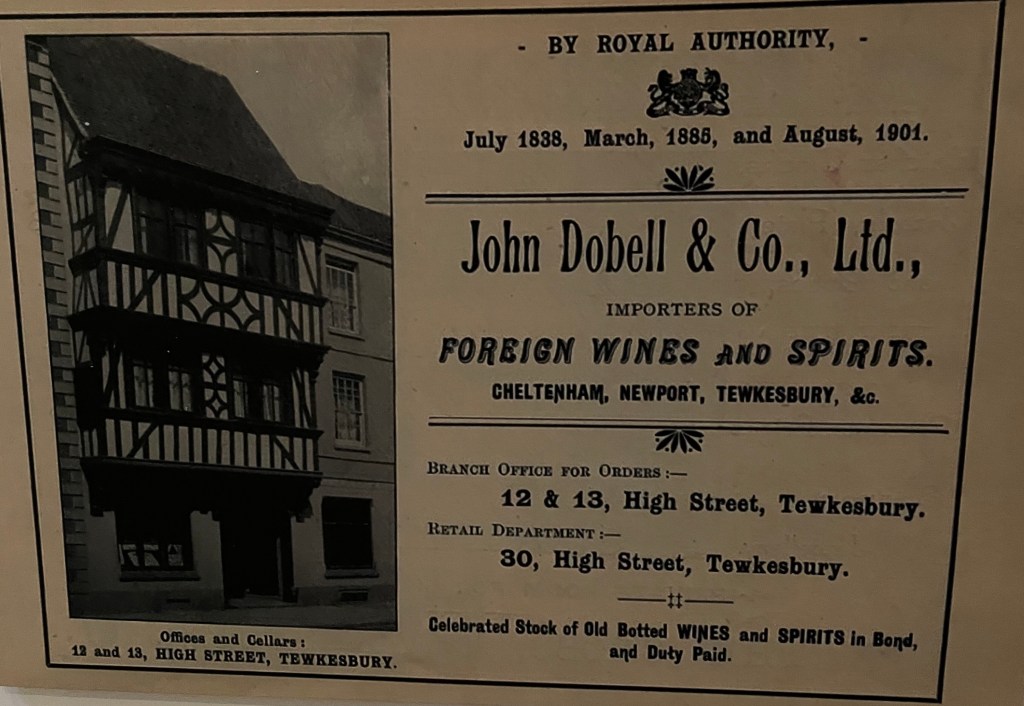
I was wandering around Tewkesbury Abbey late on Saturday afternoon. It is a beautiful church and the sunlight streamed through the stained glass windows, painting pictures of the floor. In one of the side aisles they had an exhibition of pictures of the high street last century. One of the pictures was this:

It gave me a bit of a shock because John Dobell was my great great great grandfather. He had a fascinating life, coming from poverty in Cranbrook, Kent. As a teenager he became apprenticed to a wine merchant in London called Samuel Thompson. John fell in love with Samuel’s daughter Julietta. Samuel was a radical Protestant preacher, and when John and Julietta married in a church, Samuel stood up and denounced the ceremony. I am guessing there was a falling out because John and Julietta moved to Cheltenham, and over the next years, built their own business, based in Cheltenham and Tewkesbury.

They became very wealthy, and that money was passed down the generations. Even my Grannie was brought up with servants in big houses. Unfortunately the money all went, and the Dobell family trust was finally wound up around 1995. The remaining funds were split amongst the youngest generation. I think my two sons got about £200 each.

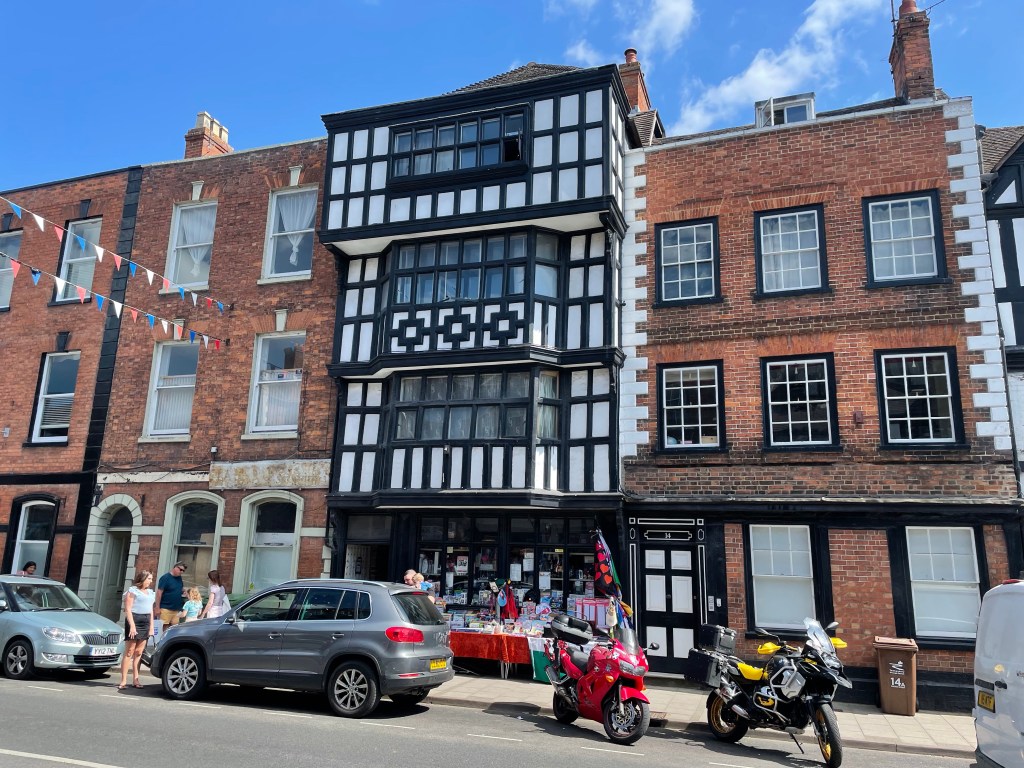
Still, it is interesting to think about what the Dobells’ life would have been like. The shop in the advert is still there, although no longer a wine merchant:

Isn’t family history fascinating?

What was my great great great grandfather like?

I was wandering around Tewkesbury Abbey late on Saturday afternoon. It is a beautiful church and the sunlight streamed through the stained glass windows, painting pictures of the floor. In one of the side aisles they had an exhibition of pictures of the high street last century. One of the pictures was this:

It gave me a bit of a shock because John Dobell was my great great great grandfather. He had a fascinating life, coming from poverty in Cranbrook, Kent. As a teenager he became apprenticed to a wine merchant in London called Samuel Thompson. John fell in love with Samuel’s daughter Julietta. Samuel was a radical Protestant preacher, and when John and Julietta married in a church, Samuel stood up and denounced the ceremony. I am guessing there was a falling out because John and Julietta moved to Cheltenham, and over the next years, built their own business, based in Cheltenham and Tewkesbury.

They became very wealthy, and that money was passed down the generations. Even my Grannie was brought up with servants in big houses. Unfortunately the money all went, and the Dobell family trust was finally wound up around 1995. The remaining funds were split amongst the youngest generation. I think my two sons got about £200 each.

Still, it is interesting to think about what the Dobells’ life would have been like. The shop in the advert is still there, although no longer a wine merchant:

Isn’t family history fascinating?

Is every day the same on a narrowboat?

One question we often get asked by non-boaters is whether we get bored because every day is just the same. The answer is that we never get bored because every day is different. We learn something new each day. We see something new each day. Let’s look at this week as an example.

Last Friday, we travelled from Penkridge to Compton, an unusually long day for us – about seven hours cruising. Despite going through the middle of Wolverhampton in the West Midlands, this is a pretty canal. It is one of the earliest, built by a chap named James Brindley and opened in 1772, and uses the contours of the land rather than cutting through hills and using locks to go up and down. Near Compton I found this pretty Victorian arts and crafts house to visit.

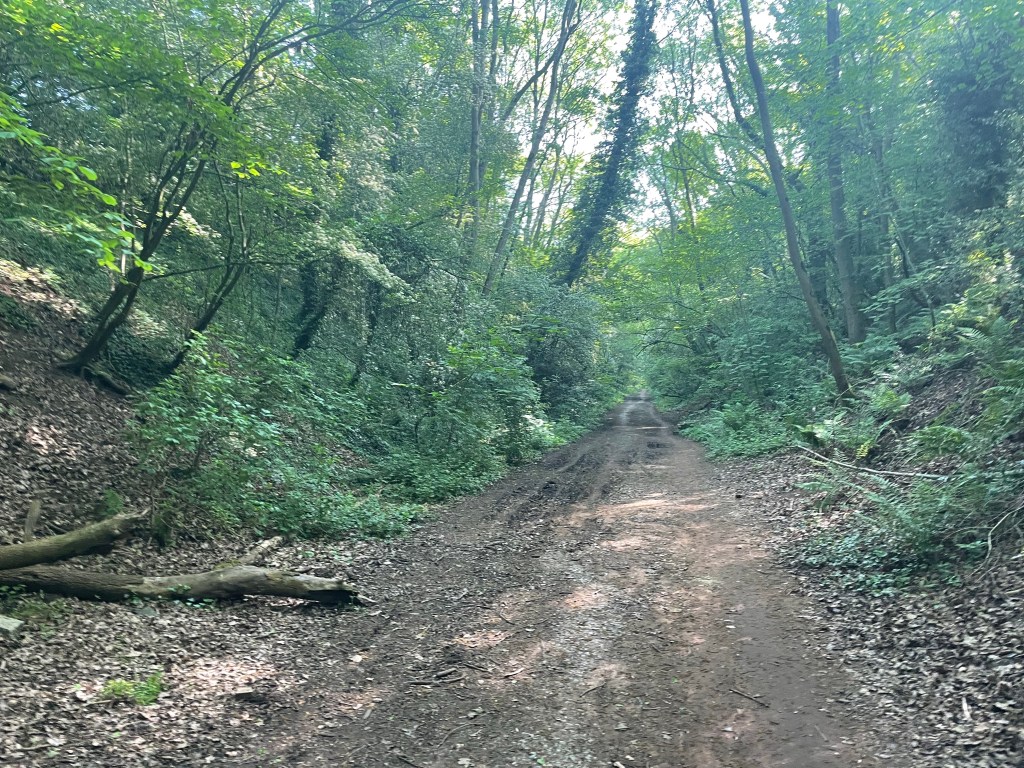
On Saturday, we stayed in Compton for a lazy day. I found a nice long walk for the dogs – along the canal, across countryside and back again along this disused railway line. Fascinating to imagine the heavy steam trains, the grime and dirt. It was a hot day and in the afternoon we found a country park where the dogs could swim. Pizza for team and a film.

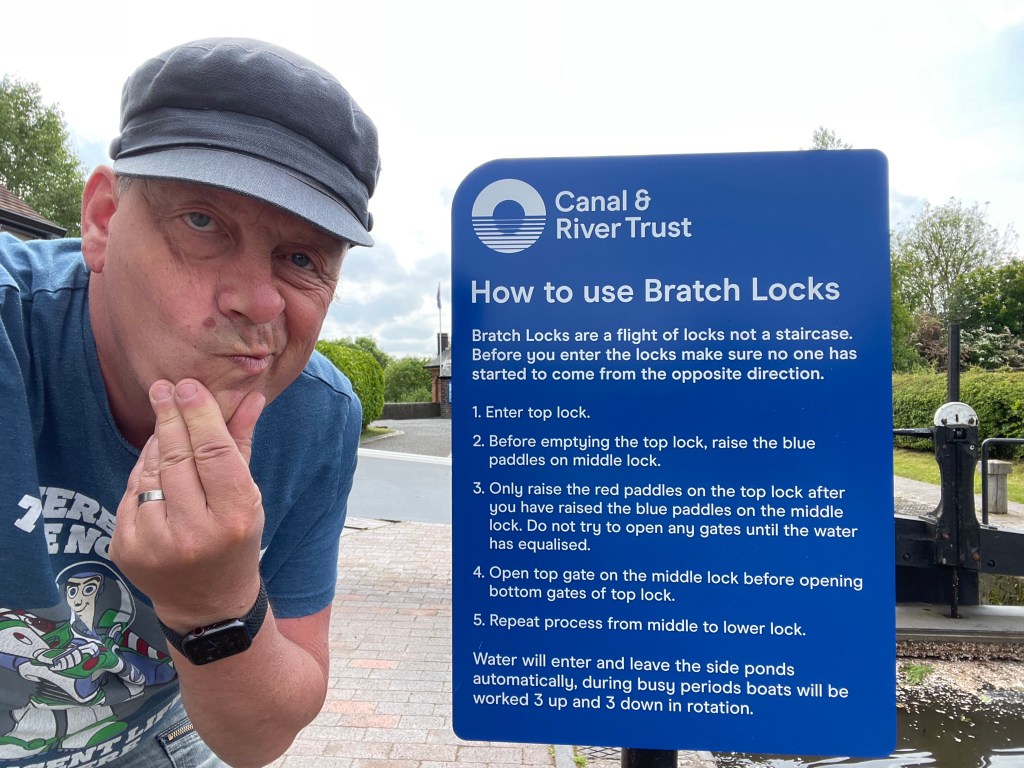
On Sunday, it was back on our journey south. A boat coming the other way warned us that a boat club was ahead of us. Fifteen boats were waiting to go down Bratch Locks. This is a bit of a bottleneck on the canal, because three locks are next to each other, so they allow three boats to go down and then three come up. This means if you are boat four, you will wait around an hour before you can go. If you are boat fifteen, you could be waiting several hours. Fortunately by the time we got there the queue had reduced and we were only held up for around forty minutes. Bratch Locks are fascinating. They were built by Brindley as a staircase, where the top gates of one lock form the bottom gates of the next one. But this used too much water, so around 1820 they were converted to individual locks with about a meter of canal between each lock, and side ponds to hold the water. I have never seen anything like them, and as you can see in the photo, the rules are somewhat complex. Fortunately there were volunteers to help us and all was well.

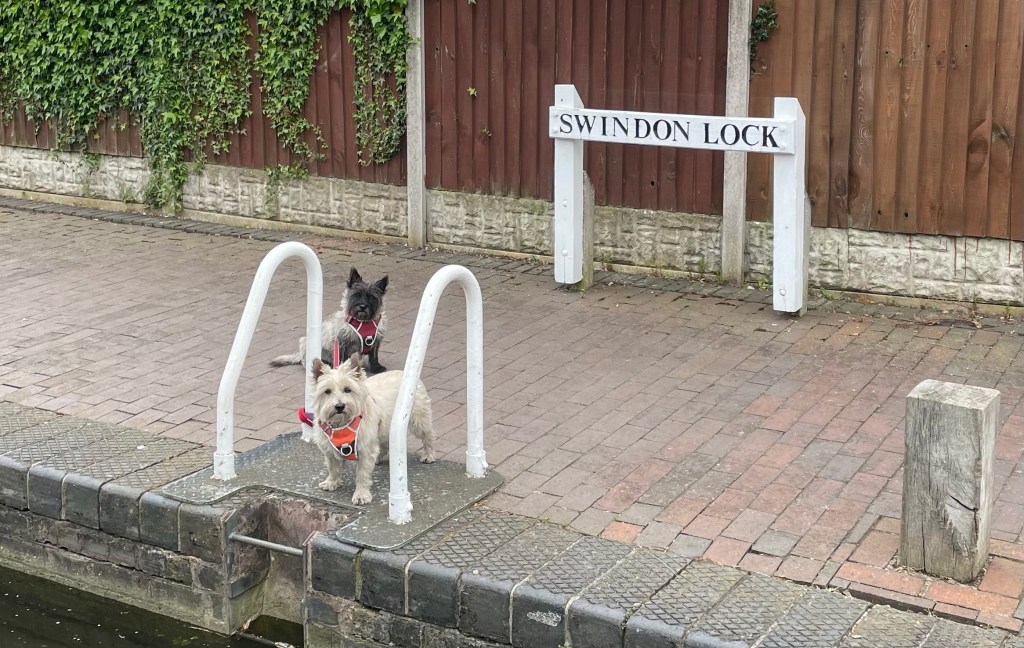
On Monday, we passed through a number of small villages with great names such as Boterham, Giggerty and Bumblehole. We even went through Swindon – not the massive 1960s sprawling town in Wiltshire, but a hamlet of a few houses and a pub in the West Midlands.

Tuesday was a short day. Just a couple of hours from Stewponey to Wolverley. We moored in a beautiful tree lined stretch, next to a brilliant pub called the Lock Inn. It cooked traditional Black Country food. I had a couple of pints of the local ale, and an enormous plate of Faggots and Mash. We considered staying another day, so we could see the Morris dancers, but in the end decided to carry on.

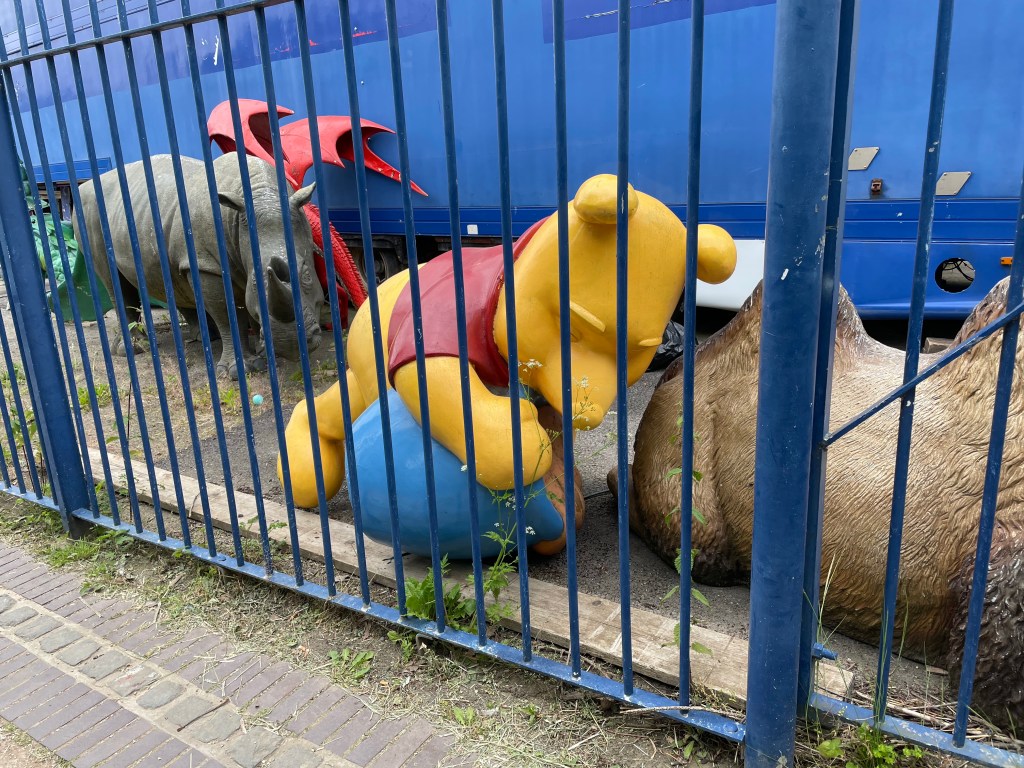
On Wednesday, we continued to the end of the Staffordshire and Worcestershire canal at Stourport. Stourport was once a very small village called Mitton, but after the canal was built became one of the busiest inland ports in Britain, as the canal joins the river Severn and from there large boats sailed down to the sea at Bristol. Nowadays it is a sleepy pretty town, with much history to see. It also has a permanent funfair, where we found this rather sad Winnie the Pooh.

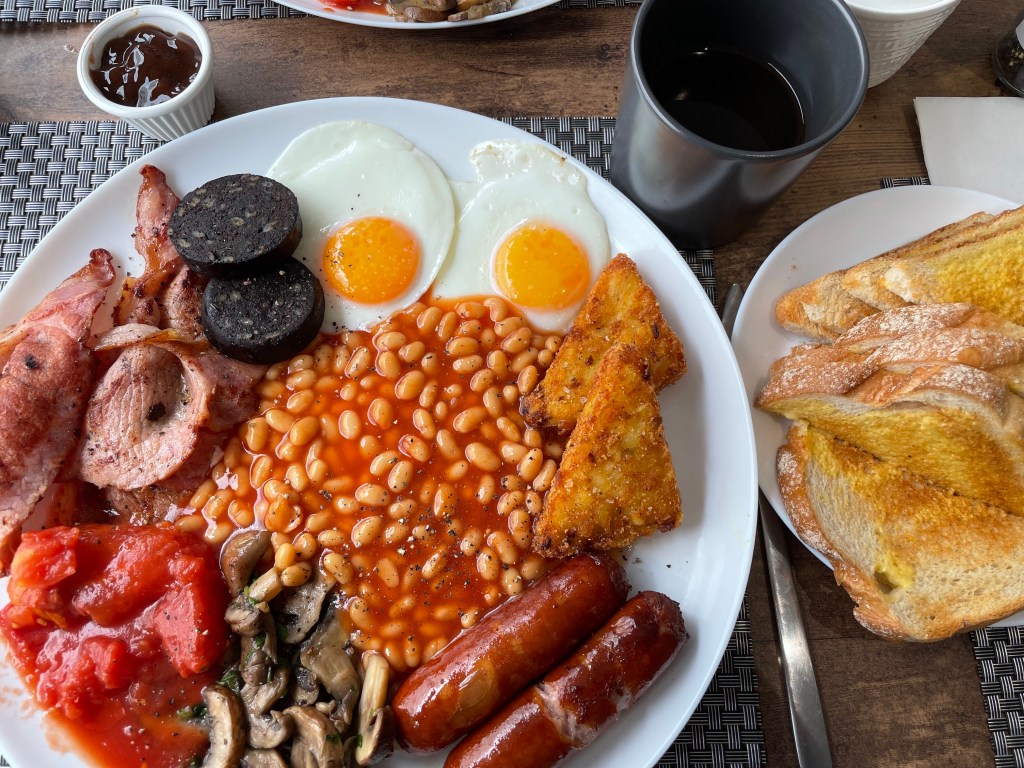
Thursday was another day off and we stayed in Stourport. We took the opportunity to enjoy this small breakfast. Yum! We also went on a trip to see Dudmaston, a huge stately home that is still lived in by a (rather wealthy) family.

So no. Every day is not the same on a narrowboat. Every day brings something new and we are very lucky to enjoy it.

Blog at WordPress.com.

Up ↑