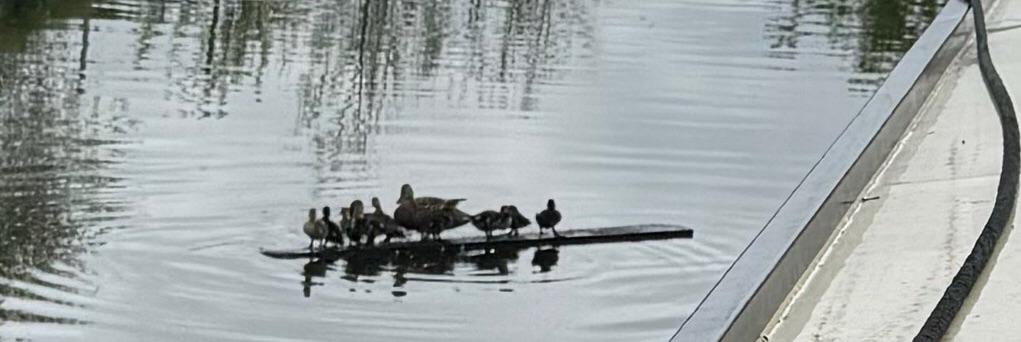
One of our delights when narrowboating is to see the many baby birds on the canals and rivers. Ducklings, Cygnets, Goslings, Cooties (baby Coots), and other chicks all arrive during our Spring travels. One thing I have never understood is why they all arrive at the same time. Two weeks ago we had seen none – just a few birds on nests. Then last week we began to see cooties and this week the canal is full of ducklings.
This family seem to prefer not to swim
I understand the benefits to the birds of young growing up as the weather warms up, but why do they all arrive in such a short space of time? In three weeks time there will be no more new ducklings, but lots of goslings and cygnets.
When I lived in a house, I was largely oblivious to seasons. Apart from it being cold in winter and hot in summer, I did not notice the changes. On the boat we see so much more. As well as ducklings, this has been the week for bluebells and wild garlic. The sides of the canals that were bare when we headed into Liverpool are now festooned with the flowers.
And May will bring a big seasonal change for me, when the jeans go back into the wardrobe, and the shorts come out. Those first few weeks with the pale white legs will be scarier than any wild birds.
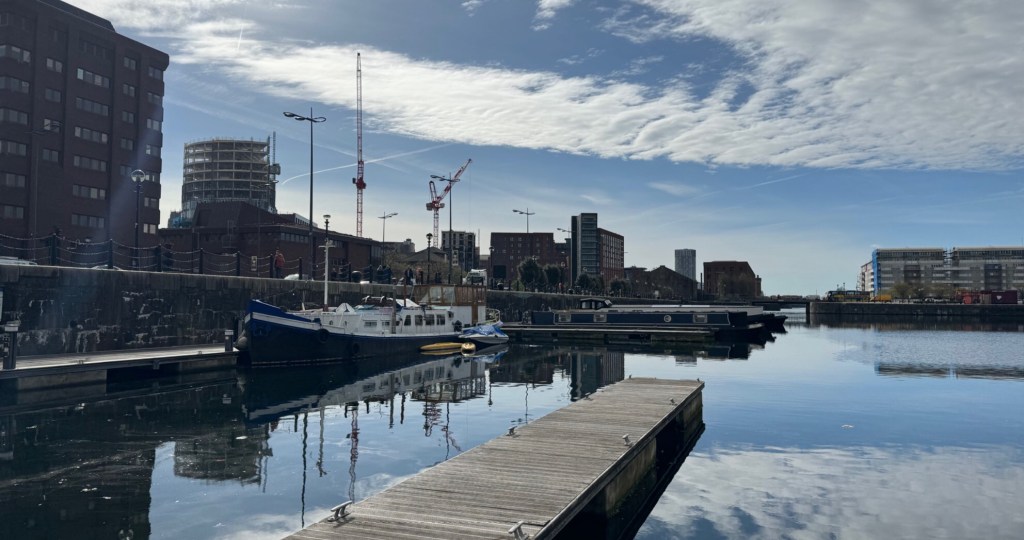
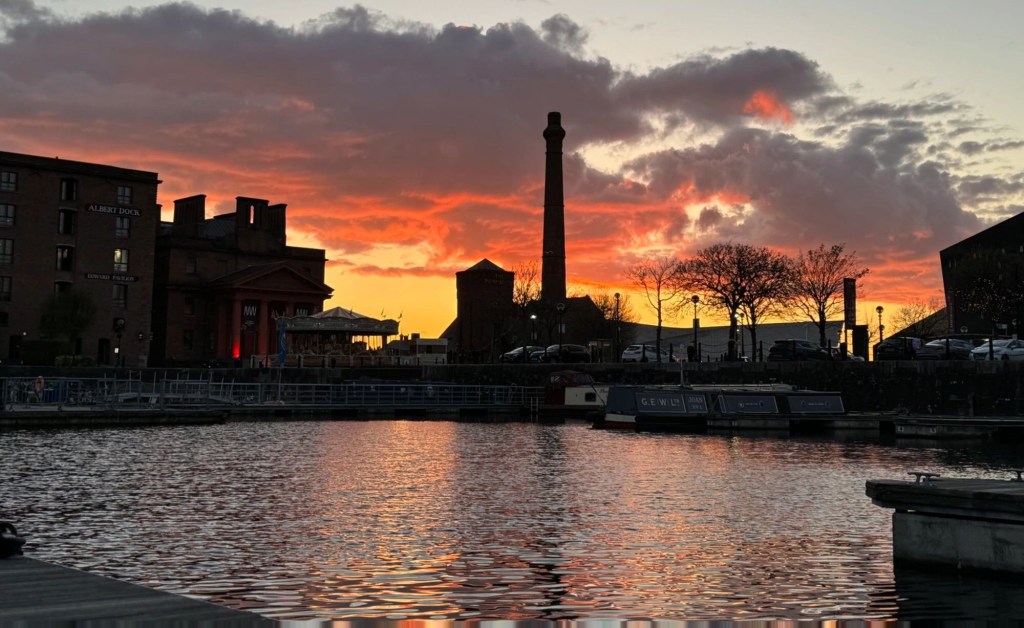
Usually when we are on our big narrowboat trips we have a couple of days off each week, when we don’t move the boat, and either do “jobs” or chill out. But this week we decided to take six days off and moor in Liverpool docks.
Mooring here is one of the wonders of the waterways. The docks were designed for great ocean going ships and so our narrowboat is dwarfed by the high docksides and massive bollards.
To get here we came down four locks from the main canal, and then steered through about six historic docks, passing many famous landmarks of Liverpool.
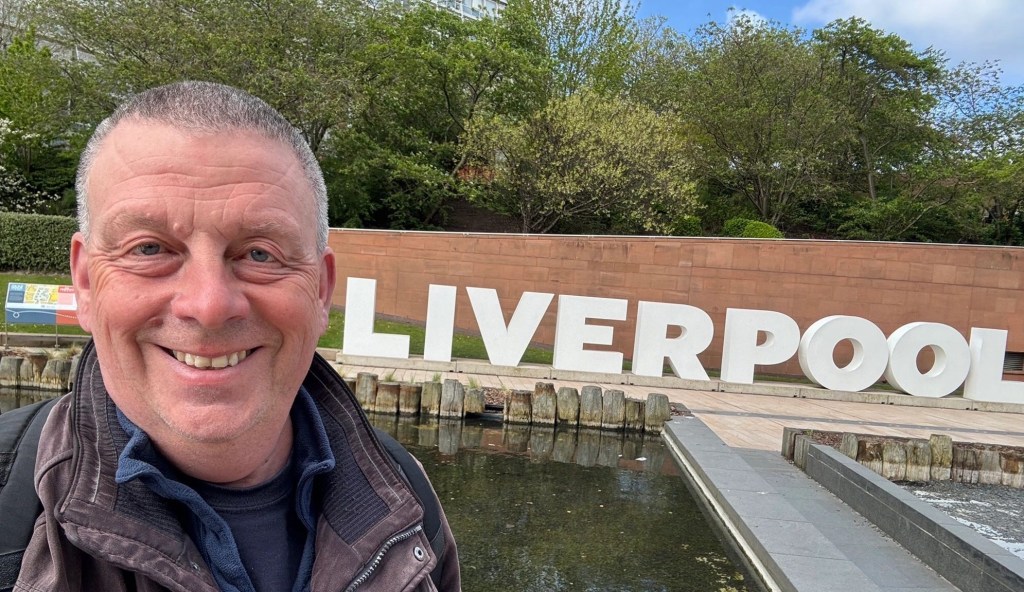
While here I have done a number of tourist things, including visiting both cathedrals, a stately home, and the houses where John Lennon and Paul McCartney grew up.
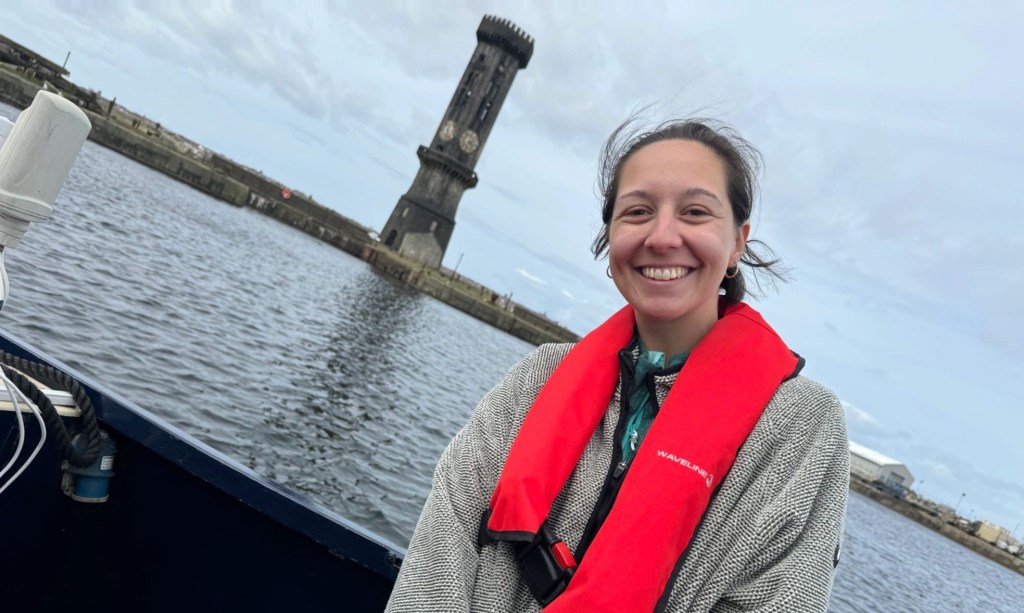
We also got to spend time with our niece Zoë and her new fiancé Guy. Zoë helped us on the journey here.
I think the thing I have enjoyed the most is just being moored quietly in the very centre of one of England’s great cities.
Thanks for a great week Liverpool. We will be back.
On a canal, the length of water between two locks is called a “pound”. On a lock flight this might be three or four boat lengths long. Sometimes it might be shorter. There is a pound on the Staffs & Worcester canal that is just a few feet long (there is a side pound where all the water goes when you empty the top lock). There are “long pounds” on canals that are very flat. For instance last week we had a forty mile pound on the Bridgewater.
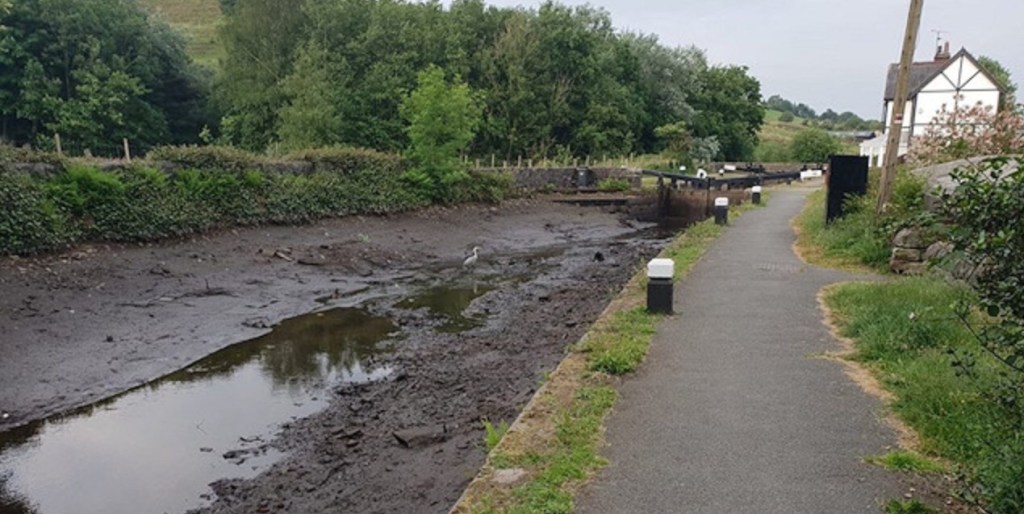
Once or twice a year we find a pound is empty. Last year there was a mile long empty pound near Gloucester after a hire boater went through the bottom lock one evening and left all the paddles up. The year before we grounded in a pound overnight on the Aylesbury canal because of leaky lock gates. This week we have faced three separate empty pounds. The first was about a mile long in Wigan, caused by vandals. The second was about half a mile on the Rufford arm, caused by a lazy boater leaving paddles up. The third was a short planned “dewatering” by the Canal & River Trust (CRT) in order to inspect blocked culverts.
So what do you need when faced by an empty pound? The first and most obvious thing is a lot of water. Somehow you need to fill the canal back up to at least four feet in depth. If you think the canal is maybe twenty feet wide, and the pound is maybe half a mile long, that is an awful lot of water. You have to bring that water down from higher in the canal, maybe using bywaters that go around some locks, and sometimes by opening paddles on the locks themselves.
The second thing you need is time. You need to fill that water without draining the pounds higher up. For this reason, CRT prefer the work to be done by their staff rather than boaters. A short pound may take just an hour or two to fill, but the Wigan and Rufford problems this week took a day each.
The third thing you may need is special equipment. On our boat we carry a windlass to open lock paddles, a CRT key to open water points and swing bridges, and an anti-vandal key to open the handcuff locks used to prevent bad people causing trouble. CRT staff can remove other padlocks and open special paddles to let in water from other sources such as rivers and reservoirs. Again this has to be done very carefully to prevent flooding.
By far the most important thing you need is patience. There is no point getting cross about what has happened. It won’t help. There is no point trying to get through before the water has fully filled, because you will get stuck. Instead, we just wait it out, and look for the best. In Wigan I found a nice local butcher that I would have missed. In Rufford we just moored up and watched a couple of films.
If you are in a hurry on a narrowboat, you have chosen the wrong lifestyle. We are lucky enough to be retired. For us, narrowboating is not just about the wonderful places we go. It is about the journey to get there – however long that takes.
As a privileged white man I may be on dangerous ground asking this question but I really don’t understand why there aren’t more black and Asian people on the canals.
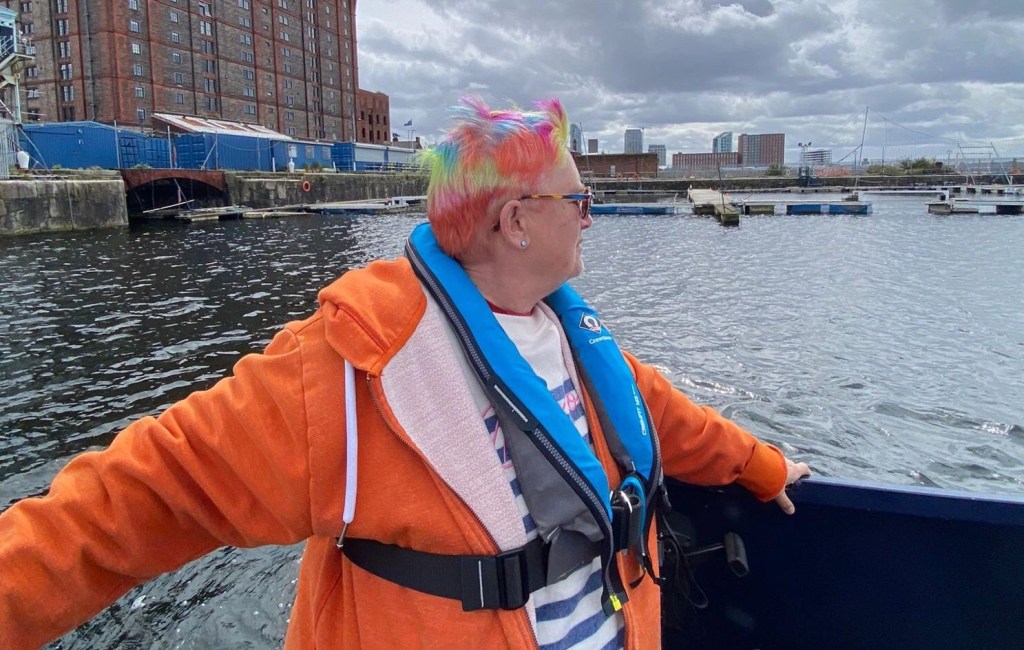
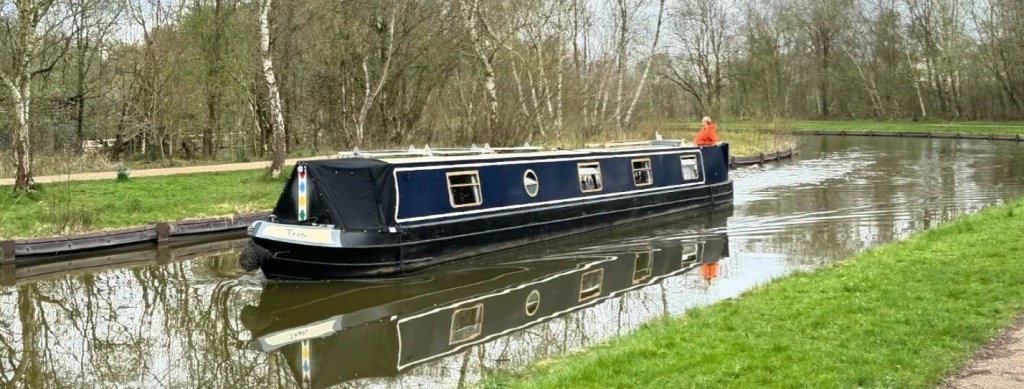
On the Bridgewater Canal this week
Narrowboating is a pretty inclusive pastime. In general there is a great deal of diversity. We meet really rich people and incredibly poor. There are probably equal numbers of men and women (even if some of the men are dinosaurs). There are probably more LBGTQ people on the canal network than in “real life”. Narrowboats are not normally designed for wheelchairs, but there are charities all over the country who have converted boats and arrange boating holidays and trips for people with all kinds of disability.
So why is it so white?
I am guessing it is simply a self fulfilling prophesy. People of colour see only white people on boats and so it is not something they consider as something for them.
So all I can do is to keep talking to the people I meet on the towpath and sell why I think narrowboating is for everyone. We have a great community of boaters here in the UK and it would be even better if it were not just white.





 Pete's Blog