Five reasons why the Anchor Inn is the best pub on the waterways

I wrote a few years ago about one of my favourite pubs – the Anchor Inn at High Offley. We spent a couple of days moored there this week, trying to shelter from the worst of the heat. Here are five reasons why I love it so much.

  1. It is like pubs used to be. They don’t sell food. They don’t have music except an occasional customer that picks up a guitar. They open at 7pm and close at 11pm. The seats are reclaimed wood. The floors are quarry tiled. There is an open fire, though not in use this week! The landlady finds the right balance between friendly and no-nonsense.
  2. It is really isolated. We first found this pub while doing the Four Counties Ring on a hired Narrowboat forty years ago. I liked it so much that when we got home I tried to find it by using a road map and driving back to the area. This was before the days of Internet and Google. It took me weeks!
  3. It is a proper boaters’ pub. I went there for two evenings this week and both times got lost in chat with boaters. The first night I struck up a conversation with three solo narrowboaters who moor on an isolated stretch of the Birmingham Canal Network (BCN) and come out for trips together a few times a year. I have always been nervous about cruising the BCN because of rumours of rubbish, shallow canals and vandals. These guys recommended the “BCN Explorer”, where a group of boaters like us get together for a guided tour over a week, ending in a big celebration. I do fancy that.
  4. The drinks are well kept. The real ale has been Wadworth’s 6X for at least 45 years. It is served not from a pump on the bar, but collected directly from a barrel in the cellar. They also have scrumpy from the cask. They do have one cold lager and a few bottles of soft drinks and wine for new fangled customers, but this is primarily a beer pub for customers meeting and telling stories of the cut.
  5. It never changes. About sixty years ago Olive took over as a young landlady from her parents and grandparents who were there before. Olive died about ten years ago and her daughter Elaine took over. There are pictures in the bar of how it used to be, and apart from the lack of cigarette smoke, the pub looks exactly the same. When I arrived this week, Elaine was excited about a radical change. Because of an issue at the Wadworth brewery with 6X supply, she had added a second real ale, Renegade’s Good Old Boy. As far as I could see, noone was drinking it.

It really is a lovely pub, and even people like me, who do not really like talking to strangers, get caught in the beery chat. I recommend a visit if you are ever in the Shropshire area. Maybe use google maps rather than guesswork to get there!

Is the Wardle Canal the shortest in the country?

This week we have been travelling up the Trent & Mersey to Middlewich and then across to join the Shropshire Union at Barbridge. It has been a lovely week, with more sunshine than showers, lots of wild flowers on the towpaths, and a good mixture of industrial history (there were lots of salt mines in the area) and open countryside. As part of the journey we went through what is claimed to be the shortest canal in the UK – the Wardle Canal.
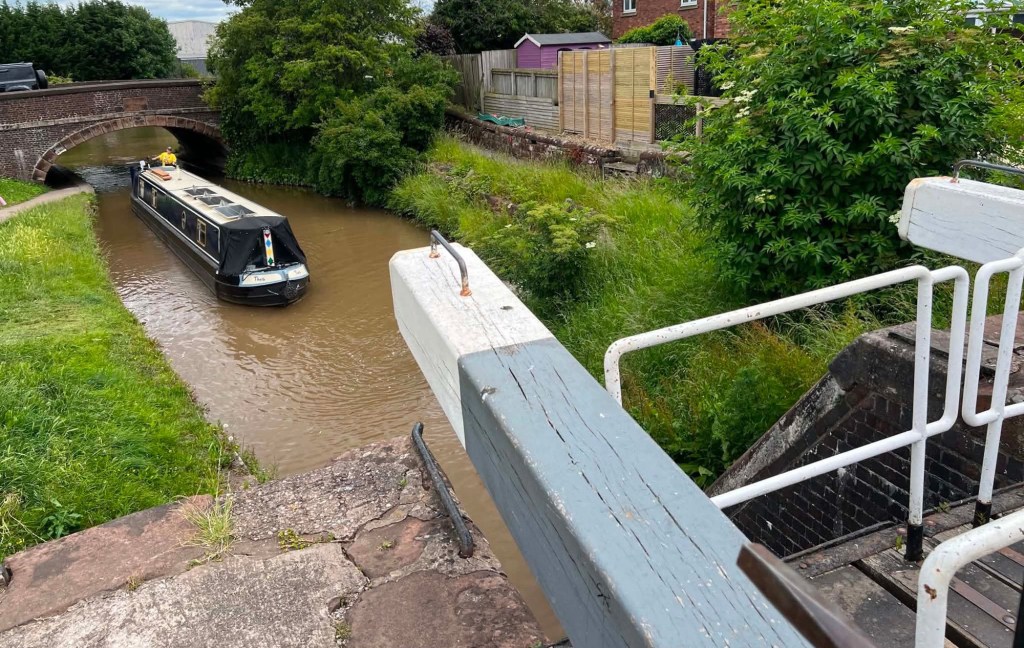
The Wardle Canal

The Wardle Canal was opened in in the early nineteenth century by the Trent & Mersey Canal Company, connecting the T&M to the Middlewich branch of the Shropshire Union. Its sole purpose was so that the T&M could claim full ownership of the junction, and could charge tolls for using it.

It is just 154 feet long from the bridge at the junction, to the bottom of Wardle Lock, and there is a commemorative sign on the bridge claiming it as the shortest canal. But is it?
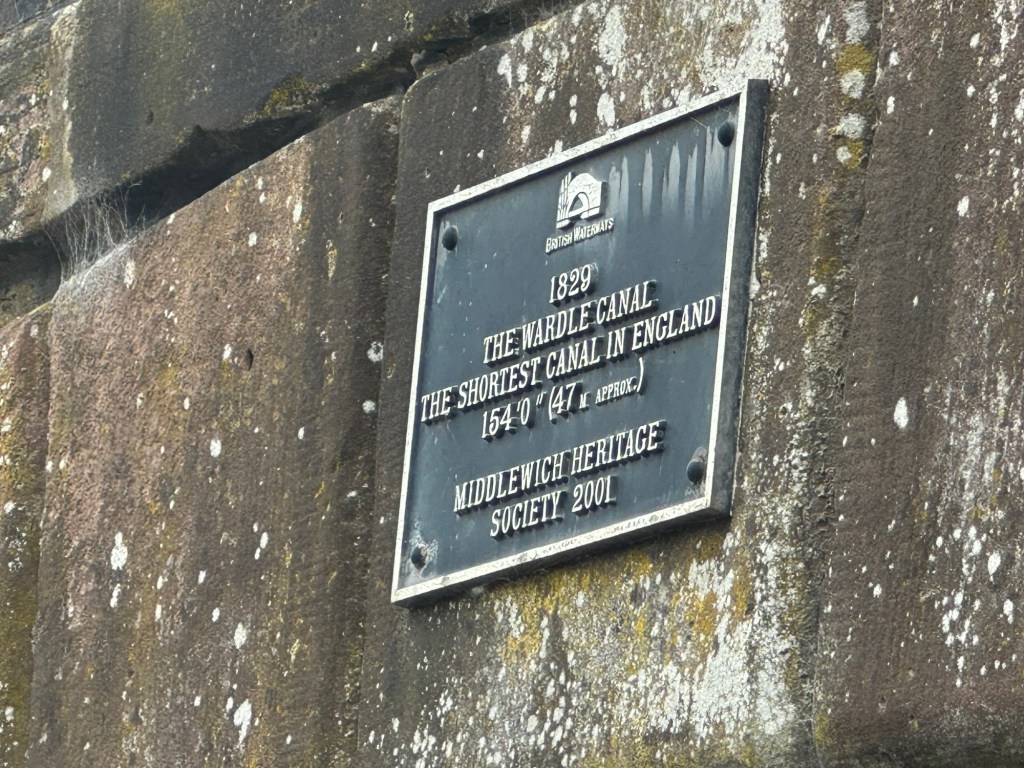
There are three problems with the claim. It is not 154 feet long, there are shorter competitors, and it is not a canal anyway!

In my view the length should include Wardle Lock, because that was built at the same time, giving a total length of more like 330 feet, according to the Trent & Mersey Society

There are other similar examples of short stretches of water joining canals for the purpose of raising tolls. For instance the Peak Forest is joined to the Ashton by a short aqueduct over the River Tame, that was built by the Ashton company.

I think the biggest challenge to the claim is that it is not really a canal. To be a canal it needed to be authorised by parliament, and built by a private canal company. Stretches off that canal, built by the same company, are called branches. For instance what we call the Middlewich, where we are now, is actually the Middlewich branch of the Shropshire Union. Similarly, the Caldon Canal, which we visited a couple of weeks ago is really the Caldon branch of the Trent & Mersey. So this should be the Wardle branch of the Trent & Mersey.

But…

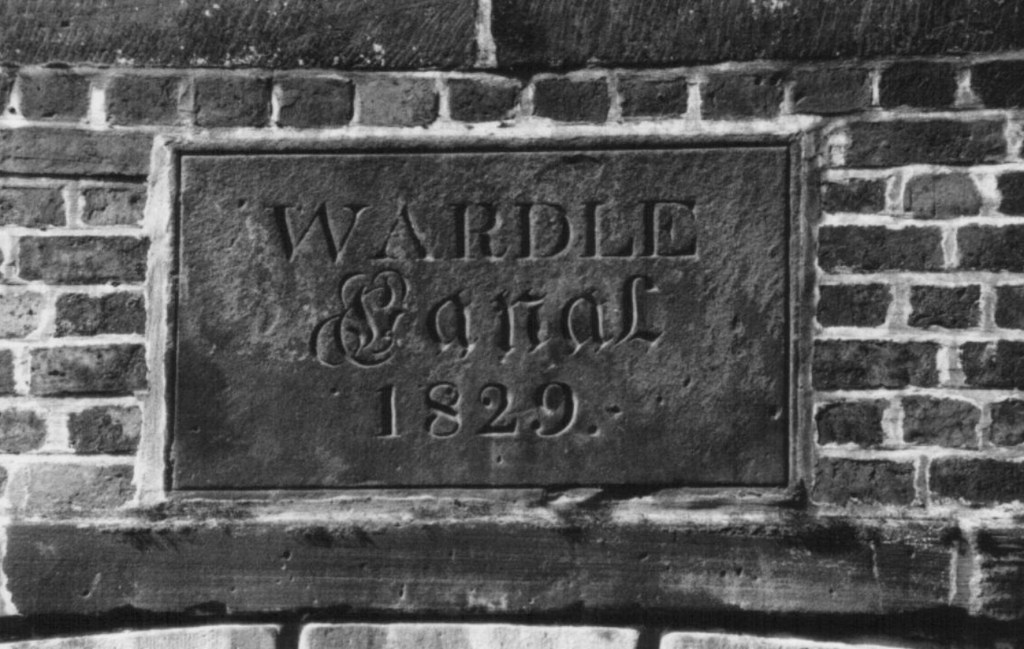
Mandy says I am frequently unnecessarily pedantic. The bridge at the junction is dated 1829 and clearly calls this “Wardle Canal”. And many boaters for many generations have enjoyed the story of the shortest canal in the UK. So OK, maybe it is.
Should I be grumpy that Canal & River Trust have not fixed Bosley Locks?

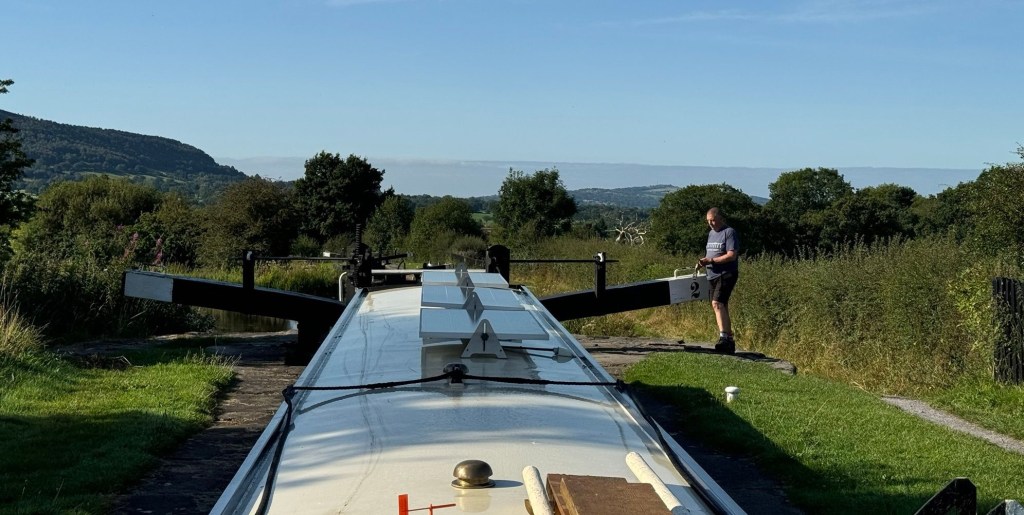
In early May a boat crashed into the bottom gate of Bosley Locks. Bosley are a flight of 12 locks on the Macclesfield canal that raise a boat 118 feet over just half a mile, taking you from the bottom of the canal to the top. They have been closed since then and I am becoming irritated by Canal & River Trust (CRT) not fixing them.

Going down Bosley Locks two years ago

The problem with the locks being out of action are that boaters like us cannot get up to Macclesfield and the Peak Forest Canal without them. There is a theoretical alternative route through Manchester but the Bridgewater Canal is closed due to a breach a couple of years ago, and the Marple flight of locks at the other end of the Macclesfield has just closed due to a broken balance beam.

I have some sympathy with CRT. The damage to the gate was extensive and exacerbated an existing problem with the gates leaking. However, they took weeks before deciding to drain the lock for a proper examination, and then a while to install scaffolding and fix the issue.

As you probably know, we pootled along the Caldon Canal for a while and had a lovely time, but last week they said it would be open at 4pm on Tuesday so we set off. Then, at 1pm on Tuesday CRT sent a notice that they had found another issue and would not be opening. Next update is Friday but I am not holding our breath. We have winded (turned around) and come back to Kidsgrove.

I don’t have a problem with the gate failure. Stuff happens, especially with two hundred year old locks. But I think they should have found the second problem when they examined the lock weeks ago. And I think their communication should have been a lot better throughout.

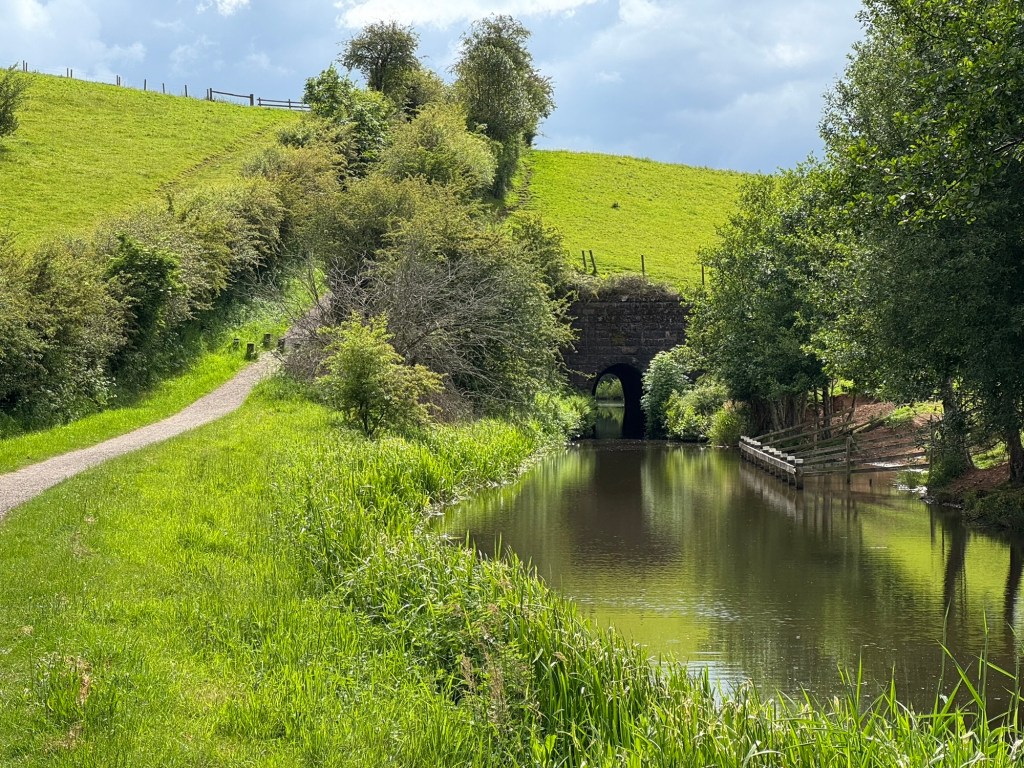
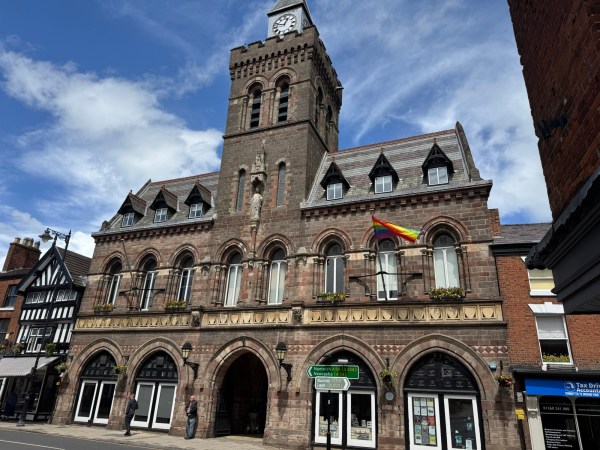
But we do not live on a boat to get grumpy. We enjoyed our trip up to Congleton, and I had a lovely afternoon looking at the museum and town hall there. It must have been such a dirty smelly mill town a hundred years ago, but is now bright and feels optimistic. And we are currently moored in one of our favourite places, just north of the Harecastle tunnel, where iron ore in the soil makes the canal run red, and the birds seem to sing all day long.

There is another lovely route down the “heartbreak hill” flight of 31 locks towards Middlewich, so we will probably head that way when the rain stops. A good friend is visiting us next week from New Zealand via South America, so we do not want to get too far anyway.

And who knows, maybe on Friday they will tell us Bosley is open again. Life’s too short to be grumpy.

Is the Caldon Canal the most beautiful?

In last week’s blog I pondered whether we should take Narrowboat Thuis along the Caldon to Froghall, along the Macclesfield and Peak Forest to Whaley Bridge or up the Trent & Mersey to Middlewich. Our answer was to try to do all three. This week we have been cruising the Caldon, and it is one of the quietist and most beautiful canals we have visited.

We left the Trent & Mersey in Stoke at Etruria. This is where Josia Wedgewood had his china factory and it has much industrial history. When we passed through there was a canal festival going on, so the canal was lined with historical boats and maybe a thousand gongoozlers (people who like to watch boats).

The first few miles of the Caldon are notorious and you are advised not to moor if you don’t want to meet dodgy characters. So it was no surprise when the boat suddenly stalled with a duvet wrapped around the propellor. Fortunately I have recently purchased a bread knife to keep in the engine bay for things like this and after a few minutes I had cut myself free.

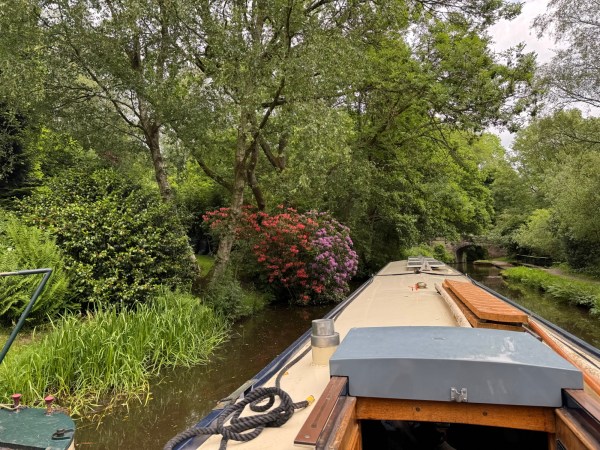
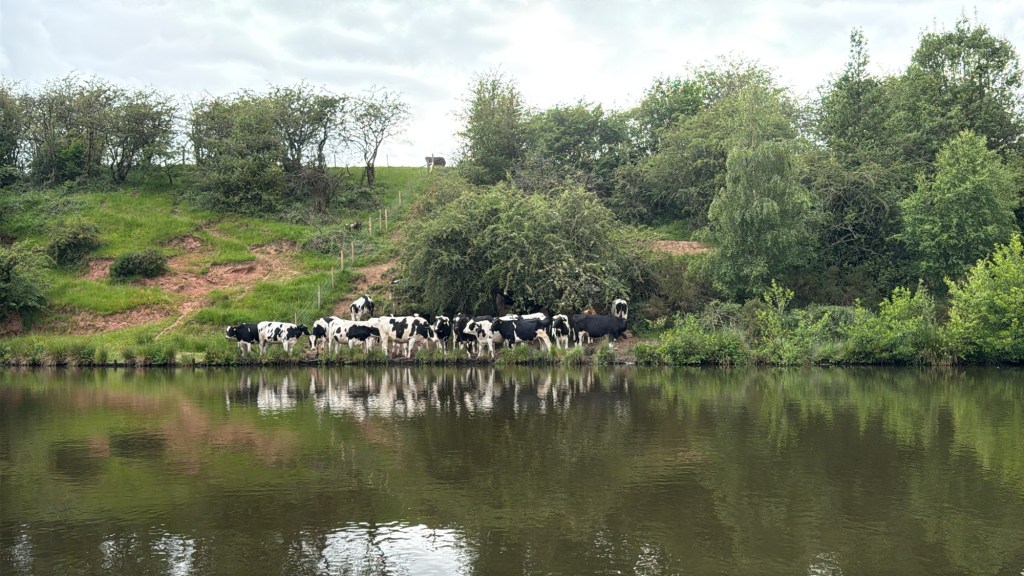
A few miles later, the character of the canal changed completely. Surrounded by trees and plants it meanders through Staffordshire. We cruised up the Leek Branch first and moored for a couple of days by a lake. It was very peaceful except when the cows decided to visit.

Then back to the mainline and through the Churnett valley to Froghall. At times the canal is only wide enough for one, but not many boats come down here so it was fine. There is a tunnel at the end of the navigation but it is too low for NB Thuis so we turned around.

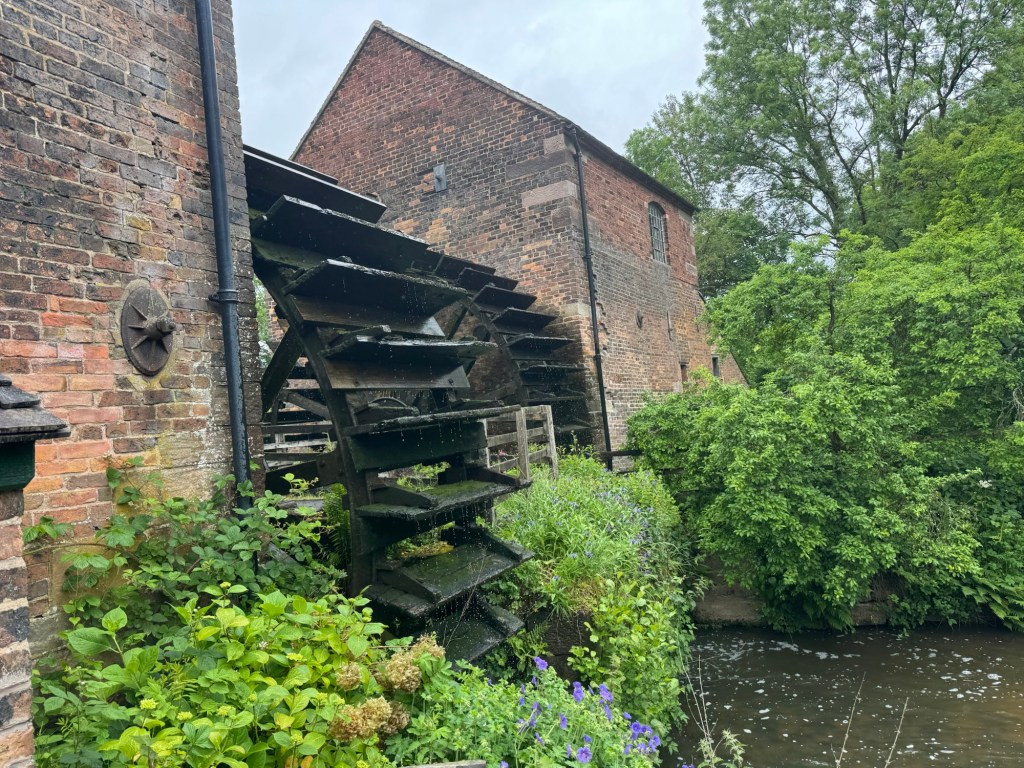
The strangest thing for me about this lovely canal is that it was not always this way. It was built for heavy industry and in the eighteenth and nineteenth centuries it would have been filthy with effluent from lime and flint kilns, coal mines and colour mills, feeding the factories of Stoke on Trent and further afield. We are currently moored next to a Flint Mill museum, which is absolutely fascinating. Who knew that fine china was made with more ground flint than clay. I did not even realise that bone china is actually made with 50% cattle bones.

So is the Caldon the most beautiful canal? I’ll let you know when we have been back on the Peak Forest!

Blog at WordPress.com.

Up ↑