Why am I so excited about new canal books?

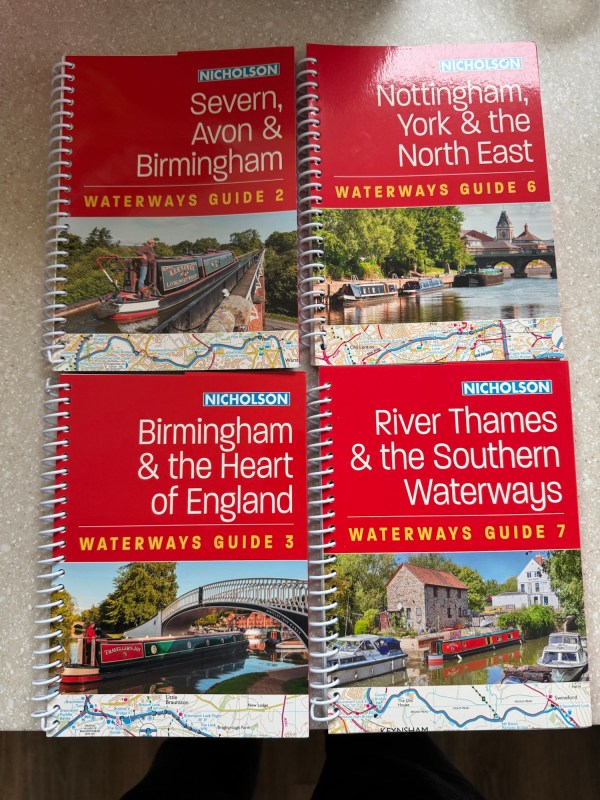
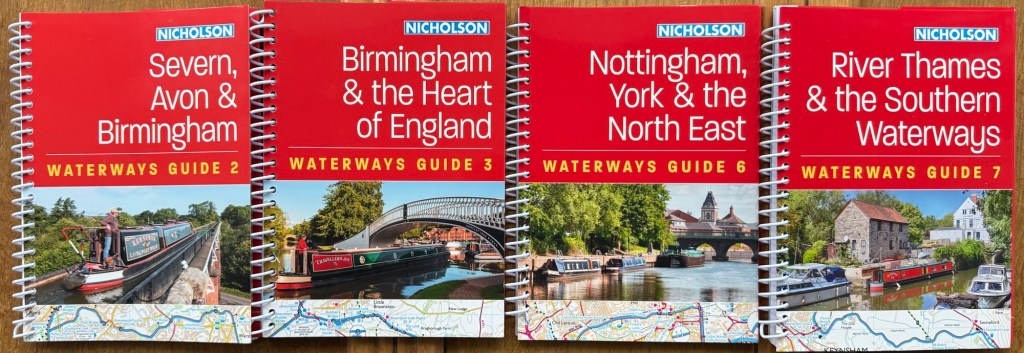
This week I received.a package in the post. It contained not a Christmas present, but four books with maps and routes of the canal network in the UK.

Narrowboaters have many options for navigating these days. We use a website called CanalPlan AC and an app called OpenCanalMap. But most boaters also like to read the guides. Some use the ones from Pearsons, but we prefer the originals – the Nicholsons. They have good maps of the routes, helpful lists of pubs and places to visit, and honest descriptions of the towns and villages on the route.

I also have a personal connection to the Nicholsons because one of my friends is the main author, Jonathan Mosse. I met him about ten years ago at a barbecue for narrowboaters in Scotland. He lent us a long chain for an anchor when we travelled the tidal river Clyde. And since we have been in England we have used our Nicholsons to navigate the huge network of rivers ad canals across the country.

Once a year I let Jonathan know all the changes and edits we have found in the books. Perhaps a pub has closed. Perhaps a bridge is incorrectly numbered. Perhaps we have discovered a wonderful new cafê. In return he sometimes sends me new editions, and that was what I received this week. In fact, guides 2 and 3 have not even been published yet. They come out in February but Jonathan has got me early copies.

We have been living in bricks and mortar houses since October, albeit with six weeks in the Outer Hebrides. I am itching to be back on Narrowboat Thuis. We won’t get properly going till March but perhaps we can get a week or two on the boat while it is moored in the Marina. Maybe New Year in our Narrowboat, with me, Mandy, the dogs and reading my new books. Sounds good to me.

No more narrowboating this year – so what is next?

Narrowboat Thuis is back at the marina in Stone for the winter and we are back in our house in Lancashire. As always, we are a little sad at the end of this year’s adventure, but we will be back on “the cut” next year, and can look forward to the next few months of bricks & mortar life.

And I can engage in my favourite pastime of making plans. I get bored very easily and the idea of a quiet retirement fills me with dread. So we will have a couple of weeks at home, seeing family and friends and doing jobs around the house, and then we will be off to North Uist for six weeks.

North Uist is a small island in the Outer Hebrides. We have stayed there before and it will be very peaceful at this time of year. The tourists will have left and restaurants & attractions will have closed. But what will be left for the locals is simply stunning scenery and amazing nature. The weather will either be sideways rain, in which case our cottage with the open fire will be very welcome, or it will be clear and sunny with the best light in the UK. My brother in law is joining us for the first week and he is unconvinced. I can’t wait to take him to see some of the beaches and see what he says.

After the Hebridean trip it will be Christmas and maybe skiing in January. And then, all too soon, it will be February and we will be back on the boat. Come the end of this year I will have been retired for five years. Is it time to go back to a job? Not yet!

How much do you know about narrowboating?

I have been writing this blog for a good few years now and I hope that followers will have learnt more than a little about our summer narrowboat adventures. So just for a bit of fun as we near the end of our 2025 trip, I thought I would do a quiz. Good luck!

  1. What is the longest narrowboat that can travel throughout the British network?
    a) 58 ft
    b) 60 ft
    c) 62 ft
  2. How many miles of navigable canals and rivers are there in the UK?
    a) 2700 miles
    b) 3700 miles
    c) 4700 miles
  3. Most locks are operated using a windlass, but for the Calder and Hebble canal, what else do you need?
    a) a ratcheted lever
    b) a handspike
    c) a twin coiled rope
  4. How should boats travelling in opposite directions pass each other?
    a) port to port
    b) starboard to starboard
    c) at tickover
  5. When leaving a marina to join a canal, what should you do?
    a) check the weed hatch
    b) sound your horn
    c) display your licence
  6. There is cheery banter on the cut between narrowboat owners and people who have boats with keels (such as motorboats and yachts). They call us “sewer sailors” and “ditch dwellers”. What do we call their boats?
    a) gin palaces
    b) airfix kits
    c) yoghurt pots
  7. What is the popular Channel 4 programme that showcases eccentric narrowboat owners (many of whom we have met)?
    a) Narrow Escapes
    b) Boat People
    c) Onion Bargees
  8. If you fall in a canal what is the best way to avoid drowning?
    a) swim to the towpath side, where it is shallower
    b) swim back to the boat, avoiding the dangerous propellor
    c) stand up
  9. What is the name of our narrowboat?
    a) Notayot
    b) Thuis
    c) Serendipity
  10. Where is our favourite mooring (where we are right now)?
    a) Tixall Wide
    b) Tixall Narrows
    c) The Tixall Arms
Emma Culshaw Bell from that Channel 4 series, on the Shroppie last week

And the answers are:

1. The longest narrowboat that can travel throughout the British network is (a) 58 ft

2. There are (c) 4700 miles of navigable canals and rivers in the UK. We must have travelled over 3000 I think.

3. To operate the Calder and Hebble locks you need (b) a handspike

4. Boats should pass each other (a) port to port

5. When leaving a marina to join a canal, you should (b) sound your horn

6. We call keeled plastic boats (c) yoghurt pots

7. The popular Channel 4 programme that showcases eccentric narrowboat owners is (a) Narrow Escapes

8. If you fall in a canal, the best way to avoid drowning is to (c) stand up. Most canals are less than four feet deep.

9. Our narrowboat is called (b) Thuis

10. Our favourite mooring is (a) Tixall Wide

How did you do? Any scores over five are pretty impressive I think.

It’s autumn on the Shropshire Union

It really feels that as we have entered September, we have entered autumn. I am waking up in the dark for the first time since March. It rains every day. I am wearing a top as well as a t shirt. I have even started wearing jeans instead of shorts.

So what is good about narrowboating in autumn?

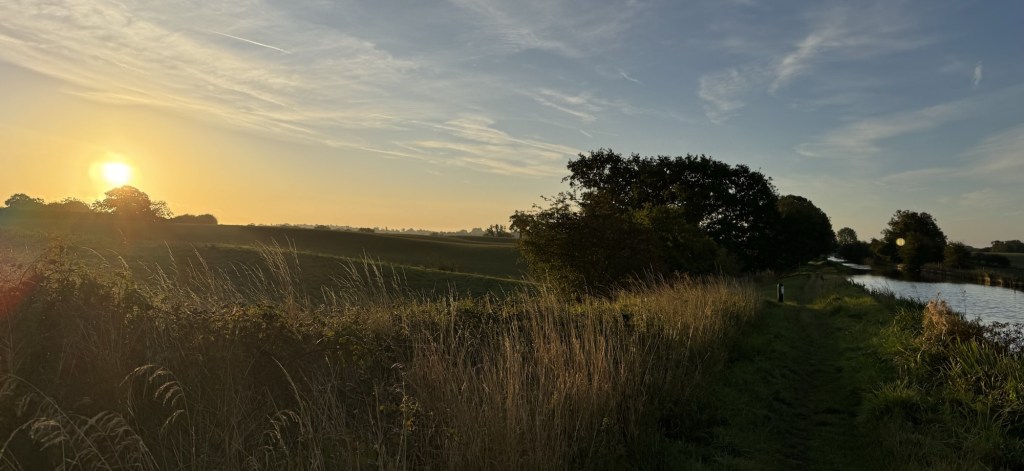
Well one thing is the light. The sunrises and sunsets are just so beautiful. We are currently traveling in the middle of the Shropshire countryside and I look forward to walking the dogs each morning.

Another thing I love is my fellow boaters on the canal. I enjoy boating with the novices during the summer. But it is great at this time of year when my fellow boaters have a little more experience and knowledge. I spent an evening in a proper boaters pub yesterday, geeking out about the life with people who have lived on board since childhood.

And finally, best of all in autumn the insects start to die off. The sunny days have been nice this summer, but the horse flies and wasps less so. I have a boat full of spiders, which helps, but a few frosts will help even more.

But as we head towards winter, there is one thing I am not looking forward to, and that is muddy towpaths. Narrowboats are easy to clean, because they are small, but it is an uphill battle when the dogs bring in their dirty footprints every time they go out.

So what is in like in the “real” world? Are you enjoying autumn too, or missing the sun?

What is it like to be sick on a Narrowboat?

It has been a funny old week. We have continued our journey northwards on the Shropshire Union. We have had some lovely days including one down the Audlem flight of 15 locks, but it has generally been wet.

Narrowboaters are famous complainers. We have spent all summer complaining that there is not enough rain to fill the reservoirs and canals. And then these past two weeks we have been complaining about there being too much rain to travel in.

And then I got sick. I am not good at being sick. In general my belief that I do not get sick has served me well over the years, but there are times when the world of reality overwhelms my positive mindset. This week was one of those occasions. A pain in my back developed into aches all over and then an upset stomach that is not suitable for description in a blog.

Fatigue has been the biggest problem. Yesterday I slept for around 20 of the 24 hours.

So what has it been like being ill on a boat? In all honesty I would rather have been in a house. The little irritations of boat life seem worse when you are out of sorts, and I would rather hide away in the most comfortable space I can find. However, I think I have turned the corner now and looking out of the Narrowboat window into the countryside, it is not a bad place to recover.

So wish me well. Sympathy welcome.

Is narrowboat life tiring?

A lot of people ask us if it is boring to live on a narrowboat. I think they assume that when we are moving so slowly we don’t have to concentrate. And when we are moored, there is nothing to do. So how come we are all feeling tired this week?

I think there are three reasons. Firstly when you drive a narrowboat, even at 3mph, you have to concentrate the whole time. The boats seem to have a mind of their own and after few seconds lacking attention you can be pointing at the canal bank, another boat or more likely a bridge. I love it because you also see wonderful nature and industrial heritage, and every day is different. But all that fresh air can be tiring.

Secondly there is always something to do when we moor up. Perhaps it is fixing something, doing general maintenance, or the day to day tasks of shopping, filling up with water, greasing the stern gland. There is also plenty of time to read, watch TV or even write a blog, but it can be tiring.

Finally this year there is always the nagging concern about canal closures. More than half the network is closed now due to low water levels, and even though we have chosen a route for our final trip of the year that navigates the most reliably wet canals, rumours abound amongst the boating community that where we are now may also suffer. We really don’t want to find ourselves isolated, miles away from our home marina.

So yes, narrowboating can be tiring. But it is a good tiring and one where I fall asleep each night, looking forward to the next day.

Where shall we go for our last boat trip of the year?

We are back on Narrowboat Thuis for the next five or six weeks. It will be our last trip of the year so we need to decide where to go. Normally there would be a great deal of choice with thousands of miles of interconnecting canals and rivers. But this year the water levels are so low that many canals are now closed, and the Canal & River Trust have warned us that worse is to come.

There seems to be only one route where we can be sure of water – across the Staffordshire & Worcester to Autherley Junction, north on the Shropshire Union and then west on the Llangollen and maybe north to Chester. The “Shroppie” and Lllangollen in particular are used to carry water for people so will not be allowed to drain out. We can hope for rain to open other canals, but the reality is that we will need to wait for a wet winter to fill the reservoirs and canals back to normal.

The downside of this journey is that we have done it many times before. The upside is that there is a reason we have done it so many times – because we love it. We are hoping for stunning sunsets, peaceful moorings, places to visit, maybe even a couple of canal side pubs!

Stay tuned to find out how the trip goes.

Ten things to look for in a good marina

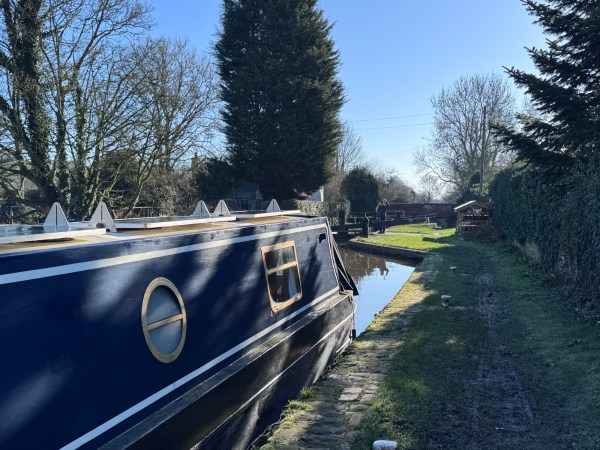
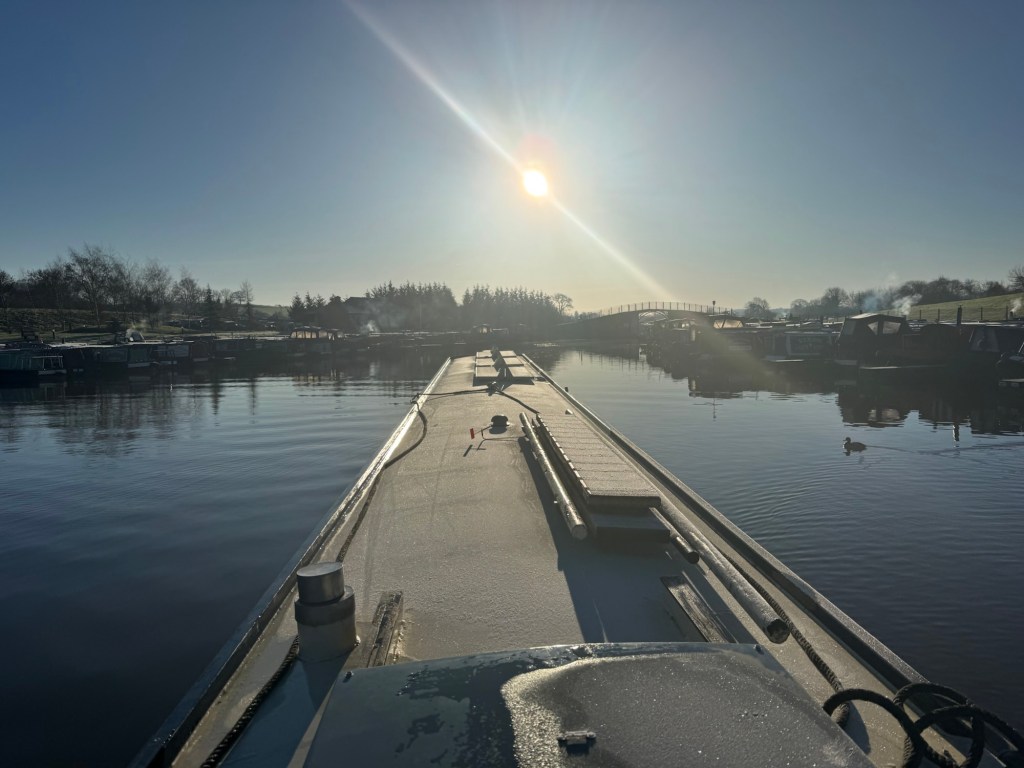
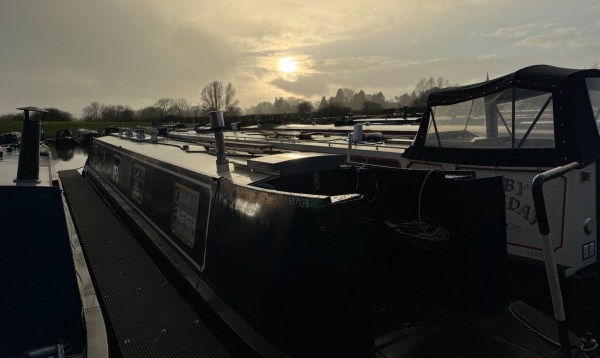
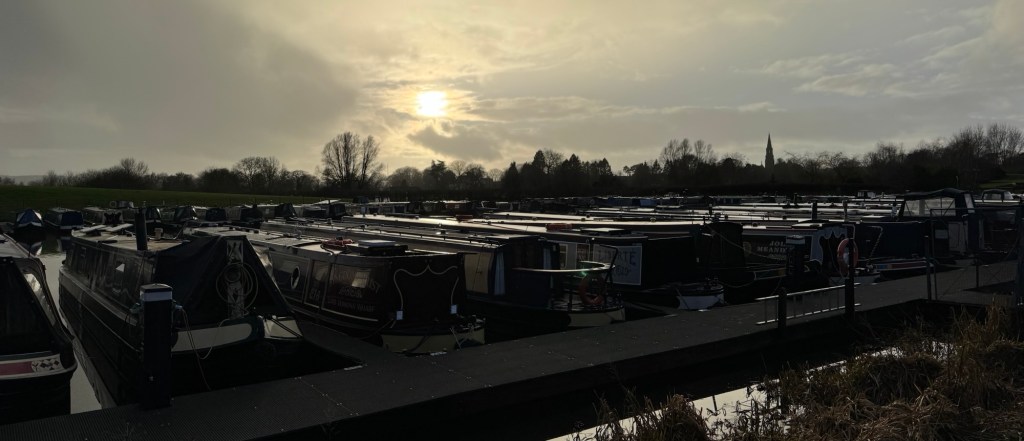
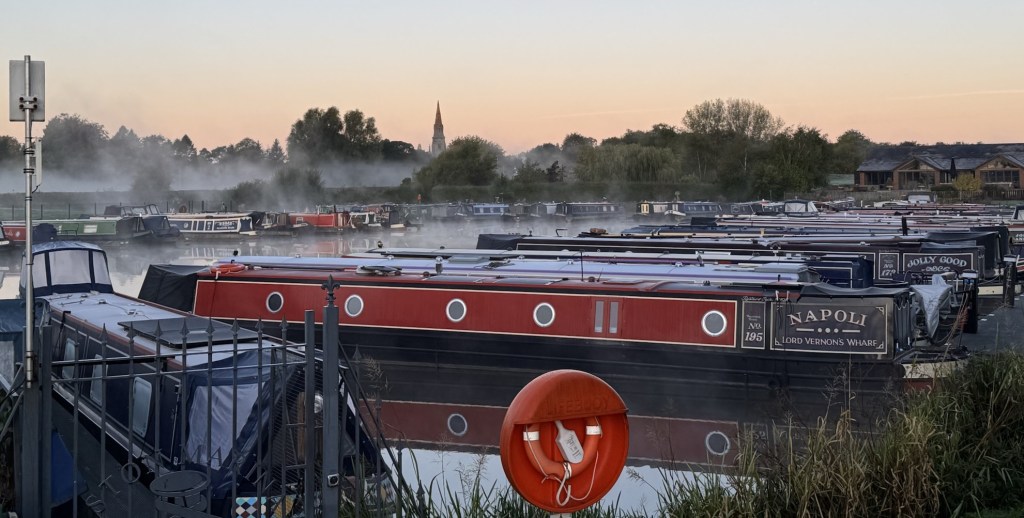
We are currently moored at Aston Marina, in Stone, Staffordshire. We have moored in many marinas over the years and this is our favourite. So what is it that makes a great marina for us?

  1. Location location location. The canal network is extensive and there are marinas all over the UK. For people that work it is important to have a marina nearby. For us, it is important to have a marina near the middle of the network so that we can get anywhere.
  2. Reasonable prices. It is never cheap mooring n a marina. Even basic canalside moorings can cost over a thousand pound a year, and good marinas are quite a lot more. But there are some marinas near fancy places like Henley or Windsor that cost a ridiculous amount – because they can.
  3. A laundry. We have a washing machine on the boat but before we had it, the marina laundry was invaluable and we still regularly use the tumble drier.
  4. Toilets. Sorry to bring the blog tone down but the toilet on the boat empties into a tank that we have to pump out. I prefer to use someone else’s facilities when I can.
  5. A pub. We are spoilt on the UK canals in that there are many pubs along the way so that if we do not fancy cooking we can get a meal and a beer overlooking our mooring. Marinas without pubs can be a bit isolated.
  6. Moderate wind. Narrowboats have long flat sides that act like sails when the wind catches them. On canals and rivers you usually have protection from cuttings and trees, but some exposed marinas are almost impossible to navigate in. So a marina with hills around is always preferable.
  7. Appropriate rules. Without rules, marinas become mess. If one boat gets away with building a pretty garden next to their boat, within months there are things being dumped all over the marina. There are rules that we don’t like. At Aston we are not allowed to dry washing on our whirlygig. But at least the rules are fair.
  8. Security. In general we feel quite secure on the boat, but when we have to leave it for a few weeks, we worry that it might be broken into. Good marinas have the boats on secure jetties behind locked gates that only boat owners can open.
  9. Friendly boat owners. We have stayed on marinas where there are cliques of boat owners that spend their time whinging about others. At Aston we have found just about everyone friendly and helpful.
  10. Friendly marina managers. We have also stayed at marinas where the managers do not understand boating or boat owners, and treat it as “just a job”. Sadly this can be particularly true at large chains of marinas. Great managers uphold the rules equally and are always ready for a chat and to help out.

It is often said that people considering buying a Narrowboat should find a mooring before they look for the boat because good ones are like hens’ teeth. certainly we were on the waiting list for Aston for nearly two years, while we overwintered in other marinas. And for us, it feels like home.

Why would a village be proud of being “boater hostile”?

Earlier this week we travelled on the North Oxford canal through a village called Ansty in Warwickshire. I was ready to moor up for the day so was looking for a nice stretch of armco to tie up to, with good views. Unfortunately though the whole village there were “no mooring” signs every few metres along the canal.

This is very unusual. We boaters have many rights from hundreds of years of boating and one of them is a right to moor on the towpath side of almost every canal. Sometimes there are short term moorings in the centre of towns where you can just stay for a couple of days. Sometimes there are long term moorings where boaters pay to moor permanently. But mostly you can stay pretty much anywhere for up to 14 days.

So why is Ansty to anti boat? Their Parish Council website front page claims that the village is the most boater hostile on the network but does not explain why.

All I can think is that the canal goes through the village on an embankment and so boaters can see into the upstairs bedrooms of the nearby houses. But that is true in many many parts of the canal network and besides the canal would have been there two hundred years before these houses were built so why not just use curtains? Besides which, we boaters get very used to gongoozlers peering through our windows.

We are very privileged being allowed to moor in the most beautiful parts of the UK so I am not complaining too much, but I won’t be visiting Ansty again any time soon.

The perils of narrowboating in a drought

We have been tootling along the Oxford Canals this week. It has been a little disappointing because we have had to turn around before reaching our destination.

We had hoped to make it to Oxford, city of dreaming spires. It is a beautiful town and a lovely route to get there through canal history in Banbury, Aynho and Thrupp. We would have been able to catch up with our friends Martin & Saskia and my Aunt Dorothy. I was really looking forward to it.

Unfortunately there is a drought in this part of the country. There has been very little rain since February and the Canal & River Trust (CRT) are really struggling to maintain water levels so that boats can continue to navigate the canals.

The photo above shows one “pound” between two locks where we completely grounded this week, and had to wait for a CRT chap to let water down to us before we could continue with our journey.

We have seen more and more notices from CRT about lock openings being restricted and canals closed because of lack of water. I am pretty confident we would have made it down to Oxford but the big risk was that the South Oxford Canal, already 30cm down, would be closed for months and we would not be able to get back.

So at Fenny Compton we winded the boat (turned it around) and are now heading back to the Midlands, hoping that we will not be held up too much. I reckon if we can get through the Atherstone flight of locks in a few days time, we will be OK.

I am well aware that such inconveniences from Climate Change are nothing compared with people losing their livelihoods and even lives in fires and floods. But it is a reminder in our little bubble that the world is changing.

On a brighter note we did see one solution to dry canals:this week.

We saw this narrowboat landlocked in a field. The owner has cut a small canal into his land, moved his boat into it and then filled the canal in behind him. This means he can live on the boat near the canal without paying a licence to CRT. He even has his own greenhouse to grow food. It is not what I boat for. I love the travelling. But it is one way to deal with droughts!

Blog at WordPress.com.

Up ↑