Well that was nice. We had a wonderful Christmas and New Year. But the festivities are over. The decorations are coming down today. I’m on boring but healthy eating and Dry January. The couple of days of snow have turned into grey rain. Time to start looking forward to this year’s adventures, and that starts with the narrowboat.
At the moment many of the canals are closed as the Canal and River Trust do their winter works. We probably won’t be able to set off on our long summer trip until March. But we are missing the boat and it is sitting in Staffordshire waiting for us. The engine is serviced, the cooolant replaced, the central heating leak is fixed. The bottom is blacked with bitumen and has new sacrificial anodes. And the roof has ben stripped down and repainted. So it is ready for visitors in its marina.
Next week I plan to go down and get it set up. During the winter we take off linen, crockery, foodstuffs so they need sorting out. The water tank needs bleaching with Milton. The fuel tank needs topping up. The heating systems need checking. And there are some bits and pieces of DIY to do.
Then for Mandy’s birthday towards the end of January, we plan to spend a week or two on the boat. We may not be moving yet, but it will still feel like coming home. There is something about being on a narrowboat that we just find relaxing.
We will be getting up early tomorrow (22nd) because we need to be on the road b y 0530. We are travelling from Edinburgh to Brighton to spend Christmas with our son Rob and his fiancée Alessa. At best it is a nine hour journey plus break stops. However, the BBC website says that tomorrow will be the busiest road day of the year, with many people still working and many others, like us, travelling for Christmas. So we expect the worst.
There is also a yellow weather warning for high winds, and with the roof box on the car that does make us a little like a sail. We will have to be particularly careful on bridges.
I am not looking forward to it. When we are on the narrowboat we also have to be careful for winds. Particularly in marinas it can be exceptionally difficult to steer. But we are only going at 2 or 3 mph, and the beauty of being retired is that if we do not like the weather we can just moor up.
I think the biggest difference between travelling in a car and travelling in a narrowboat is that in a car, it is all about looking forward to the destination, while in a narrowboat, it is all about the journey itself.
But there aren’t any canals between Scotland and England, and even if there were, the 380 miles would take us about two months.
Christmas will not wait for us, and so we just need to grit our teeth tomorrow and face into the journey. At least we can stick on some Christmas songs to cheer us up. And when we get there I am sure we will have a really lovely week with our family and Alessa’s family,
So instead of Bah Humbug, I will be Ho Ho Ho and wish you and yours a very very merry Christmas.
My last day at work was Christmas Eve 2020. In the months before I left, I spoke to a number of people who were already retired and a common theme was that it takes years to learn how to be properly retired. When I was at work I was very used to change. It was one of the things I was particularly good at and so I doubted their words. For me, it would take maybe three months. Certainly no longer…
It will not surprise you to hear that they were right and I was wrong. That is not to say that it was not immediately enjoyable. The first few months in retrospect I treated like being at work. I had lists of jobs to do and an urgency that was just like work. I got a lot done and it was fun. I was a total irritant to my wife because I wanted to organise everything.
After that, the first year was more like a very long holiday. We had the narrowboat and were off on our first long trip, across the north of England. I wanted to make the most of every day and despite best intentions I still had a tendency to rush at everything. I did not like “days off”. If we did stop in a location I would find five or six things that absolutely needed doing and would take up my time.
The second year was better. I still had a pretty detailed plan of how we would spend the year – where we should get to by when. But I was a bit more chilled about plans changing and relaxing into each day. It was the first year after the pandemic and we made the most of it to see old friends as we boated around the south of England.
This third year has been the best yet. We have still travelled a long way, from Chester to Bristol and back. We have had real adventures and Mandy, the dogs and I have made a great team. But I have also enjoyed the days when we did not travel. I still find it hard just to read a book or do a jigsaw, and I have tended to go off and find a stately home or a new town to see. But I am getting there.
For next year’s narrowboat trip we have so far just planned the first canal – Liverpool to Leeds. It makes me uncomfortable not to have more of a plan, but I am trying to learn to be a better retiree.
When I first left work I was determined to have something to aim towards, not just to stop. I had seen too many people stop work, do nothing and get ill. And I think in that I have succeeded. We are so lucky to be able to do what we do, whether on the boat, or on our trips away. It is a wonderful life.
And after three years I feel like I am still only beginning to make the most of that life. After three years I am probably still not properly retired. But I am getting better at it!
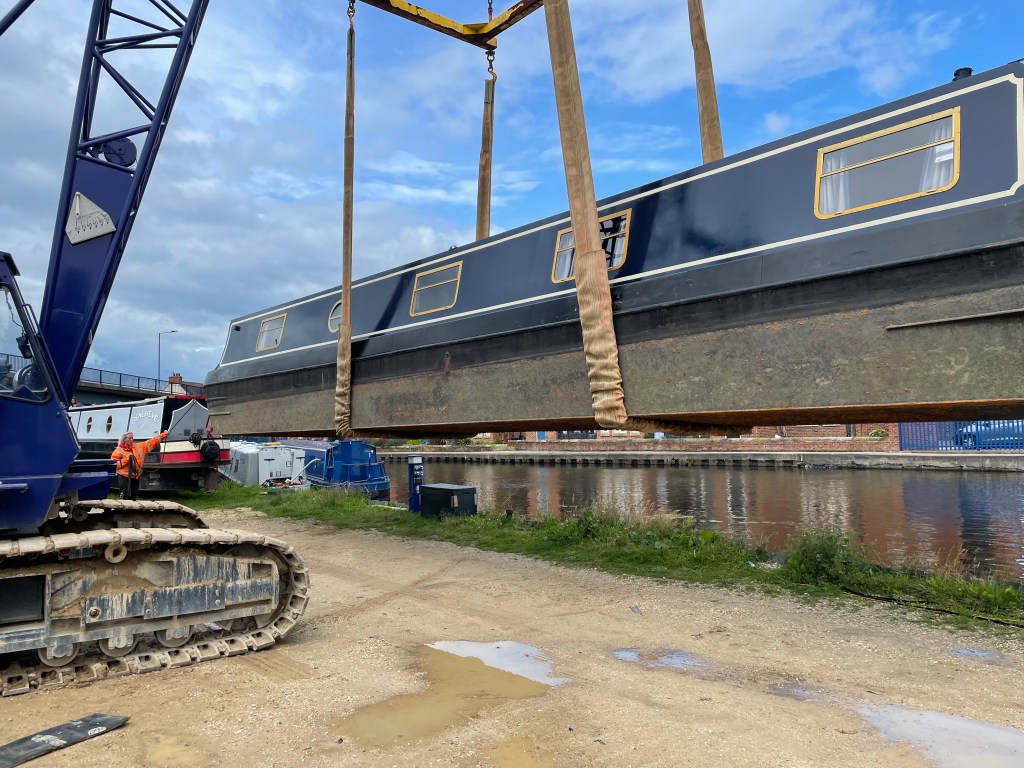
I’m back at the narrowboat tonight. Over the past few weeks it has been taken out of the water and blacked (bitumen painted on the hull to protect it), It has new sacrificial anodes (zinc plates under the water to prevent electrolysis pitting the steel). It has had the roof stripped back to metal and repainted with 7 or 8 layers of primer, undercoat and top coat (the sun and my poor repairs had made the roof flaky). The engine has been fully serviced and the coolant system pressure checked after we overheated last summer. They have investigated a leak in the central heating system and dampness by the water pump.
Last time the boat was out of the water
So my job this weekend is to check the work, and to make sure that everything else still works, especially the heating now that cold weather is coming. I am looking forward to being back, even if it is just for a couple of days.
We are currently looking at moving house from Scotland to Lancashire, and as part of that we may have to live on the boat before Spring, which we have not done before, so it is fairly critical that it is warm. We can heat the boat in one of three ways. We can use the webasto boiler, we can use our “bubble stove” diesel fire, or we can run the engine. The last of these is not really an option while we are in a marina overwinter, but the other two techniques should be OK. Often people assume that narrowboats are cold in winter because they just have a single skin of metal, but in fact they have such a small airspace that they warm up very quickly. The only challenge is first thing in the morning, when I need to run from my warm bed to press the button on the webasto controller, before returning to bed for 30 minutes while it warms up.
Hopefully everything will be fine. And then there is just the bill to pay to the boatyard for their work. The saying is that “boat” stands for “bung on another thousand” and it is not far wrong! It is worth it though.
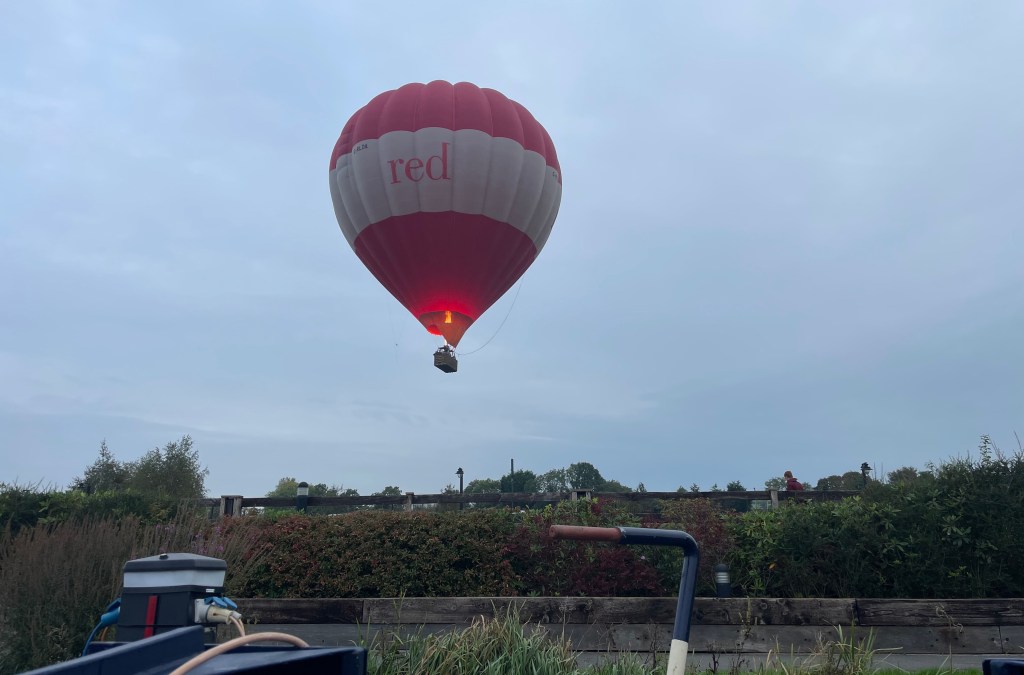
I went back to the narrowboat last weekend to get it ready for winter. We have been travelling for over seven months so it was fairly full of bits and pieces. I had a long list of jobs to do. But it was also a wonderful few days to relax and enjoy the boat and the marina for one last time this autumn. We even had a hot air balloon take off a few yards from where we are moored.
So here is my list of jobs:
Clean windows inside and out
Dust and clean all surfaces and ledges.
Wipe down radiators
Vacuum throughout
Clean mirrors and pictures
Clean floor
Clean shower grout
Demould shower sealant
Defrost and clean fridge. Turn off and leave open.
Properly clean oven and grill
Take home and revarnish wooden boat hook and seat
Antitrust and repaint windlass and mooring “nappy” pins
Clean out cratch (area at the front of the boat)
Put covers on front window, side hatch and back deck
Pump out toilet tank
Drain water tank
Take home crockery and glasses for dishwashing
Take home all food except cans
Bring home fire stick for use when we go away
Take home towels, t towels, bedding, hats, gloves
Leave a few windows open for ventilation
And now all that is done I feel the boat is ready. Next step is for the boat to be taken out of the water at end of October to have its bottom blacked, roof stripped and repainted, new batteries, engine serviced, and a couple of faults fixed. Then maybe we will come back for a winter stay in December or January before our next big adventure in 2024.
After seven months cruising the cut this year we are nearing the end of our 2023 narrowboat adventure. The boat is berthed in its over-winter marina, near Stone in Staffordshire. We are back in our house in Scotland, And in a couple of weeks I will return to the boat to clean it. This last activity is important on a boat, because otherwise mould can grown on surfaces and fabrics during the cold damp months.
The Staffordshire & Worcester canal this week, as we finished our journey
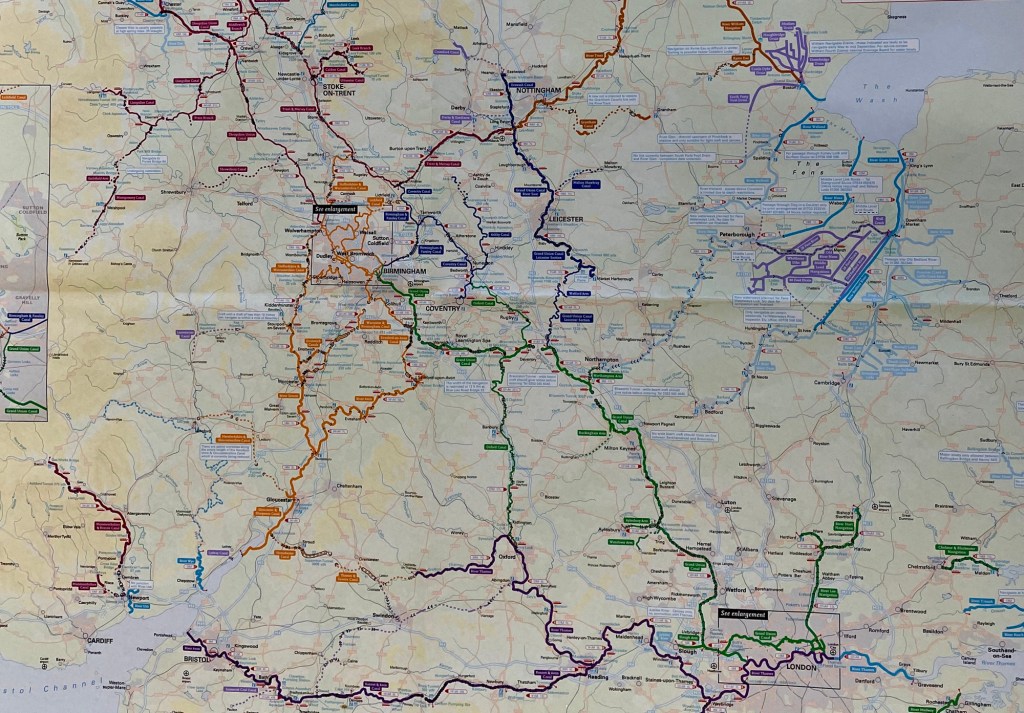
We have had a really lovely time this year, travelling the western canals of England. Starting in the snow near Chester, we had a spring visit to the Llangollen and the Montgomery in Wales. Then across the Middlewich arm and up the Macclesfield and the very beautiful Peak Forest to one of the most historic moorings in Bugsworth basin. From there we travelled down the Trent and Mersey, Staffs & Worcester onto the river Severn at Stourport. Taking care on the tidal stretch we made it down to Gloucester and Sharpness, the southernmost point of the journey. Then back up the Severn and Avon to Stratford, and from there up through Birmingham, to visit Coventry and for a leisurely week up the quiet Ashby. We finished the trip with a reprise of the Four Counties Ring and the Chester canal up to Ellesmere Port Boat Museum.
So many happy memories made and enjoyed. Mandy says she doesn’t want to face the real world now, she just wants to go back and hide on the boat. It does feel sad. But there are things to do that are hard on the boat – doctors and dentists appointments, and hopefully to sell the house and move closer to the boat.
And the boat itself will have a little adventure in November – being lifted out of the water, having its bottom “blacked” with bitumen, and its roof stripped down and repainted. The engine will be fully serviced, and it will hopefully be sharp and read for whatever 2024 may bring us. Watch this space!
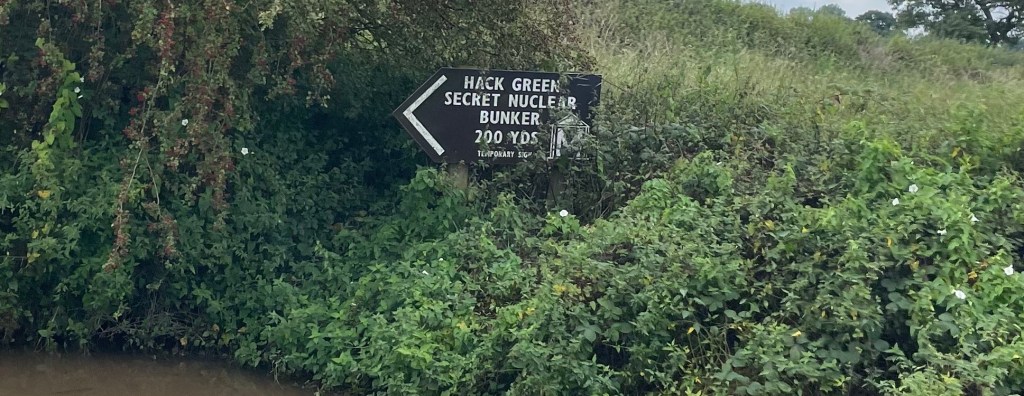
One thing you definitely do not expect to see when cruising the canals is to find a sign for a secret bunker. But that is exactly what I found this week at Hack Green.
I have previously visited a “secret” bunker near St Andrews in Scotland so it was not entirely new to me, but the chance to explore from the canal was too good to miss, and we moored up.
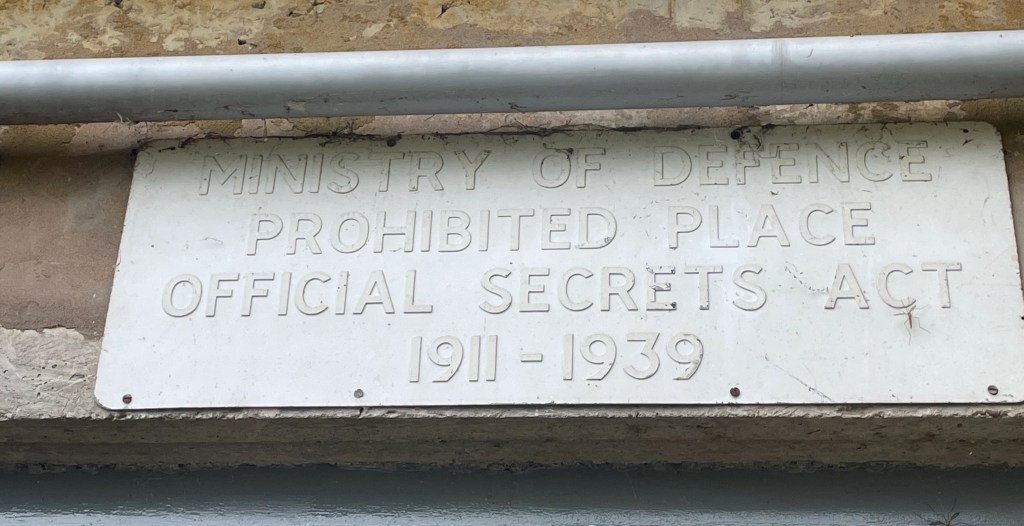
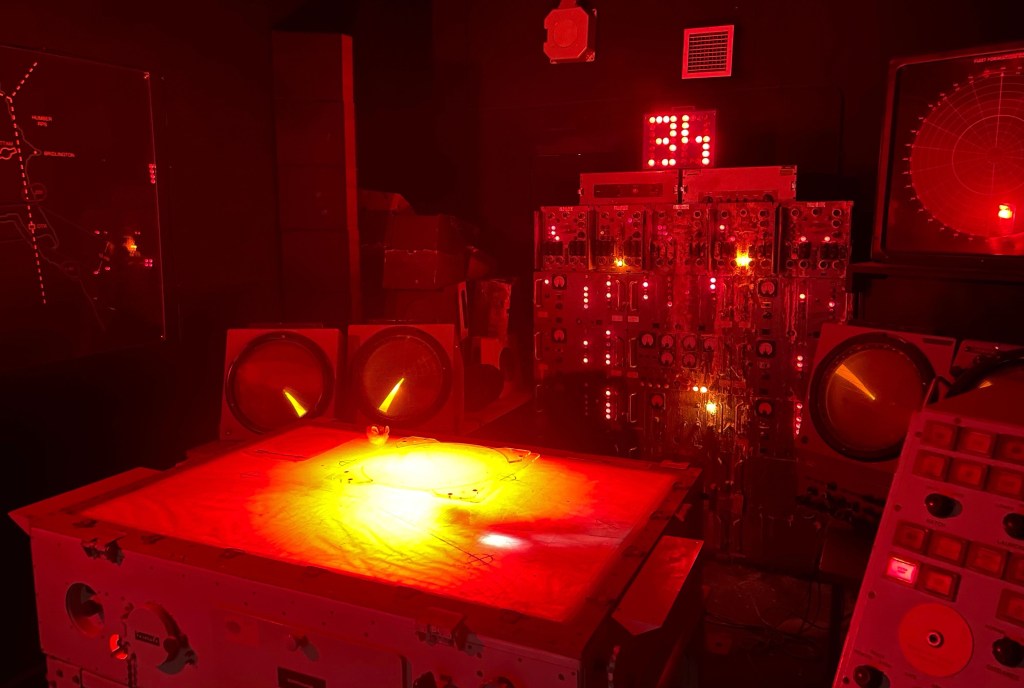
I was born in 1964 and grew up at the height of the Cold War. This would have been the centre for organising the UK midlands if there had been a nuclear war. It just looks like a small farm building, but below ground there are extensive rooms that would have coordinated civil defence activities.
I confess I found the visit fascinating but also very sobering. In the 1950s and 60s we came very close to disaster and it could happen again. In one of the rooms they were showing a film called “War Game” about what the aftermath of a nuclear war would have been like, It was horrific.
Back at the boat that afternoon, travelling through our beautiful countryside I was glad I had visited the secret bunker, but more glad that it had never been needed.
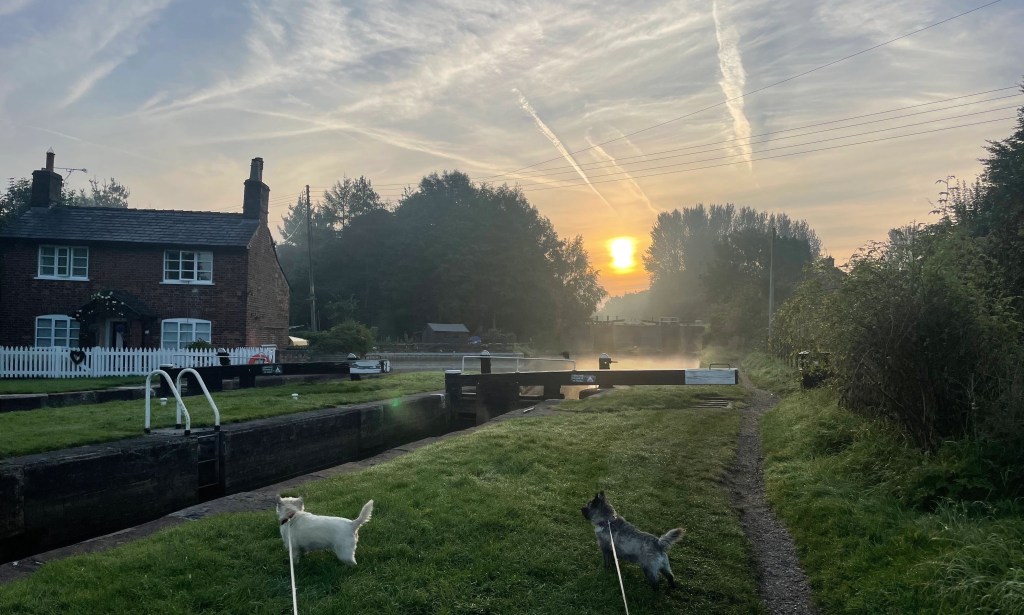
In the UK we have had something of a heatwave this week, with plenty of sunshine and warm temperatures. At the same time the days are getting shorter and I have often woken to mist rising off the canal in the dawn sunshine.
I feel as if such “Indian Summers” are increasingly common, before Autumn sets in, and they provide some of the best days on a narrowboat. The plants are still in full bloom with some just beginning to change colour. The water fowl still have plenty of food and swim happily around the boat. The canals are busy with experienced boaters on hire boats taking advantage of reduced prices after the school holidays. Everyone seems content.
And there are always surprises. On Wednesday evening we were moored outside Chester and went for a bite to eat and a pint in the Cheshire Cat pub, quite a famous boaters’ inn. The food and beer was good and instead of canned music we were treated to songs from a local ukulele band.
They “interpreted” many popular songs. This might sound terrible but after a long hot day on the boat it was genuinely just what I wanted.
We only have a few more weeks cruising this year but right now we are loving every moment. September is a great time to be on a narrowboat.
I am 60 next year. It’s a good age to start reflecting on what I have achieved in my life, and what I want to do with the years in front of me. My standard answer when asked about regrets is that I regret nothing because I have had a great life so far, and if things had been different, I would not have had this life. That is true. Overall I do not regret the choices I have made because I like how it has ended up. I am so lucky to have loved my family, loved my work and now loving my retirement. Travelling the canals of Britain in our narrowboat gives me so many prefect moments.
But to say I have no regrets is disingenuous. There are things in my life that I regret.
I regret not going to Cambridge University. My parents both went and I believe I was academically good enough. I always dreamed about living in an ancient college and taking the advantages that Oxbridge gives you. But if I had gone, I would have missed out on Imperial, experiencing London life, meeting my wife.
I regret not having a gap year. I think if I had done something different before University, I would have been less naive and would have had more world experience as an individual. But I do like the aspect of my character that can’t wait for the next adventure. I rushed into Uni, rushed into work, rushed into marriage, rushed into children. And now I can enjoy early retirement.
I regret leaving Ernst & Young to join Zefer. I was doing well as a Management Consultant, and was dazzled by the bright lights of the late 1990s dotcom boom. The new company failed and I became depressed. But I learnt from the experience, and without it I would not have got the Head of IT role with the Halifax, that I loved and took me to the next stage of my career.
I regret selling our house in Todmorden. Monkroyd is a large Victorian mill owner’s house, set on a Yorkshire hill side. It was the kind of house I dreamt of when I was a kid. Large cellars, hidden rooms in the loft. But if we had not moved, I would not have experienced how wonderful Scotland is, which has been such a great way to spend the last few years.
I regret not getting a CIO role in the Netherlands. We lived in Holland for four years when the kids were little, and after they left home I had the opportunity to return. I flew over for interviews and it just felt right to be back. When they gave the job to someone else I was so disappointed. But if I had been successful I would never have had the chance to spend the last years of my working life with RBS/NatWest, which were probably the most fulfilling roles I ever did.
No doubt there will be things in the next 30 years that I will regret. And rather than thinking that regrets are not useful and to always look forwards, maybe a better choice for me is to recognise those regrets, feel the pain, and then remind myself again how very lucky I am.
It is definitely harvest time. This week we have travelled through the midlands from Coventry up past Fradley Junction and Great Haywood to Stone – villages that probably mean very little to most people but are famous to narrowboaters, as they were developed around the canals in the 18th Century. The countryside is mostly arable farming – wheat, corn, barley and sweetcorn.
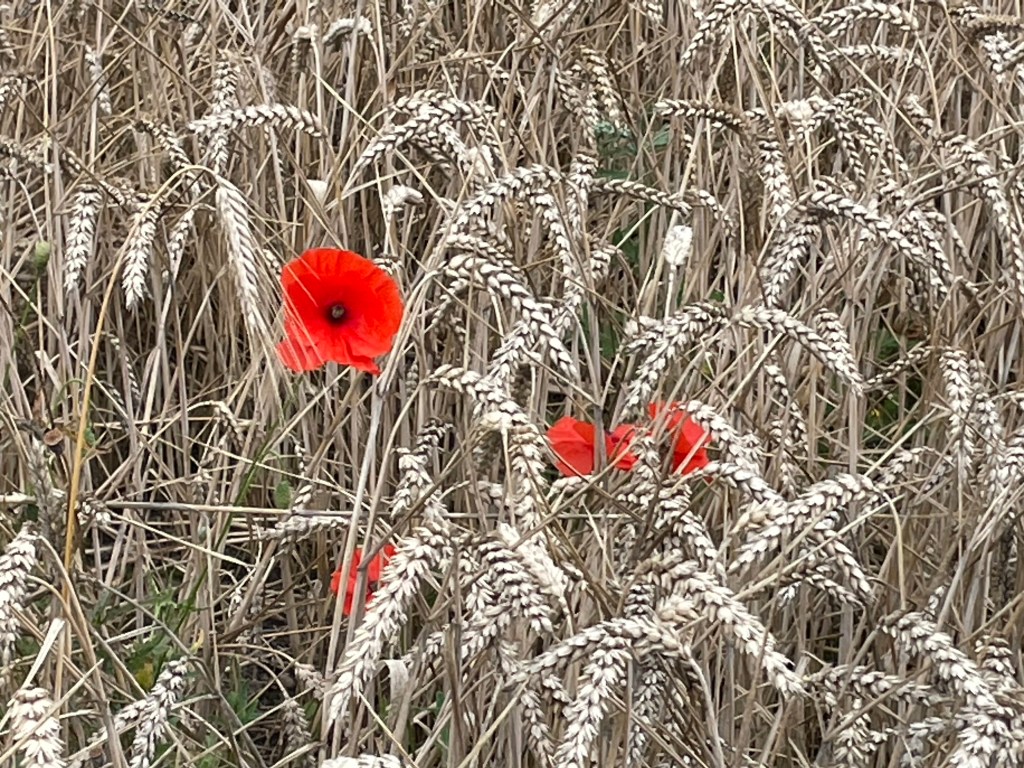
I imagine it has been tricky for the farmers to know when to harvest. As you can see from my picture, taken near Nuneaton, the wheat is full and ready for cutting, but if it is damp, the moisture levels are too high and the price the farmer can get comes down. And the weather has been very mixed this week. One minute it is bright sunshine, the next a heavy rainstorm.
So not surprisingly some days the fields have been empty, and other days every piece of farm equipment has been out. On Saturday we moored up near farmland and were woken about 11pm by the bright lights and noise of a combine harvester and associated tractors. I am not complaining. The farmers have to get the crops in whenever they can.
Living on a narrowboat has brought me closer to nature and how the land is used. You can be steering through an industrial cityscape, and round a corner you find the view opening up over fields to distant hills. This week I saw a kingfisher darting between the bushes alongside the boat. Yesterday evening we were “bothered” by two swans tapping on the side hatch to ask for food. It is not a bad way to spend a summer.