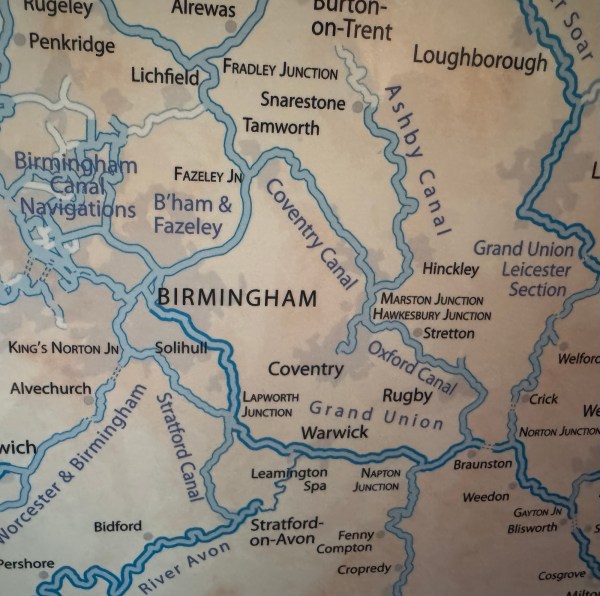
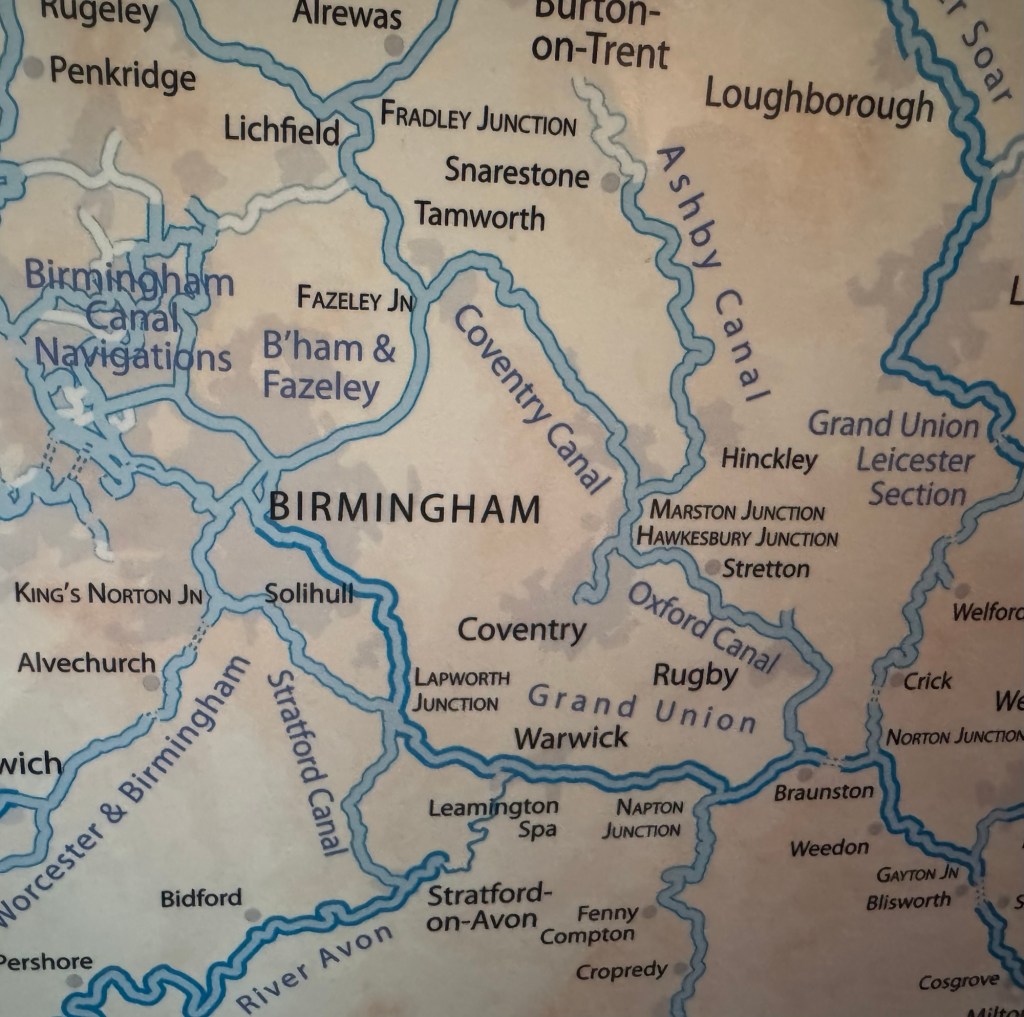
We are travelling towards Oxford on Narrowboat Thuis. That means navigating the Trent & Mersey, The Coventry, the North Oxford and finally the South Oxford Canals. It will take us about three weeks. There is one complication in this route. The Coventry Canal starts at Fradley Junction and travels down to Coventry city centre. But there is a gap of a few miles in the middle.
The good news is that this gap is filled by a chunk of the Birminghams and Fazeley Canal. Why?

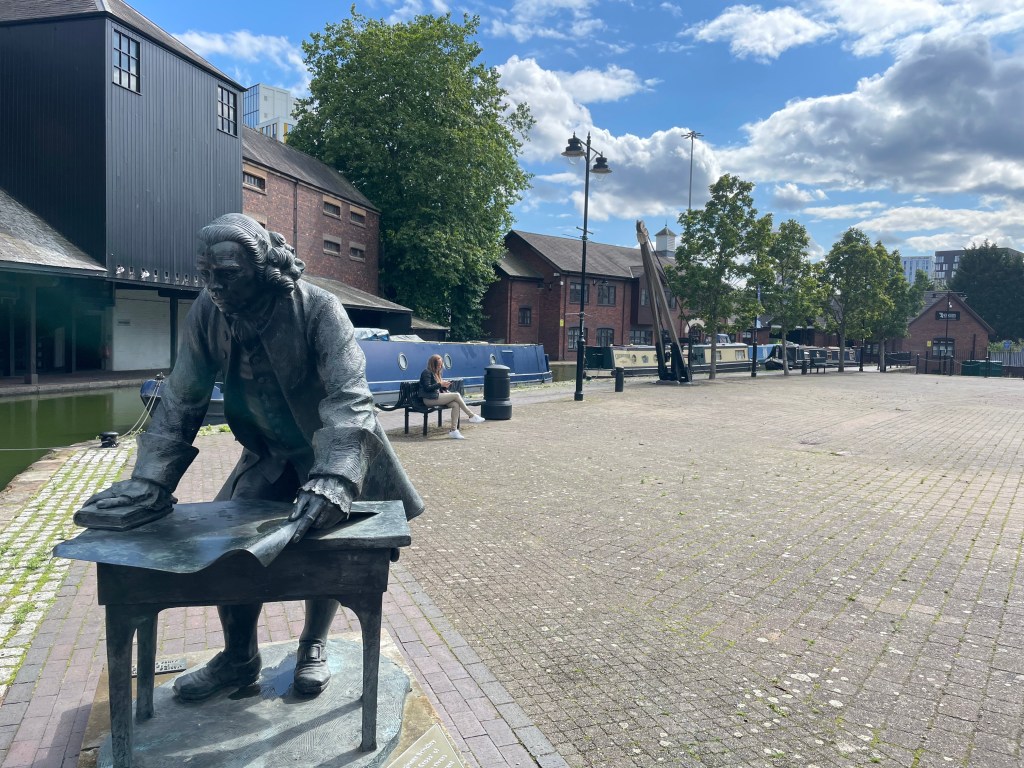
In a week in which the HS2 train scheme overran yet again, it is reminder that in history nothing changes. In 1768, at the height of canal building mania, a group of rich entrepreneurs got together to build the Coventry Canal, with the aim of connecting Coventry to the Bedworth coal fields and then the Trent & Mersey Canal at Fradley junction, joining Coventry to the North of England. They employed the greatest canal engineer of the time, James Brindley, who had previously planned the Bridgewater, the Chester, the Trent & Mersey and the Staffordshire & Worcester. Everyone was very optimistic.
At first, everything went well and in just a year they were bringing cheap coal from Bedworth to Coventry. But then the money began to run out and by 1771 they had sacked Brindley and gone bust. Eventually more money was found but it took till 1790 to extend the canal to Fazeley, where by that time the Birmingham and Fazeley canal had been built, connecting Birmingham to the Trent & Mersey at Whittington Brook.
Around the same time the Oxford Canal was completed, connecting the Coventry to Oxford and hence London on the Thames. This was immensely successful and at last the shareholders began to make money, big money. They wanted to realise their original plans, and were able to buy the stretch from Whittington Brook to Fradley from the Trent & Mersey. But the Birmingham and Fazeley refused to sell.
So there we are today, with the Coventry Canal split in the middle.
I love canal history. Our life today was enabled by a small number of entrepreneurs who lost or gained fortunes. And by thousands of poorly paid navvies, cutting the navigations with picks and shovels.
We are so lucky to be able to enjoy the fruit of their labours. And to remember their sacrifices.

 Pete's Blog