What to do on a narrowboat when the canal is closed?

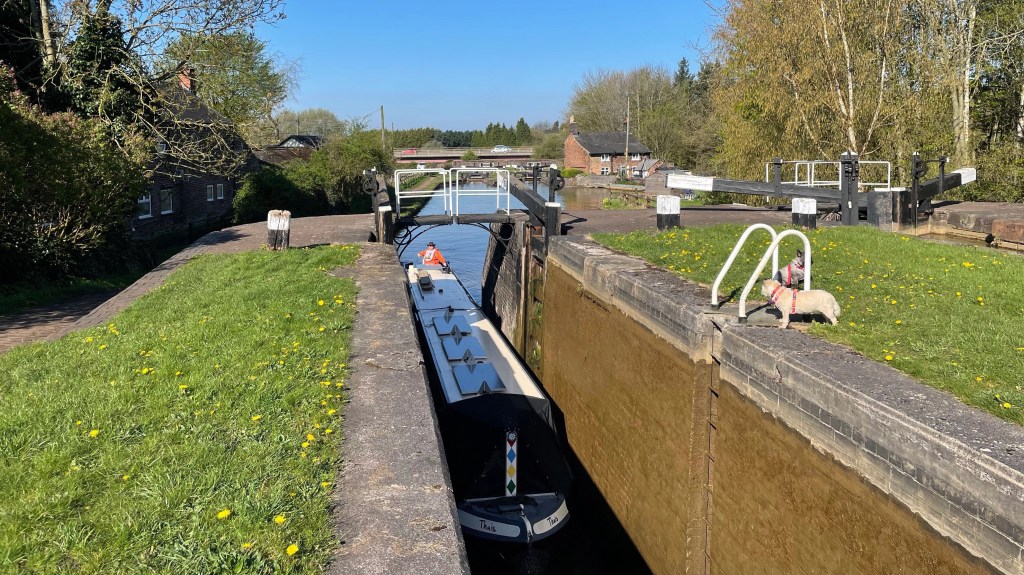
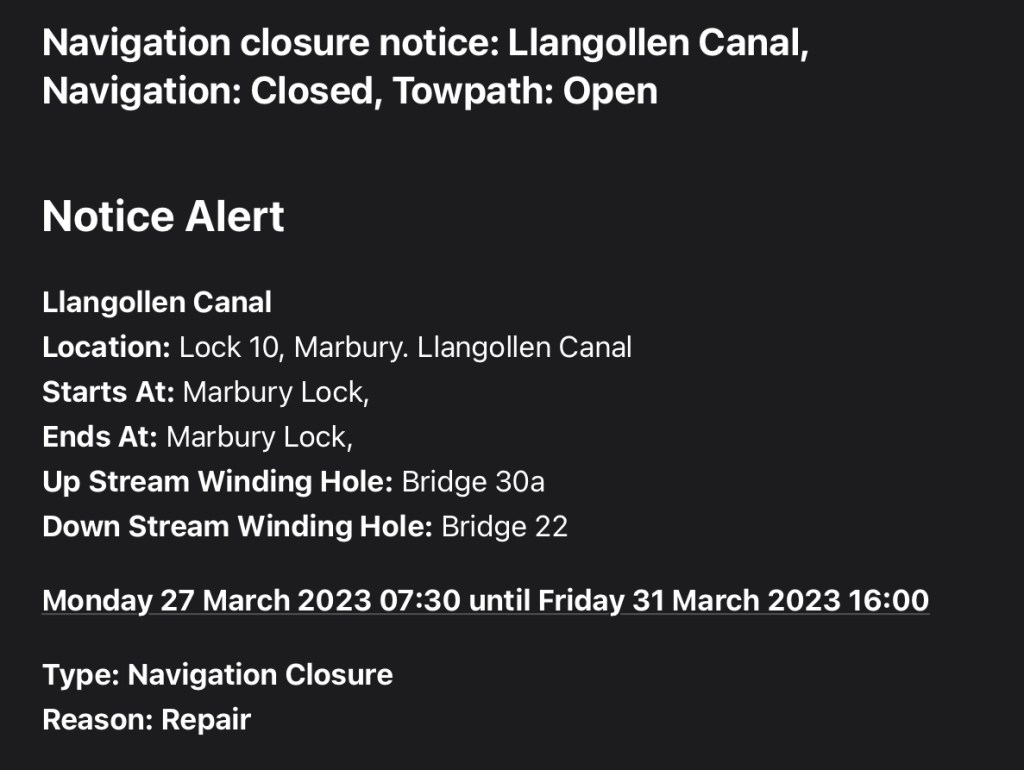
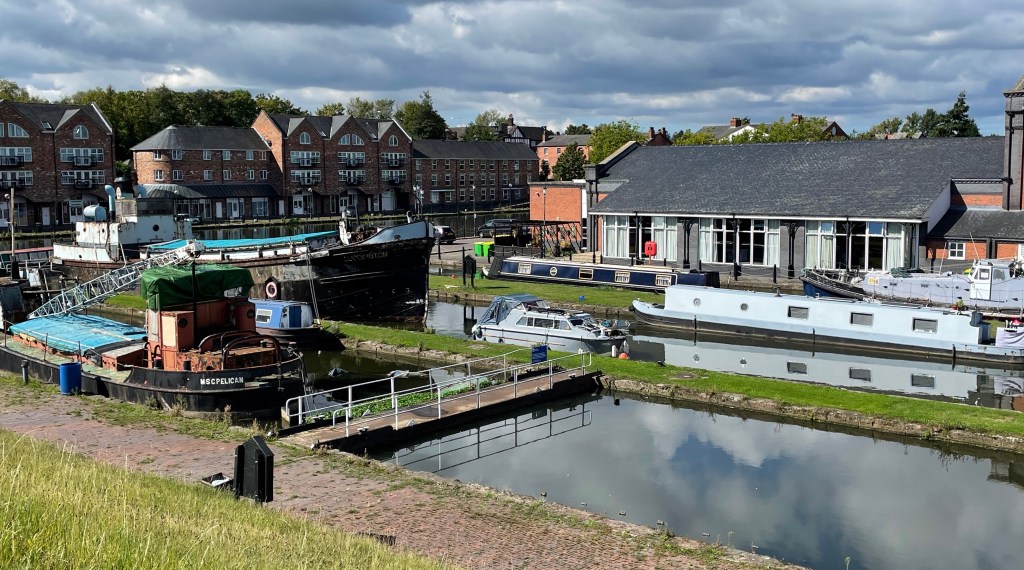
We were let down by the Canal and River Trust (CRT) this week. After a lovely weekend on the Montgomery Canal in Wales, we set off back along the Lllangollen with the aim to get to a mooring in Chester this Saturday. Unfortunately, when we got to Grindley Brook locks on Monday afternoon, we received this email from CRT:

There is a reality that with a 250 year old canal network, there will be times when things break unexpectedly. But in this case it was planned work, and we should have been notified well in advance. I am set up so that I get emails about any stoppages on the canals we travel, so that we can plan around them, and if this notice had been issued on 17th March, as it should have, we would have been well beyond the area before work started. But apparently they had a “system issue” which I suspect was more likely a “forgot to press the button issue”, so we did not know until too late.

This gave me two challenges. Firstly how to react to the CRT cock up. Should I get angry and shout at the poor agent on the end of the CRT helpline? Should I move the boat up to the stoppage area and shout at the workmen to work faster? Neither would have any impact except perhaps to make me feel better. No, after reflection we decided to treat the incident as one of those things that happens when you live on a narrowboat, and to make the most of it.

So my second challenge was how to make the most of it. I have been able to get a few jobs done on the boat – touching up some scratched paint, adding diesel bug inhibitor to my fuel tank, checking my weed hatch, getting a load of shopping. But much more fun has been a couple of bus adventures to local towns – Whitchurch and Shrewsbury. Shrewsbury in particular is a really lovely town, with Roman remains, a Norman mott and bailey castle, Medieval and Tudor shop fronts, and a bustling indoor market full of craft and food stalls.

The way I look at it is that if CRT had not made their mistake, I would never have had these extra few days, and to have had my adventures.

But I still hope that the work completes this afternoon and we can get back on our way. Living on a narrowboat is fun. Travelling on a narrowboat is more fun.

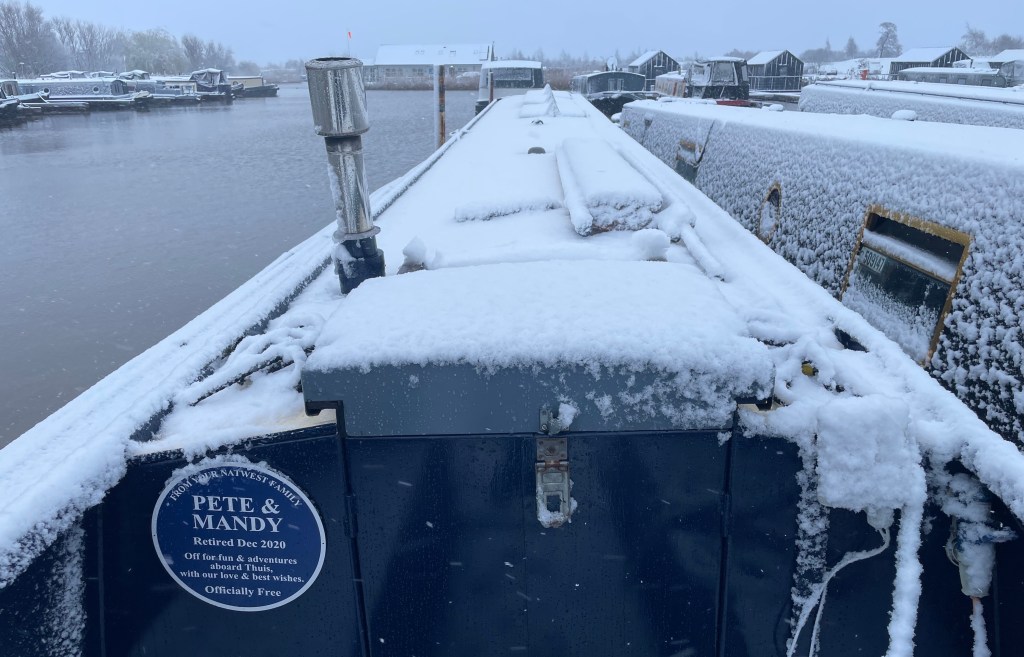
It may be snowing but it’s cozy inside the narrowboat

It is so good to be back on the boat.

It has been convenient to live in a house over winter. Easy to keep clean. Things don’t break as often. Plenty of space. But I have missed the boat.

The new kitchen was finally finished on Tuesday, so I drove down Wednesday with a car full of everything we need for a season – clothes, towels, crockery, cutlery, bedding. I am very pleased with the work the boat yard have done and they have kept the boat relatively tidy. Last year I had to clean lots of mould from surfaces. But this year a quick steam clean of the floor, a wipe of the insides of the cupboards, and we are fine. I have learnt that the key is to allow plenty of air circulation, so moving the bed away from the wall, having several windows open a little, and giving everything a good clean before we leave the boat in the autumn. All these things have helped.

I’m heading back to Scotland later, and then will return with Mandy and the dogs over the weekend. My plan was to get going early next week, with our first trip on the Lllangollen and Montgomery canals through Wales. But the forecast is that the current snow and sleet will continue all week, so I will have to do some pretty fancy negotiating to persuade Mandy that it is better to travel than to hunker down with the cozy stove in the boat.

Gongoozlers (people who like to watch the boats but don’t have one) often ask me if it is cold living on a narrowboat. You might think so because there is just a single metal skin and little insulation. But in fact they are very easy to keep warm and do not use much energy because there is such a small airspace inside. As I write this, it is lovely to watch the snow falling outside while feeling cozy and warm inside, with the boat very gently rocking in the wind.

But I have a list of jobs to be done. I would like to give the kitchen walls a quick coat of paint to make them look as fresh as the new units for when Mandy arrives.

I’m ready for the summer – in the snow. Are you?

How to find your way around the British Canals

I am getting excited now as we get nearer to returning to our narrowboat and travelling around the British canals this summer. We have been having work done on the boat including a new kitchen, but that should be ready soon, so hopefully by the end of the month we will be back.

The UK canal and river network is extensive – some 2000 miles – travelling through vast tracts of countryside, and connecting most towns & cities. Before the railways it was the best and fastest way of carrying goods from place to place, and despite falling into disrepair in the first half of the twentieth century, most of the navigations (the official name) are now open to traffic again. Volunteers and the Canal & River Trust keep the waters clear and the locks operating. It is somewhat easier than other countries because most of the equipment is self service and we can take our narrowboat anywhere we like, whenever we like.

Just a few of my guides

So of course that begs the question of how we know where to go. The answer is a mixture between 21st and 19th century technologies. There are some great apps and websites. One of our favourites is “Canal Plan AC” website, which is brilliant at working out how long it will take us to make a journey, and where likely stops are along the way. It takes account of fast and slow navigations, and time to get through locks, as well as how many hours a day we want to travel, and where are good places to moor. The other app on my phone is “Open Canal Map” which allows me to track our journey live and zoom in and out of the canal maps, for instance to see where a water point is, or a recent stoppage.

But I have to admit, despite the advantages of technology, I prefer to use proper paper books. There are two sets of canal books in common use in the UK – the Nicholson Guides and the Pearson Guides. Pearsons are more chatty and have simplified maps. Nicholsons are more comprehensive and have the detailed Ordnance Survey maps. Both guides have been around for over 50 years and are updated every few years. I had always thought that was done by hundreds of editors but by coincidence we have become friends with Jonathan Mosse, who lives on a boat near us in Scotland, and does most of the work to keep Nicholson guides up to date. When he started in the 1970s, he would spend his days boating and cycling along canals. These days he can do a lot of the research online, but he is still always grateful for updates from boaters like ourselves, who travel the canals every day, and can let him know when a bridge number has changed or a pub has closed.

This week, he kindly sent me the guides that have been updated for 2023 – covering the North West of England. They are shiny and new but it will not take long till they are covered in muddy thumb prints and hand marked updates. I feel privileged to play a small part in keeping everyone informed as we share the navigations.

If you have never had a narrowboat holiday in the UK, I recommend it. The slow pace of life will bring mindfulness and calm, even if just for a week. And don’t forget to get a copy of your local guides.

Does East Lothian have the best coastal walk in Scotland?

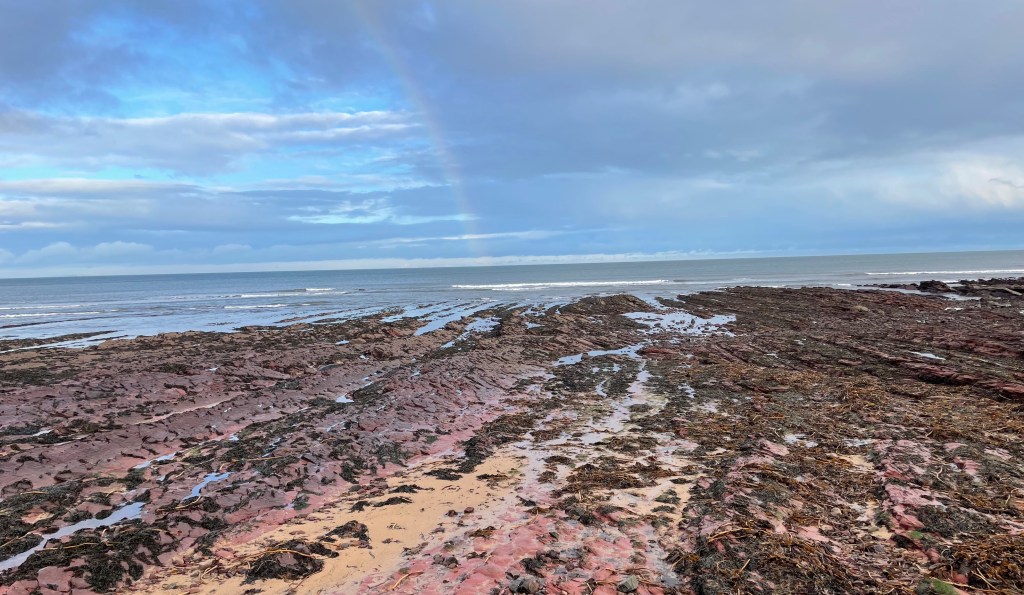
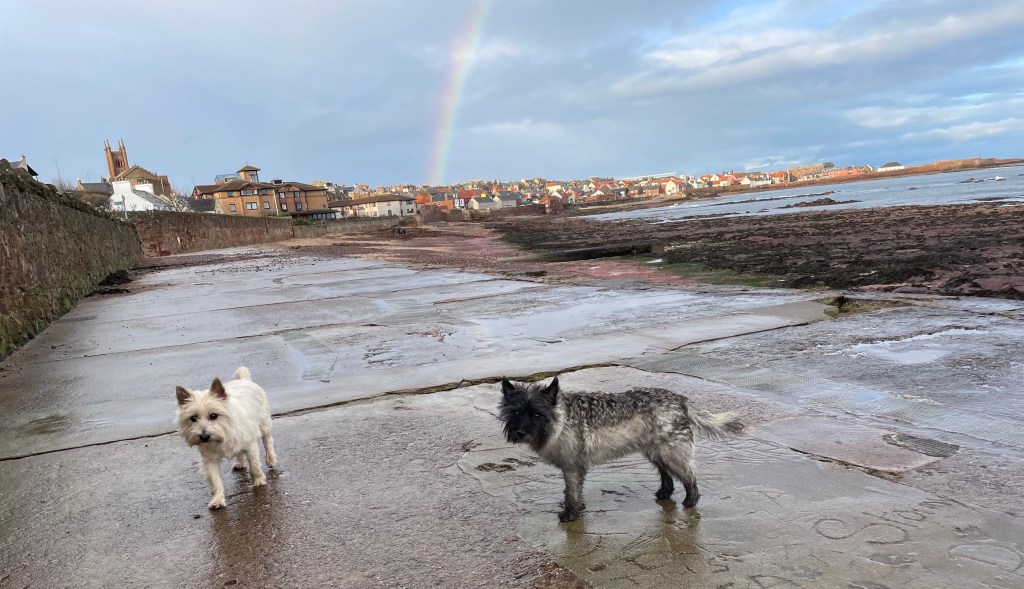
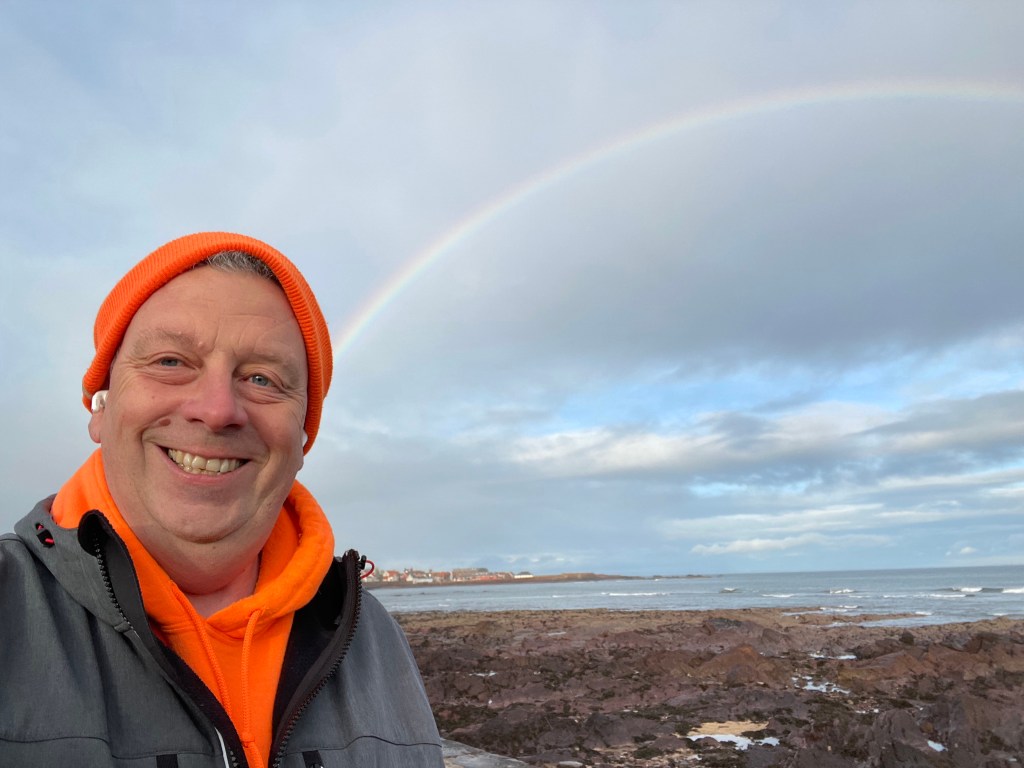
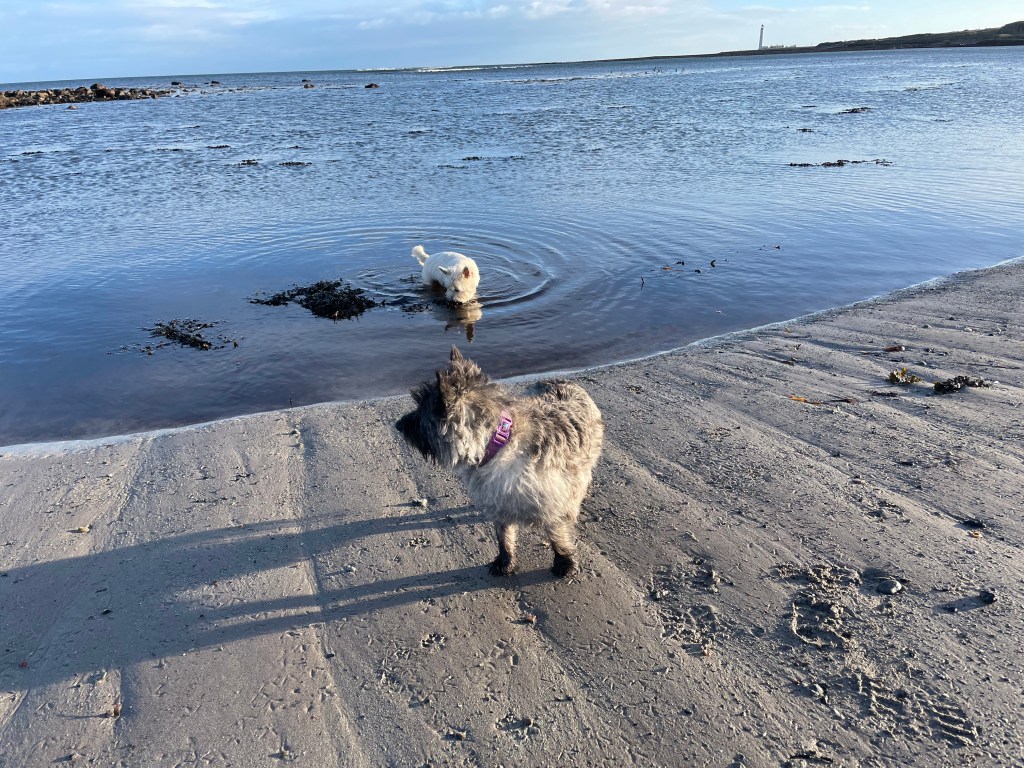
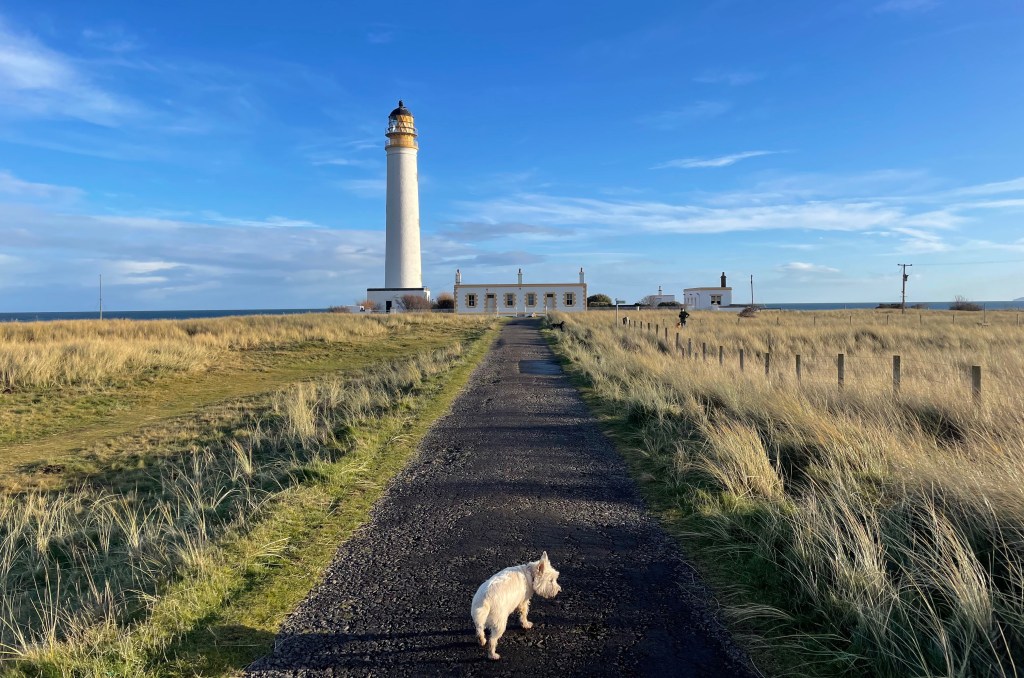
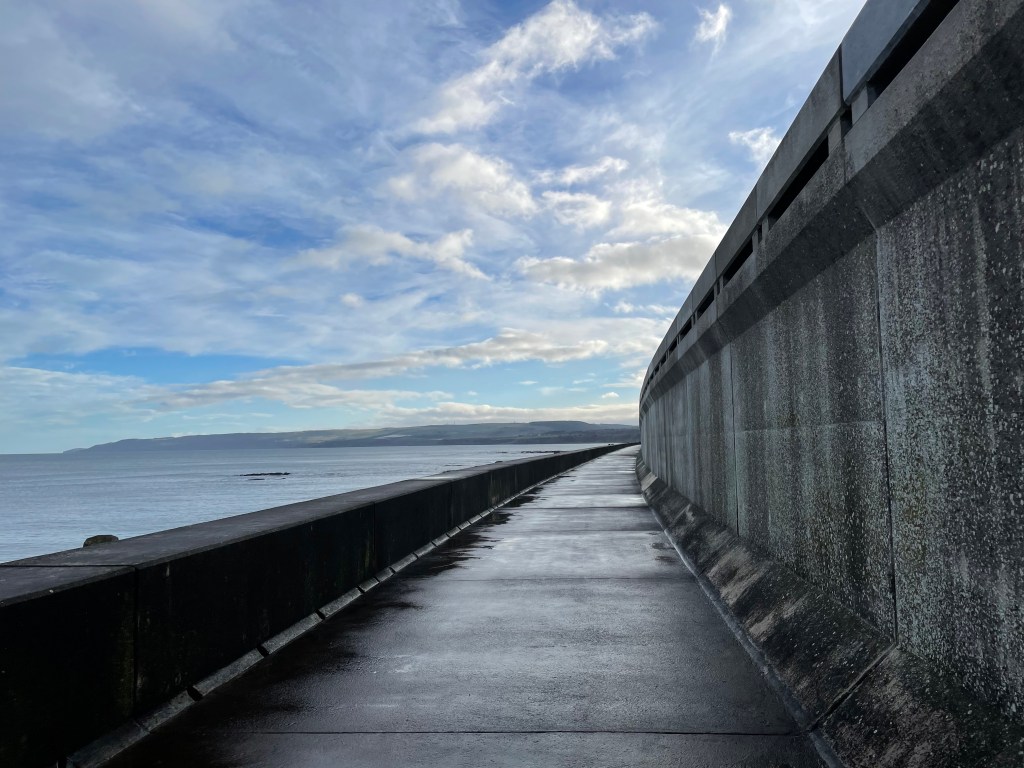
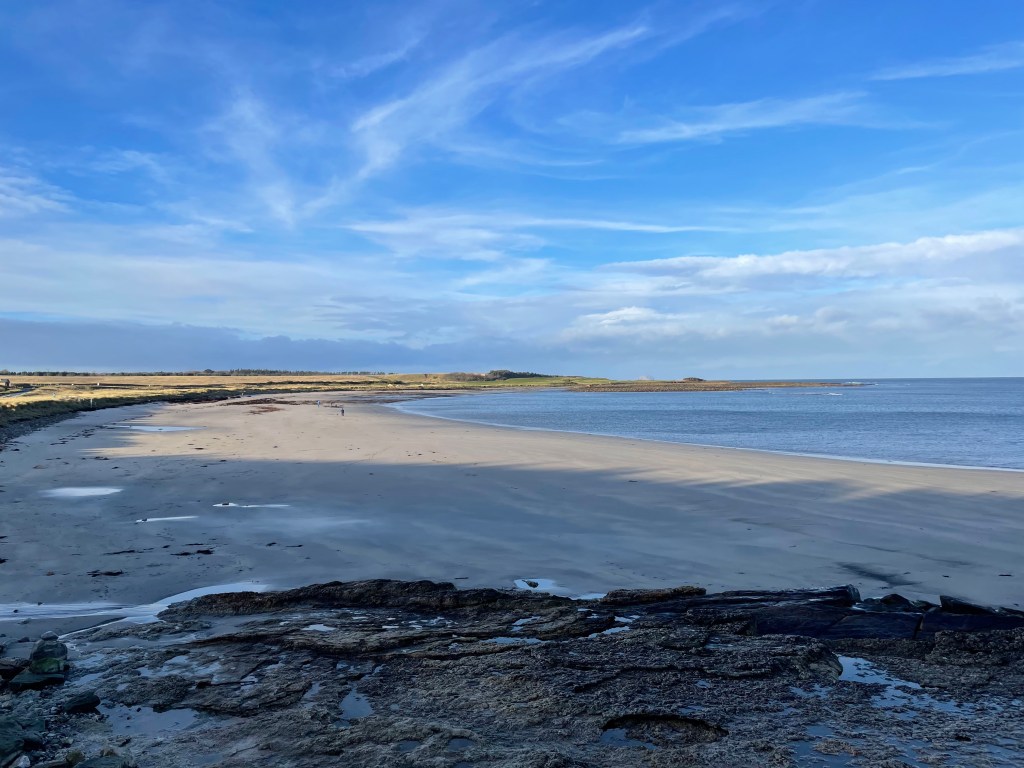
On Thursday I had a most wonderful post Christmas walk from Dunbar to Cockburnspath in East Lothian. We managed to find a window between the heavy rains, and the sun was low in the sky, giving a lovely light over the sea.

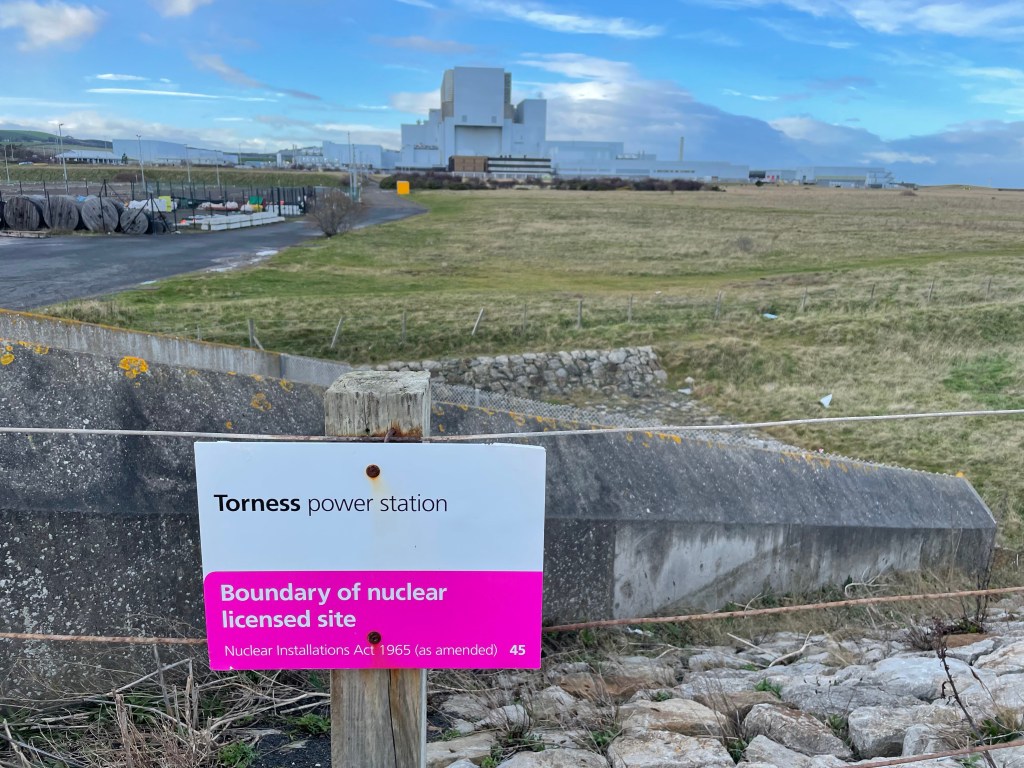
Scotland has amazing countryside, from mountains and munros to lochs and lakes. Some of my favourite walks are along the coast. The highlands have emptiness and drama. The western isles have the longest white sand beaches. Orkney and Shetland have prehistoric coastal settlements. The north east coast has craggy cliffs. But East Lothian is one of my favourites. The John Muir Way runs right along the edge, past golf courses, a nuclear power station, beautiful towns, classic beaches, cliffs, and rocks. All kinds of coast in one short walk.

Where is your favourite coastal walk?

Is there any point in a static narrowboat?

This week we are back at the narrowboat, moored in a marina near Chester. The weather is very autumnal – strong winds and rain. So we are not travelling. We have the warm stove on, are watching Christmas movies and walking the dogs.

You may wonder what the point is in coming to the boat of we aren’t travelling. Well I don’t really understand why, but when we arrive we immediately relax. Even the dogs find a comfy spot and curl up. Years ago we used to part-own a static caravan and that had much the same feel. It is as if all the worries of the world are left at home and we can chill.

Some canal boaters never move their boats. I heard this week of a new “wide beam” coming to this marina, which is too wide to travel through the bridges from here, so will be marooned. The owners don’t care. They just like staying on the water. The marina owners also recently installed five floating pods which can be hired by anyone. They are booked out at weekends, even at this time of year.

So I do get it. And I am really enjoying this week. But I confess that a little part of me can’t wait till the spring, when we will be off on our travels again. It’s like people that enjoy cruise ships. Some just want to stay on the ship. Others enjoy the facilities but want to see new things, meet new people.

Which would you prefer?

Going on a road trip

While we have been travelling on the narrowboat over the past two years we got to visit a lot of friends and family we had not seen since lockdown. But there were a few we missed out so this week we set off on a road trip. I am writing this in a cozy pub hotel near Stratford on Avon. This morning we are off to Hove in Sussex to see one of our sons. Then from there we travel to Surrey to stay with our sister in law, and then on to a vast mansion on the south Devon coast, where some friends are house sitting. From there it is to the far end of Cornwall, to stay at the Pig Hotel, where our other son is working. Back via Salisbury to see my Mum, and then to a village near Cambridge where Mandy’s Aunt lives. Finally we stay with Mandy’s brother in Lancashire and then home to Scotland via our friends in the Yorkshire Dales.

It will be quite an adventure and a good run out for our new car. Our old Qashqai had served us well for five years but was costing us more to maintain than it was worth, so after much prevaricating we have opted for a 2019 Kia Sportage. It is absolutely fine to drive but petrol heads will be disappointed that the main criteria for purchase were space in the boot for our dogs’ crate, and lots of “toys” inside like sat nav, apple play, parking camera. Immediately after signing for the car, I felt a bit of post purchase dissonance – would an XC40 have been more sensible, could I have negotiated a better deal, would a 2020 model have been better? But now we have had it for a few days, I am happy. It will do us very nicely.

Some of the route aligns with canals we have traversed this year. Journeys that took us several weeks in the boat are completed in a few hours. I prefer boating because you see so much more on the way but I admit I am enjoying being able to go left and right as well as straight on, as we do on a canal. When we see friends from the boat, they sometimes suggest meeting at some pub in the countryside, and we have to point out that the narrowboat is not great across land!

So on with the trip. It may not be Route 66, or even the Highlands North Coast 500, which we enjoyed a few years ago, but I am excited. I quite enjoy this retirement lark.

What is a night at the museum really like?

Last weekend we spent a couple of days at a very special mooring. Ellesmere Port is a run down small industrial town, on the south bank of the river Mersey and next to the Manchester Ship Canal. It does not have much to commend it, but it does have one gem. It is home to the National Waterways Museum. The old port is at the end of the Shropshire Union canal, where is meets the ship canal to the sea. It was once a thriving area, employing hundreds of people loading and unloading goods. After years of neglect, in the 1970’s a group of volunteers got together to clean it up and turn it into a boat museum. They did an amazing job and today it houses several acres of old buildings, exhibitions, boats and history. And best of all, we got to moor overnight in the middle of it.

We stayed for a couple of nights, and during the day got to visit all the exhibits and look around the town. But even better, in the evenings, the staff locked up the museum gates and we were left all alone. We had a special key so we could get in and out, but I loved wandering around the museum with the dogs, taking a close up look at the old terraced houses, the heavy port equipment, the boats themselves. It was kind of spooky although I did not see any ghosts. I could, however, imagine the dock workers busy in the docks, and the boat owners, living in their tiny cabins, behind a large barge full of coal or grain.

We are nearing the end of our six month narrowboat trip for this year, and this was a great experience to add to the memories. A night at the museum may not have been quite like in the movies but it was something very special nevertheless.

Welcome to the wonderful city of Chester

This week we took the Shropshire Union canal down into Chester, an ancient city that grew up from a Roman garrison settlement called Deva. The Romans built it here because it was roughly in the middle of the area of the UK they had conquered, it had good Roman road connections, and at the time it had good access to the sea through the river Dee. After the Romans, it continued as a successful medieval port city, and the Normans developed it further with a castle, a large cathedral and extended city walls.

Along the city walls, overlooking the canal.

These walls are possibly what Chester is most famous for. I walked a couple of times all the way around them, there are fine views across the countryside up to the Wirral and down to Wales. You can look down on Chester racecourse. You can see the Roman amphitheatre and ruined columns in a garden. The north side has the canal running alongside, utilising what once would have been a moat.

We moored up in a basin near the city centre, and just across from Telford’s Warehouse, a large pub, based in the headquarters of Thomas Telford, who built this canal. We had a fine meal with excellent craft beers, and even more excellent company of two of our nieces and a new boyfriend, who had to undergo a full inquisition from me and Mandy, testing for suitability. He passed!

The weather has turned this week and it has become wet autumn. But we have slowed down our travelling as we near the end of our summer on the boat, so a bit of rain can usually be avoided. And that has given more time for visiting Chester. Next year we plan to do a little less travelling and a little more visiting. Perhaps after two years, we are realising that retirement is more a marathon than a sprint.

Lovely city, Chester.

Life as a canal dog

We are back travelling on the narrowboat and this week have been on the oldest navigation in the UK – the River Wey – with its 17th Century shallow cuttings and locks. And then back on the RIver Thames, heading into London – one of the widest rivers we have been on. As I write this I am feeling distinctly nervous about tomorrow, when we travel on the tidal Thames for the first time, from Teddington to Brentford. But two of the family on the boat don’t seem nervous at all – our dogs.

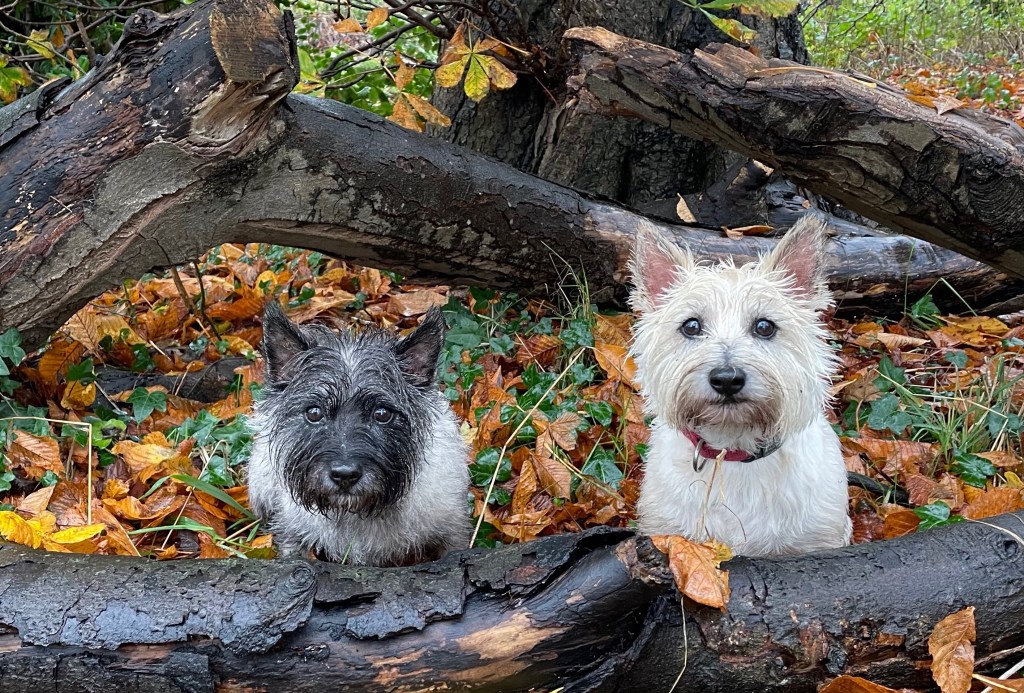
Lulu and Ziggy

The dogs adapt very quickly to canal life when we return to the boat from a house. They wake up about 7am and I take them for a walk, to get their main exercise of the day and to do their ablutions before breakfast. We like to go for a walk early before the day gets too hot, so that they do not get in the way of any boating plans we have. We usually set off on the boat about 9am with the dogs in their harnesses and tied to a pole in the middle of the back deck. This allows them to get around the deck to see anything they want, but prevents them falling in, which has happened a couple of times.

Sometimes they just sit or lie down, and take in the world. Sometimes they bark at other dogs on the towpath, or at Canadian geese, which for some reason they seem to dislike. Either way, just being there seems to tire them out. Their brains must be so full of the new things they can see, hear or smell. Sometimes they are so tired or hot that we put them back in the boat for a snooze. Sometimes they stay our with us. At locks their preference is to come onto the land with me and “help”. They usually sit by a lock ladder, watching and judging everything that is going on. If there are no locks, we will usually take them for a wander at some point, just to stretch their legs.

We often finish boating in the early afternoon, and if the dogs want, they get another walk. When they are in the boat, they can’t climb out without being lifted but it is surprising how rarely they ask to go out. They must have strong bladders! They have their tea at 5pm and then usually cuddle us while we watch TV, before their final micro walk around 8.30. When they come back from that they are so tired they take themselves to bed and sleep through.

It is not a bad life being a canal dog. Certainly Lulu and Ziggy seem to enjoy it, and we love to have them with us.

What is a treacle fair?

This week we have been moored in a marina near Aldermaston, and on Saturday, while walking the dogs, I came across a number of posters advertising a “treacle fair”. This is not something I had come across before so I asked some locals and it turns out that this is an annual country fête in the village of Tadley. It will not surprise you that we decided to go.

Ferret Racing

It was a very odd but actually quite rewarding experience. There was a rock choir of about 20 pensioners singing enthusiastically. There was a massive “crew” of about 100 teenage dancers, whose routine seemed to be waving arms and running towards each other. There were beer and tea tents. There were burger vans, a small funfair, charity stalls with raffles. There was a model railway and a hat stall. Even better were the special events in the arena. Dog agility was pretty impressive, birds of prey flying was even more so. Best of all was the ferret racing. Four ferrets put into drain pipes with obstacles, to see which would reach the end first. Don’t worry, there was no cruelty here – these were pet ferrets who were just having fun playing in pipes. Each race could last over 15 minutes, as they wandered up and down the pipes, never quite reaching the end.

Some people say the British are eccentric. For me, Tadley Treacle Fair is a great example that shows yes we are. And it is absolutely fine.

Oh by the way, it is called a “treacle” fair because from at least the nineteenth century, people believed there were treacle mines in Tadley. I love it.

Blog at WordPress.com.

Up ↑