Is family tree research too intrusive?

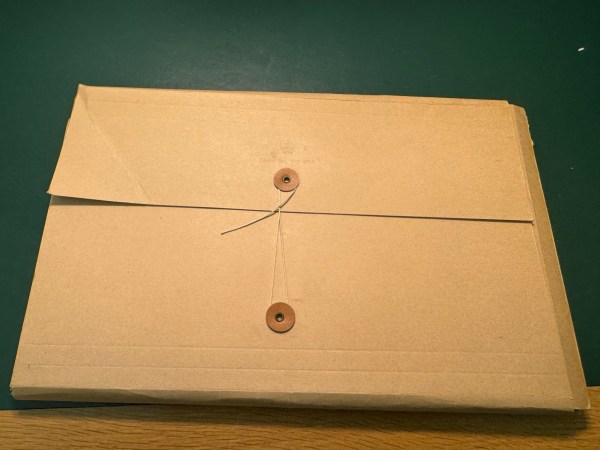
Tuesday was a windy, rainy day – not a day to move the Narrowboat. So we moored up in Banbury and I decided to go on an adventure. As part of my family tree research, I have been looking into my great uncle Francis Chase Green-Price. He was a fascinating man, who joined the British Army in the First World War, and then moved to India, as part of the British Empire, eventually reaching the rank of Lieutenant-Colonel. This much I knew, but his military records are not online. They are kept in a vault of the British Library. And my adventure was to hop on a train to London to see them.
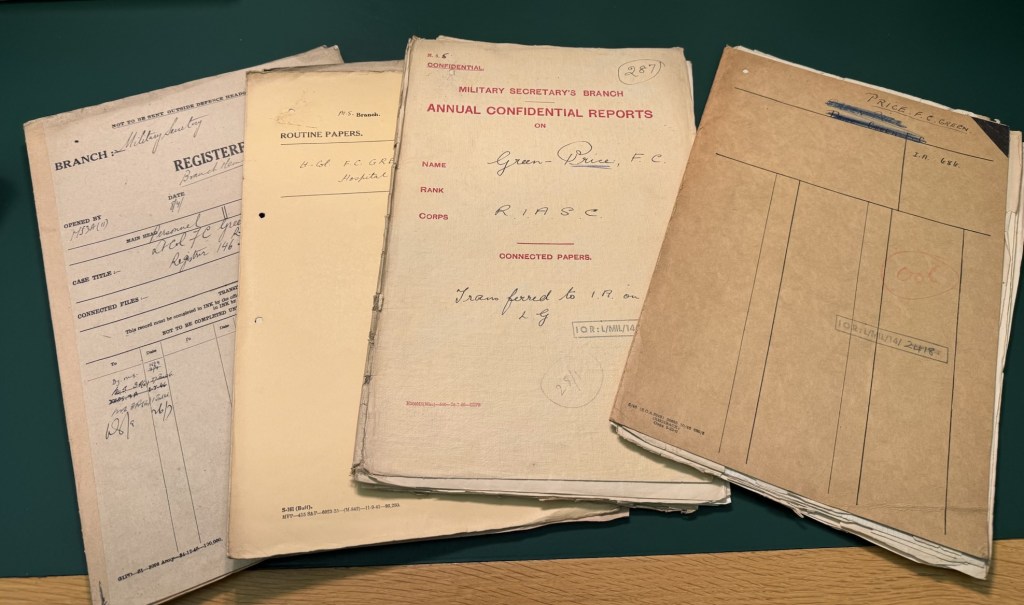
For many soldiers, records consist of a couple of notes, but for Frank, there was a large folder of around a hundred pages. I spent a very happy afternoon going through all of them and trying to recreate his military life. About thirty years, including both world wars, and working in Britain, India, China, Egypt and Sudan.

Much of the material was factual, such as lists of units he worked in. There was also a very interesting folder of correspondence about his retirement. It was 1946, his role had become redundant and India was about to become independent. The army had recognised this and ordered him to retire. But as with all big organisations there are rules, and paper pushers across India were trying to enforce the rule that he was a few months too young to retire. Eventually common sense prevailed and he returned to the UK.

The folder that was most interesting was a complete set of his annual performance reviews. I could follow his progression through the years and see his strengths and weaknesses. I also learnt a new word. Apparently he was a good “Shikar”, which means he hunted big game in his spare time.

Reading it also made me feel a little awkward. In some HR files somewhere are probably my performance reviews across the years. I am not sure I would want some geeky future family member reading them.

I do enjoy family tree research, and when I am looking at someone from many generations ago, I do not feel any guilt imagining what they were like. But Frank’s son is still alive and am I being too intrusive looking at papers like these, even if they are publicly available to any researcher?

Fortunately most of what I found was positive. Frank appears to have been a quiet, caring officer, who was loved by his soldiers, whether British or Indian. This certainly resonated with me, because when I was working I also had Indian and UK teams.

Sorry Great Uncle Frank for looking through your personal personnel files. But I think you had an interesting life, and you are remembered.

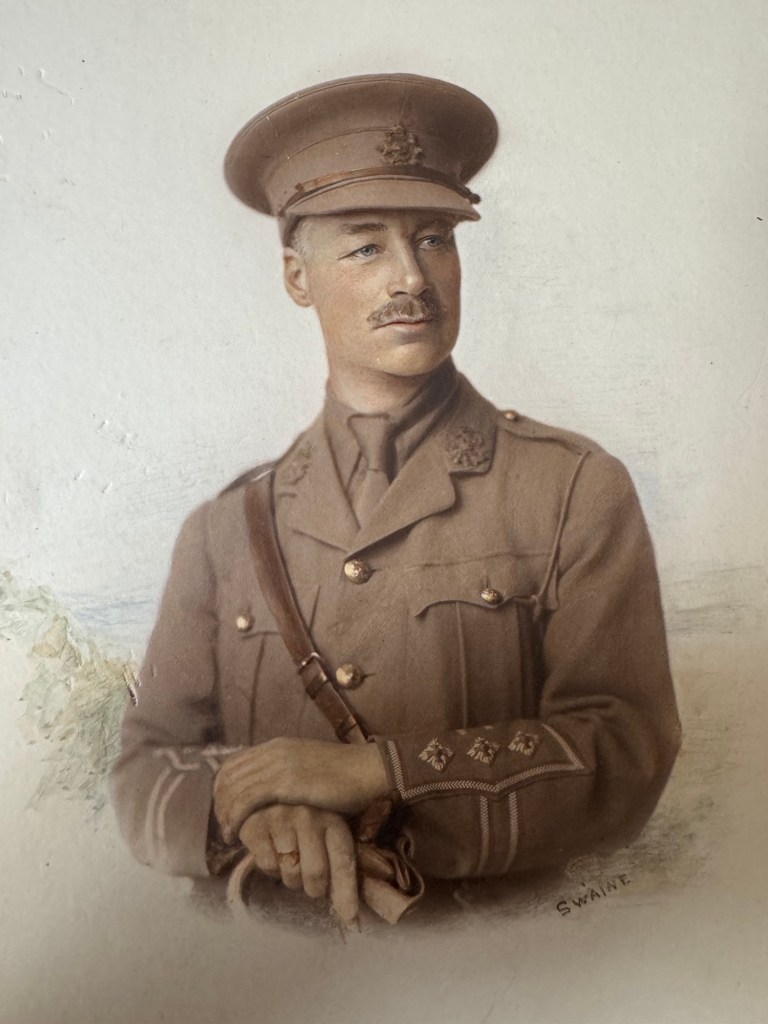
Who is this man?

I have written before that one of my hobbies is researching my family tree. This week I received a pack of old photographs from one of my Mum’s cousins. He has been tidying his house and knew that I am interested in the family, so sent them to me. He kindly annotated the backs of the pictures when he knew who they were, but this photograph was blank.

Most of the pictures are from the family of a man called John Davies, a distant cousin who was a chaplain serving in the Royal Navy, I knew the navy had chaplains but did not realise that they sailed on the ships for many months, just like ordinary sailors. John also served on submarines where he said that the confined space led to depression and need of a chaplain.

There were also photographs and newspaper articles about John’s relations. His father and grandfather were also priests, working in a small area of Wales. His grandmother was a very posh looking woman called Dorothy Jebb. She is my great great aunt and came from a very wealthy family.

But I am still stuck on this photograph. He looks a very smart soldier, I am guessing from the First World War. With three crosses on his wrist, perhaps he was a captain? John and his father both had low eyebrows, so it is not them.

In future times perhaps AI will allow me to search this photograph and find who it was, but for now I think it is sad that such a photograph, maybe made for a mother or sweetheart, cannot be identified. I will raise a glass to him.

How far back does your family tree go?

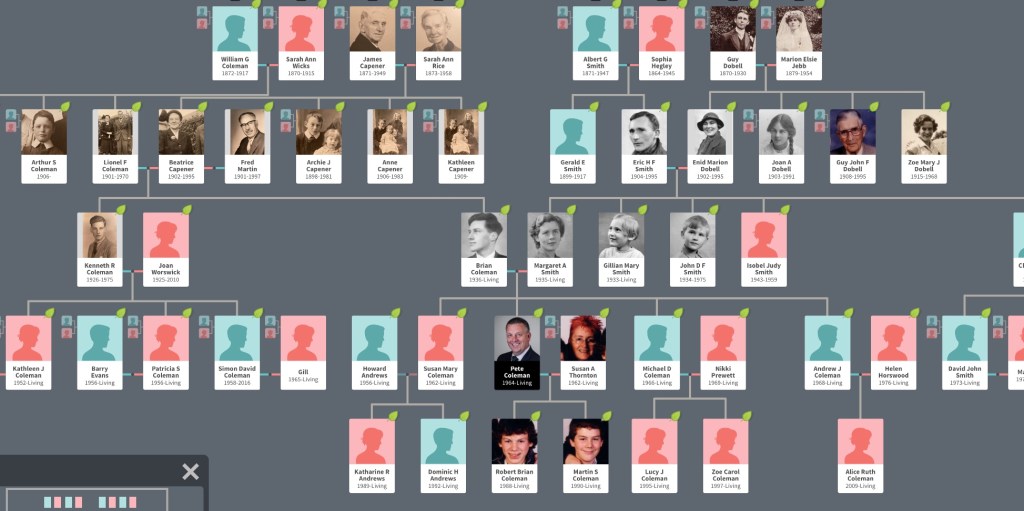
This week I have been a genealogist. Several years ago I built up my family tree with the aid of the Genes Reunited website, stories from older relatives and lots of censuses, birth, wedding and death certificates, together with visits to graveyards and old houses.

A small section of my tree

I have not kept the tree up to date and decided to transfer it to the Ancestry.co.uk website, so there was quite a lot of work to do. I also recently received a number of old photographs – one pile from an old tin chest in my Mum’s loft, that turned out to contain all the papers left to my Dad when his parents died; one pile from my Mum’s cousin, who’s own mother recently passed away; and one pile from my wife’s aunt, who’s husband died last year.

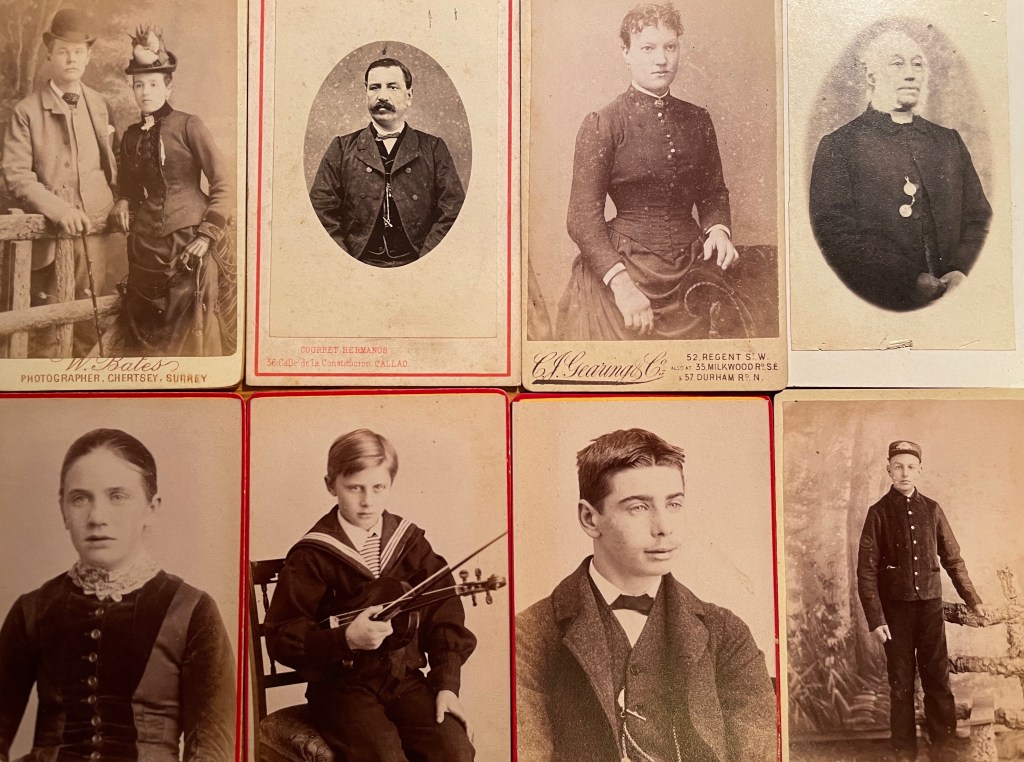
It has been time consuming and a little bit obsessive. At one point my wife instructed me in no uncertain terms that I needed to come down for dinner, because I had been sitting in my study for over 12 hours without a break. But it has also been both rewarding and a little sad. Rewarding because I really find it exciting to find our new things and to connect with the past. If you have watched “Who Do You Think You Are?” You will know the experience. But what has been sad is finding quite a few photographs where I can’t identify the people. I have pictures that have been kept carefully for over a hundred years, but where everyone who could have identify them has now gone. Here are a few examples:

Some of my relatives – but who are they?

So this week, I have one request. If you have pictures or papers from the past, please annotate them on the back with the names of people involved. Please use real names, not things like “Grannie and my Uncle”. By doing so, future genealogists like me will be able to connect faces to names, and keep them alive in memories. Do it this weekend.

Blog at WordPress.com.

Up ↑