What is the best time of year to be on a Narrowboat?

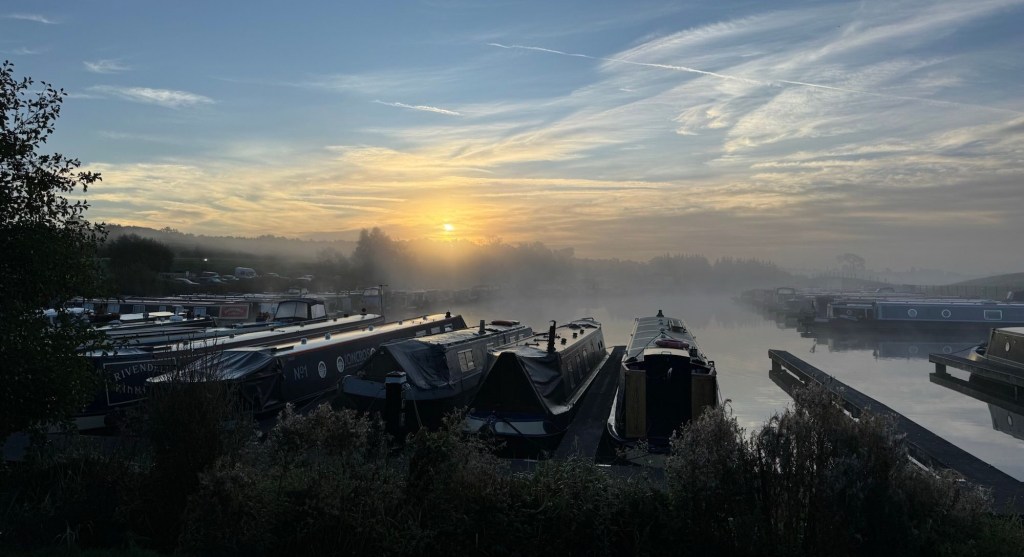
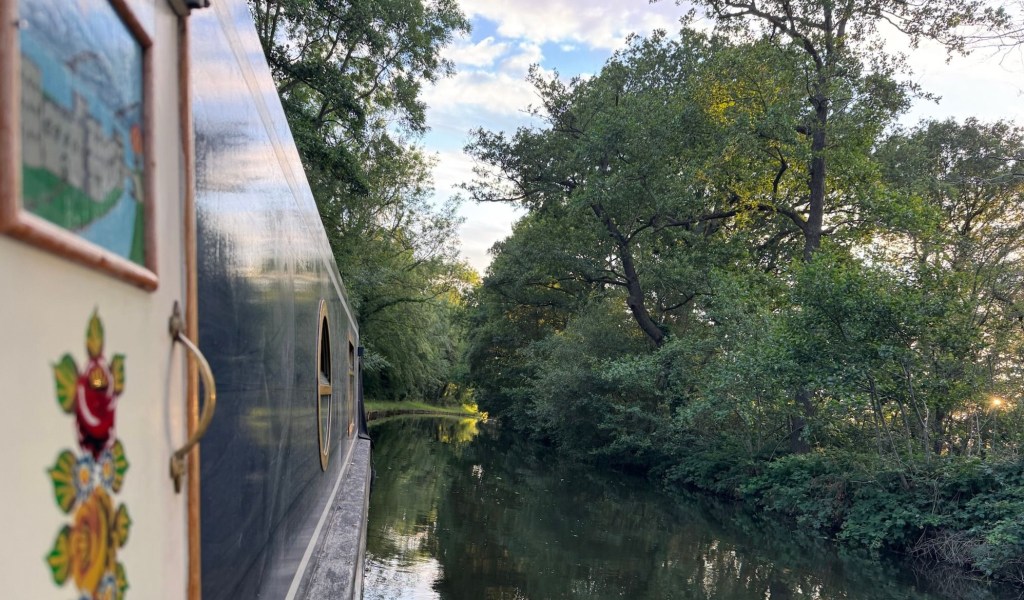
This week has certainly felt like Autumn. A lot of rain. Chilly mornings. Leaves falling from the trees. It is one of my favourite times of year on Narrowboat Thuis.

I know that other boaters take a different view. So let’s look at the pros and cons of going boating in each season.

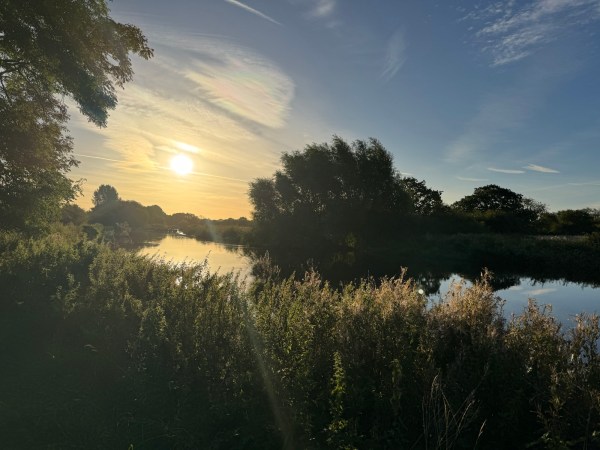
Spring is a lovely time to be out in the countryside. The plants are beginning to grow. Birds are having their chicks. The days are getting longer. I love the sunrises and sunsets. But the remnants of winter remain. Towpaths are a mess. My fingers get frozen holding the tiller.

It is great to be outside on those long warm days of summer. Shorts and t shirts. Everyone seems cheerful. The canal is warm if I need to clear the weed hatch. But so many hire boaters are holding up the locks. And our tin can of a home gets so very hot when the sun has been on it all day.

Autumn has a great mix of cold mornings and warm days. We get the waterways back to ourselves. But it is getting darker and my solar no longer fills the batteries without help. And I don’t really like cruising in the rain.

For the hardy narrow boaters, winter is the best. There is a real sense of community on the canals. We are special because we are still out when everyone else is in a house. But it is just too muddy when you have a dog. You end up constantly cleaning. And there are so many winter stoppages for things to get fixed, that it is hard to travel.

I think the truth is that each season has its own attractions, and you can have wonderful boating days at any time of year. We are very lucky to have the opportunity.

Is Ironbridge the best museum in the UK?

You may remember that I am a lifetime National Trust member. Whether we are tootling around the UK in Narrowboat Thuis, staying in a cottage on one of our long autumn holidays, or just being at home, there is nothing better for me than a day out to a stately home, or fascinating museum.

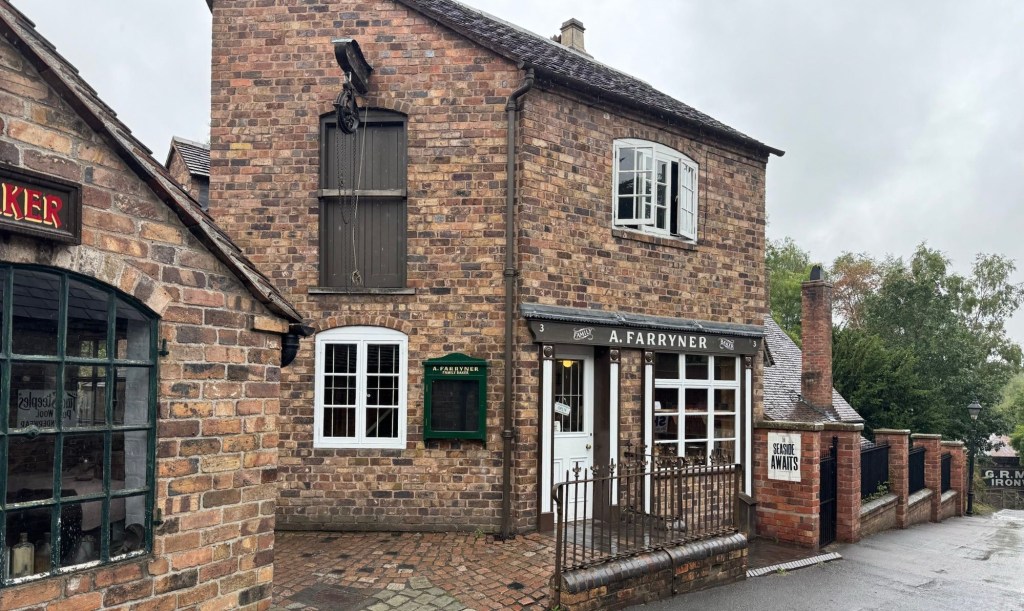
My NT card gives me free access to any of their properties which is great but the downside is that I resent paying to go to non-NT sites. One of those places I would have liked to visit but haven’t is Ironbridge, a small town near Telford, with about six museums celebrating their incredible industrial history. So you can imagine my delight last year when the Trust took over these museums. And on a very wet Saturday this week I went to see them.

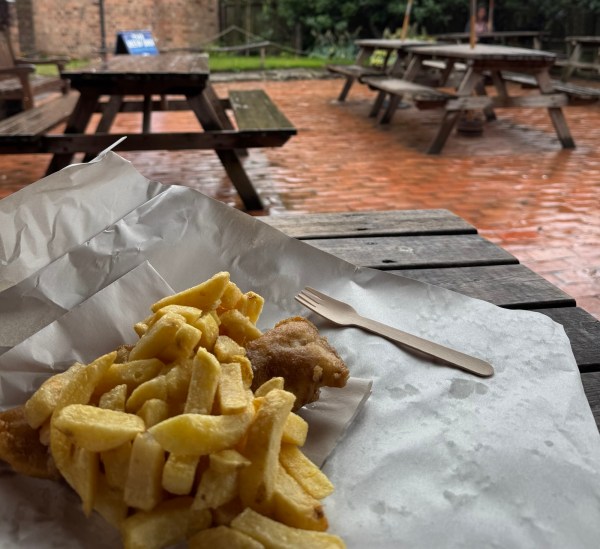
I visited Jackfield Tile Museum, which was fascinating. I did not realise how complex tile making can be. I visited Coalbrookdale Museum of Iron, with many displays showing how this area became the centre of iron making. My favourite museum however was Blists Hill Victorian town. It is a village of Victorian buildings staffed by volunteer actors. I got to chat to the blacksmith, chemist, post master, policeman, draper, publican, baker and others about what it was like in Victorian times. The baker sells their own bread, the pub sells local beer, and best of all there is a reproduction fish and chip shop, with everything fried in beef dripping. I felt I had to sample the goods for my history education. Yummy.

It was a great day out. We are back travelling on the boat now, and moored in a village called Alrewas. It grew up around the canal, so much of it is Victorian. It also has a chip shop but fish and chips twice in a week is possibly too much. Possibly.

Back on the boat but is there any water?

We have been back on Narrowboat Thuis for over a week now and as always it has been very relaxing. There is something about this boat that makes us say “aaaaah” when we get back here. This time, after six weeks of weddings, anniversaries, doctors, dentists, visitors, visits and people, people, people, it has been especially special to be back in our tin can. Mandy has been watching Midsomer Murders and doing her craft. I have been finding jobs to do and walking the dog. The big question we knew we would face was whether there would be enough water in the canals to travel.

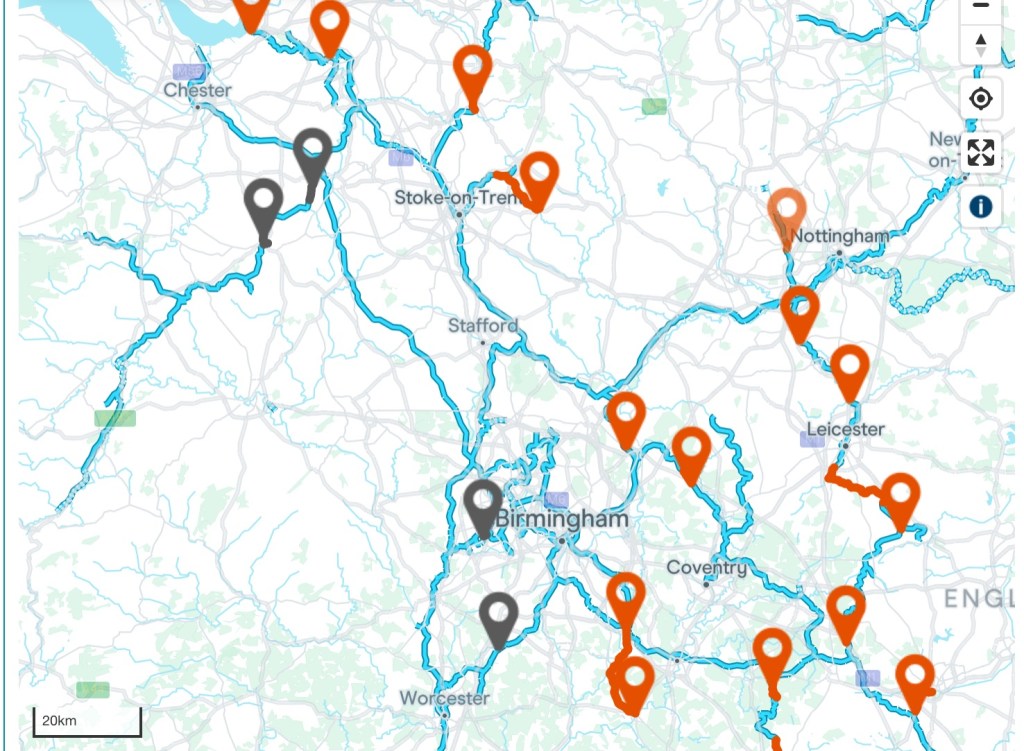
It has been a summer of drought, and we have seen more and more canals and rivers closing to boat traffic. From where we are in Stone the Northern routes are largely blocked. The Caldon is closed. Heartbreak hill on the Trent & Mersey is closed. Bosley locks on the Macclesfield are closed (yet again). We can go South, but the Atherstone lock flight on the Coventry is closed, and the Trent looks challenging beyond Alrewas.

We decided to go out for a recce trip just down to one of our favourite moorings near Weston. It was lovely, very peaceful with few boats on the canal. On the return journey we needed to wind (turn around) just below Weston lock and that is where the reality of low water became obvious. The levels were really low and boat after boat was getting stuck leaving the lock. We made it out and Mandy did a great job of winding without getting caught in the mud. But it was tricky.

The irony now is that we have come back to the marina because there is too much rain. As I write this, the skies are completely dark, the rain is rattling across the roof, and there are huge crashes of thunder and lightning. It is certainly more exciting being in a boat in a storm than in a house, but it is not great for travelling.

Will it fill up the canals? Probably not. We need weeks of weather like this to recover properly. But maybe it will top us up enough to allow us to go on a slightly longer trip next week. I hope so.

How do I get back my walking fitness?

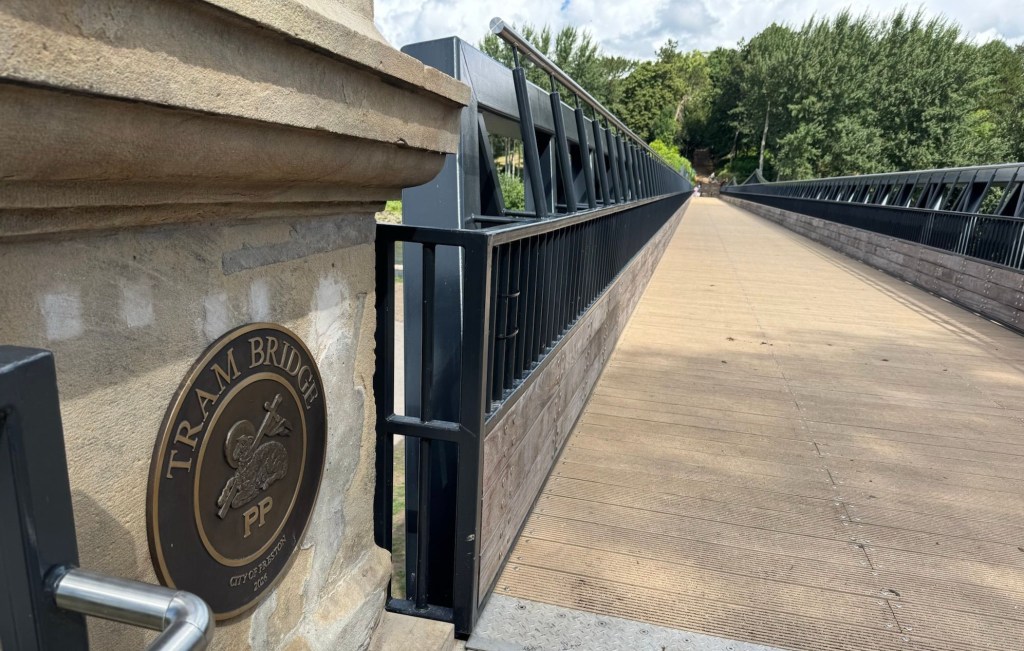
For the past year, while Ziggy Dog has been unwell, the lengths of my walks have reduced. Now that I just have Lulu I thought I would get back to it. So on Thursday I took her out to do a chunk of he Ribble Way in Preston.

It was a lovely day. The weather was mild. The countryside was beautiful. I got to pretended I was a train on the old tram route into the city. But after 3 miles Lulu had had enough, and got back in the car with Mandy. And after 6 miles I too was knackered.

This is a far cry from the days when I did many long distance walks including the Pennine Way and Wainwright’s Coast to Coast. In those days, 6 miles would be the first fast stretch before breakfast.

So what is the problem? I suppose that at 12 (Lulu) and 62 (me) we are not quite the young pups we once were. I think I need to learn not to push Lulu too hard. We went on a longish walk together when we were in Scotland and it took her three days to recover.

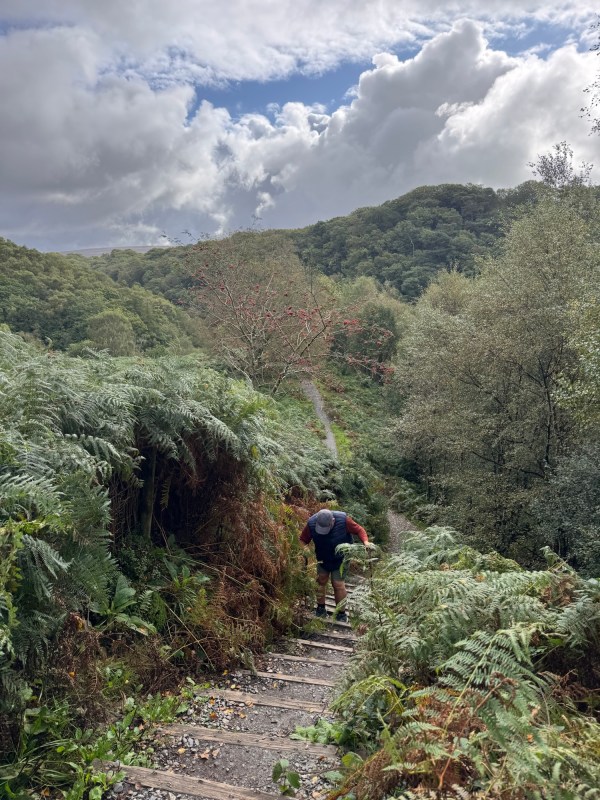
But that is no excuse for me. I may be older and more rotund, but I can definitely regain some of my walking legs. So rather like runners do with Couch to 5k (I hate running) I think I need to build up to longer walks step by step. They will mostly be flat walks when we are out on the boat because canals tend to avoid hills, but when the boating season ends I can try a bit more up and down. Time to see if my new blood pressure tablets are working.

All fine words, but as my Dad used to say “Good intentions butter no parsnips”. Let’s see if there is any action.

RIP Ziggy

Our dog Ziggy passed away this week. I thought long and hard about whether to write about her in this blog. It is not really the cheery vibe I am used to. Some people will question why it is such a big deal. She was only a dog. Other people will object to having their own sad memories triggered. But I have decided that writing about something else would be disrespectful to Ziggy. She deserves a few words.

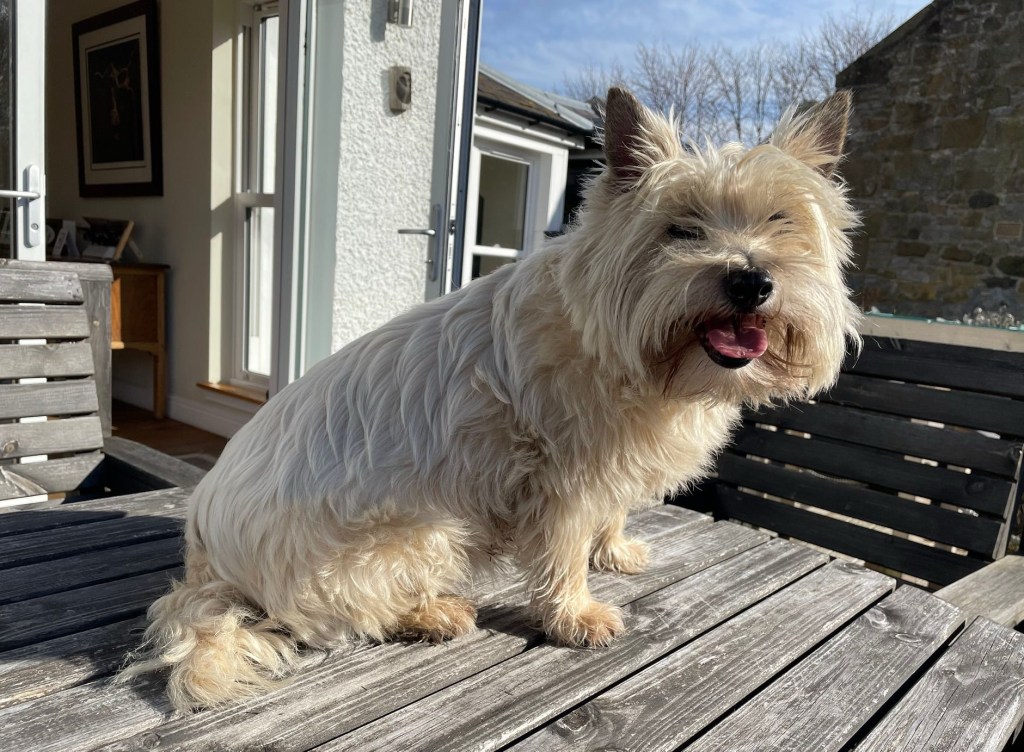
We chose Ziggy and her sister Lulu from a litter of Cairn Terriers born in Doncaster in August 2014. Actually, she chose us, walking over to ask to be picked up and cuddled. She was never the most elegant of dogs. She had a broken leg as a puppy because her bones grew too fast, and always walked with a strange gait, rather like muffin the mule. She had big brown eyes that frankly could get her anything she wanted. And what she usually wanted was sausages.

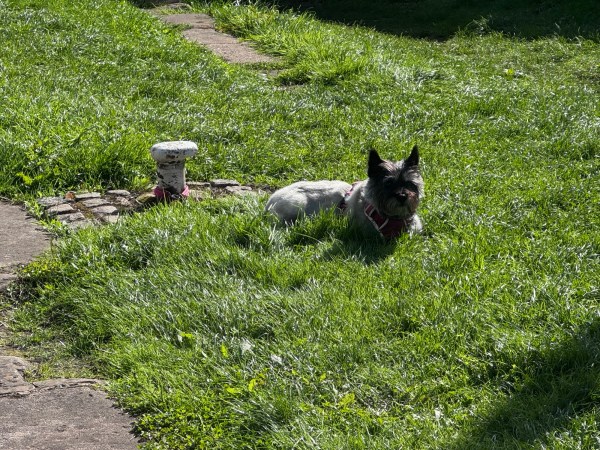
Lulu was our mad dog – chasing squirrels and snarling at the world. Ziggy on the other hand was quiet and loyal. There was nothing she enjoyed more than a “Ziggy cuddle”, where she lay on her back in my arms, with her head dangling to one side.

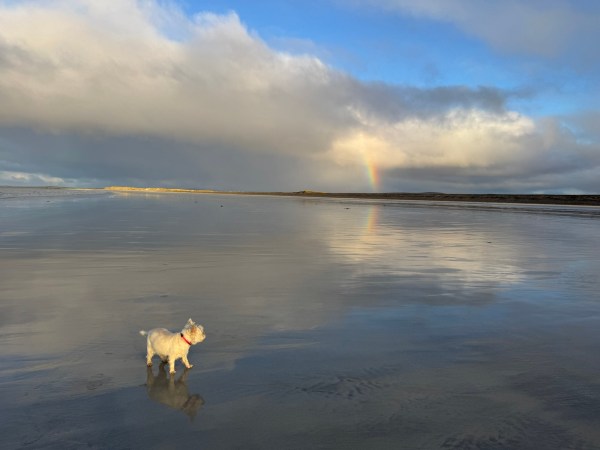
I would take the dogs on long walks. They particularly enjoyed the West Highland Way and the Southern Upland Way. Lulu would charge ahead till she got tired, and Ziggy would stay close to heel, hoping for treats. We went on long holidays to Scottish islands – Skye, Orkney, Islay and Uist. They loved beaches where they could run a round like mad things.

And both dogs have always liked being on Narrowboat Thuis, their home from home. Ziggy would sit on the back deck of the boat, watching the world go by, while Lulu scanned the towpath for something to bark at. In the evening Ziggy would try to push her luck, asking for an early tea because she was sooooo hungry.

Two years ago she was diagnosed with multiple cancers and given three months to live. The vets have been amazed how our miracle dog in fact survived nearly two years, and had such a happy time. The last few months were more difficult. She was dosed up with pain killers and couldn’t come on those long walks with her sister anymore. But until a couple of weeks ago she was still clearly a contented and happy dog. In the end I think she had finally had enough but obviously it has been very sad to let her go.

But I refuse to leave Ziggy with sad thoughts. My phone screen saver provides random photographs of the dogs and I was worried seeing Ziggy would upset me. But as I see her again, I am reminded of so very many happy memories. She was the best.

Rest in peace my wonderful, loyal, cuddly dog Ziggy.

Is finishing a Narrowboat trip an end, a beginning, or just a pause?

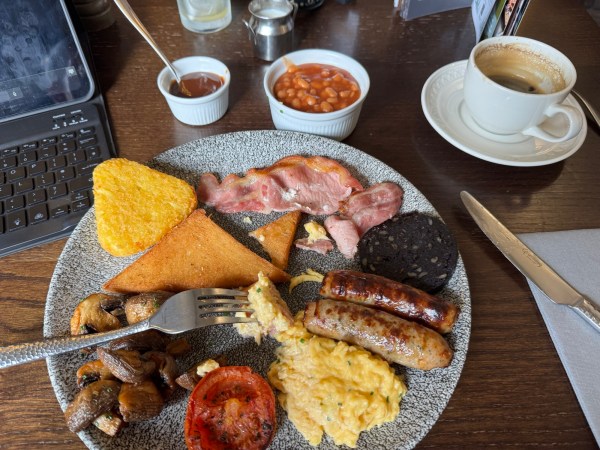
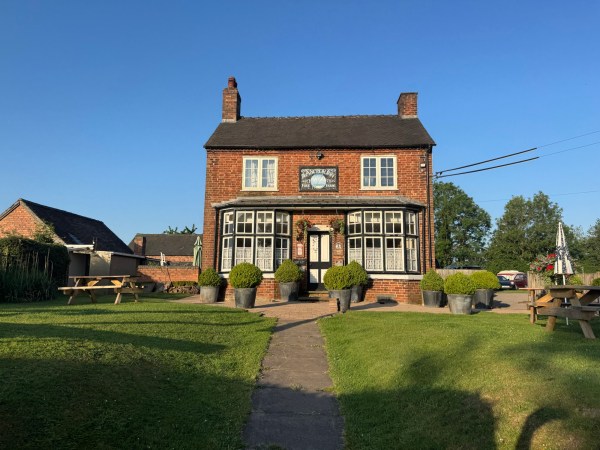
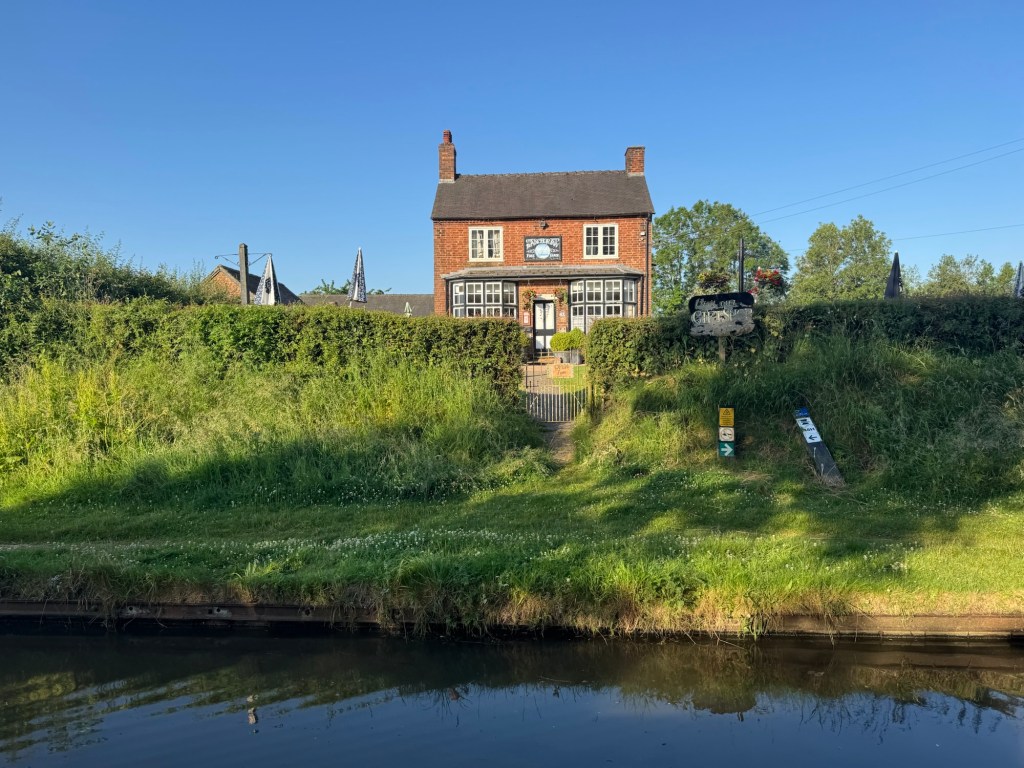
I am writing this while eating a wonderful cooked breakfast at the Saracens Head in Weston, Staffordshire. As we have travelled the UK navigations over the past five years we have found certain places where we always moor for favourites. Weston for breakfast or a pub quiz. High Offley for beer. Rugeley for Tescos. Tixall Wide for the birds and Shugborough Hall. Middlewich for Fish and Chips. It has become less about exploring the new and more about reprising what we love.

The latest trip over the past two months has been a good example of this. We have done the Four Counties Ring many times, and the Caldon canal a couple of years ago. It has been lovely to go back and see so many old haunts. I discovered new places such as the Flint Mill Museum in Cheddleton, and Congleton Town hall. And of course no day is ever the same on a boat. But it has still been a comfort blanket of a trip this time.

And now we re heading back to the Marina and then onwards to bricks and mortar for a month. The end of a trip always gives us mixed feelings. Should we feel sad because this is the end of our latest adventure? Or should we be excited because we are going back to a holiday in Scotland, dentist and doctor appointments, neighbourhood barbecue, car service, three visits to the cricket and our Ruby Wedding party? Or is this just a pause on our Narrowboat life? In just a few weeks we will be back and probably heading down to Gloucester.

I think all three are valid emotions. We are just so very lucky to be able to have such a retirement. The breakfast is pretty good too.

Five reasons why the Anchor Inn is the best pub on the waterways

I wrote a few years ago about one of my favourite pubs – the Anchor Inn at High Offley. We spent a couple of days moored there this week, trying to shelter from the worst of the heat. Here are five reasons why I love it so much.

  1. It is like pubs used to be. They don’t sell food. They don’t have music except an occasional customer that picks up a guitar. They open at 7pm and close at 11pm. The seats are reclaimed wood. The floors are quarry tiled. There is an open fire, though not in use this week! The landlady finds the right balance between friendly and no-nonsense.
  2. It is really isolated. We first found this pub while doing the Four Counties Ring on a hired Narrowboat forty years ago. I liked it so much that when we got home I tried to find it by using a road map and driving back to the area. This was before the days of Internet and Google. It took me weeks!
  3. It is a proper boaters’ pub. I went there for two evenings this week and both times got lost in chat with boaters. The first night I struck up a conversation with three solo narrowboaters who moor on an isolated stretch of the Birmingham Canal Network (BCN) and come out for trips together a few times a year. I have always been nervous about cruising the BCN because of rumours of rubbish, shallow canals and vandals. These guys recommended the “BCN Explorer”, where a group of boaters like us get together for a guided tour over a week, ending in a big celebration. I do fancy that.
  4. The drinks are well kept. The real ale has been Wadworth’s 6X for at least 45 years. It is served not from a pump on the bar, but collected directly from a barrel in the cellar. They also have scrumpy from the cask. They do have one cold lager and a few bottles of soft drinks and wine for new fangled customers, but this is primarily a beer pub for customers meeting and telling stories of the cut.
  5. It never changes. About sixty years ago Olive took over as a young landlady from her parents and grandparents who were there before. Olive died about ten years ago and her daughter Elaine took over. There are pictures in the bar of how it used to be, and apart from the lack of cigarette smoke, the pub looks exactly the same. When I arrived this week, Elaine was excited about a radical change. Because of an issue at the Wadworth brewery with 6X supply, she had added a second real ale, Renegade’s Good Old Boy. As far as I could see, noone was drinking it.

It really is a lovely pub, and even people like me, who do not really like talking to strangers, get caught in the beery chat. I recommend a visit if you are ever in the Shropshire area. Maybe use google maps rather than guesswork to get there!

Is the Wardle Canal the shortest in the country?

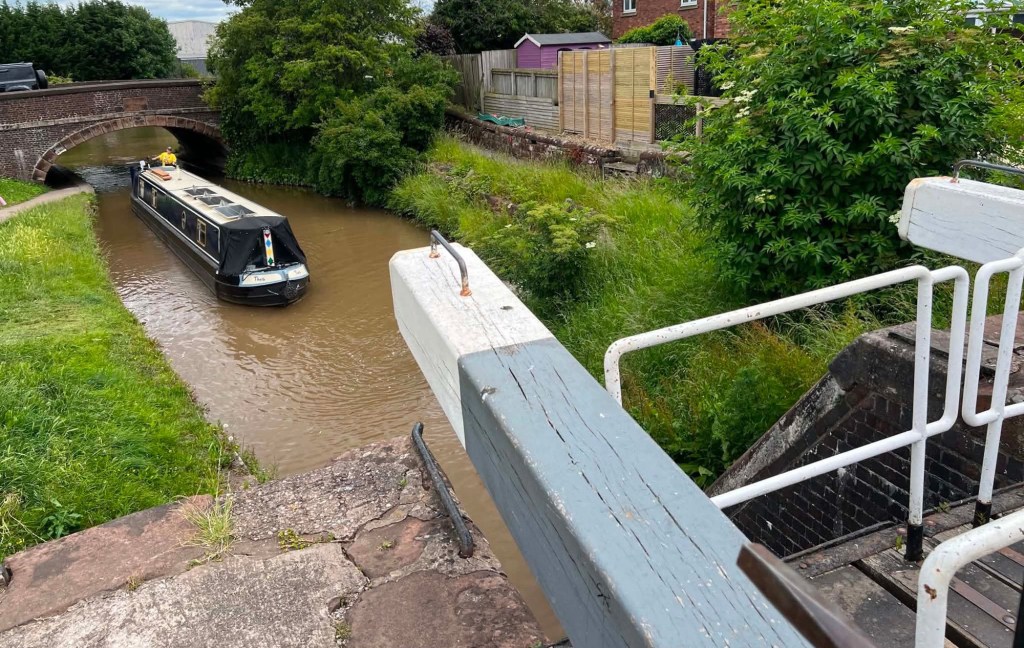
This week we have been travelling up the Trent & Mersey to Middlewich and then across to join the Shropshire Union at Barbridge. It has been a lovely week, with more sunshine than showers, lots of wild flowers on the towpaths, and a good mixture of industrial history (there were lots of salt mines in the area) and open countryside. As part of the journey we went through what is claimed to be the shortest canal in the UK – the Wardle Canal.

The Wardle Canal

The Wardle Canal was opened in in the early nineteenth century by the Trent & Mersey Canal Company, connecting the T&M to the Middlewich branch of the Shropshire Union. Its sole purpose was so that the T&M could claim full ownership of the junction, and could charge tolls for using it.

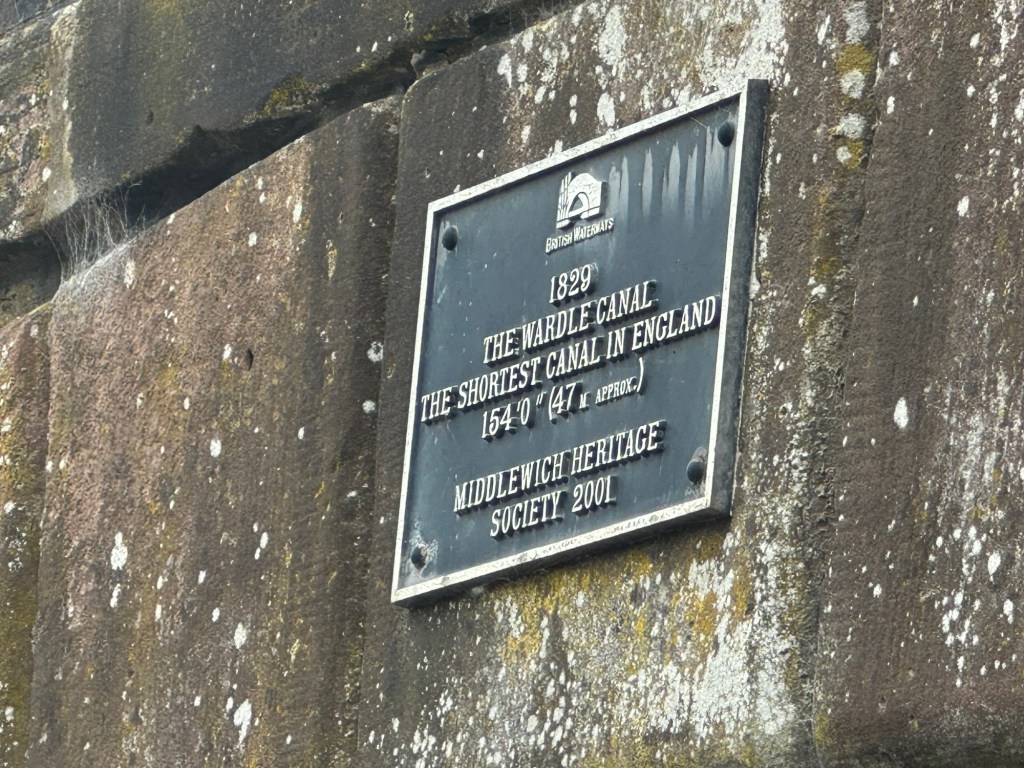
It is just 154 feet long from the bridge at the junction, to the bottom of Wardle Lock, and there is a commemorative sign on the bridge claiming it as the shortest canal. But is it?

There are three problems with the claim. It is not 154 feet long, there are shorter competitors, and it is not a canal anyway!

In my view the length should include Wardle Lock, because that was built at the same time, giving a total length of more like 330 feet, according to the Trent & Mersey Society

There are other similar examples of short stretches of water joining canals for the purpose of raising tolls. For instance the Peak Forest is joined to the Ashton by a short aqueduct over the River Tame, that was built by the Ashton company.

I think the biggest challenge to the claim is that it is not really a canal. To be a canal it needed to be authorised by parliament, and built by a private canal company. Stretches off that canal, built by the same company, are called branches. For instance what we call the Middlewich, where we are now, is actually the Middlewich branch of the Shropshire Union. Similarly, the Caldon Canal, which we visited a couple of weeks ago is really the Caldon branch of the Trent & Mersey. So this should be the Wardle branch of the Trent & Mersey.

But…

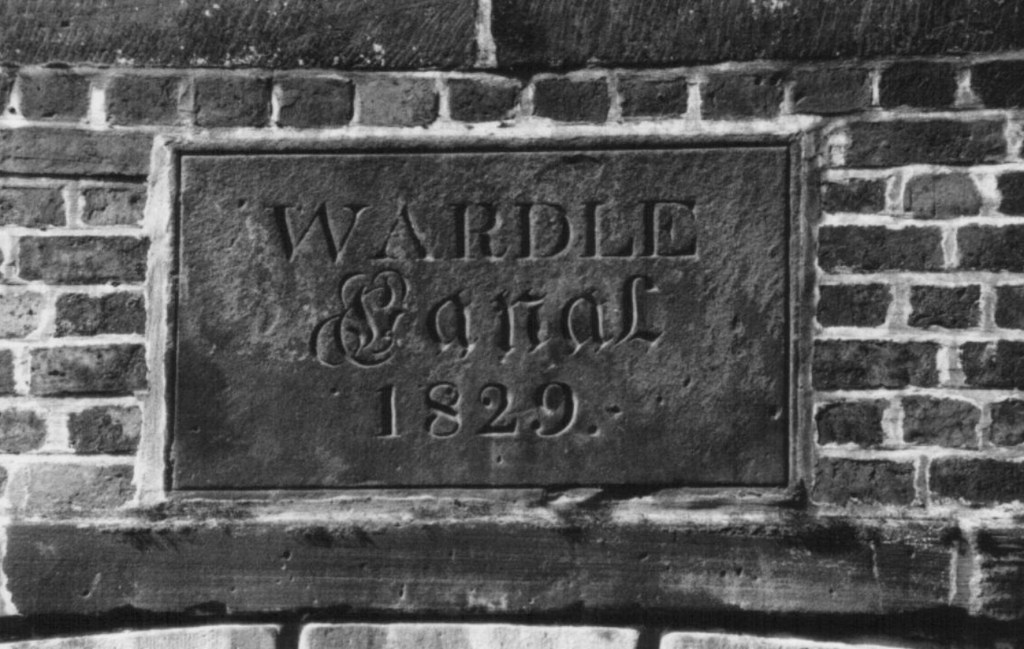
Mandy says I am frequently unnecessarily pedantic. The bridge at the junction is dated 1829 and clearly calls this “Wardle Canal”. And many boaters for many generations have enjoyed the story of the shortest canal in the UK. So OK, maybe it is.

Should I be grumpy that Canal & River Trust have not fixed Bosley Locks?

In early May a boat crashed into the bottom gate of Bosley Locks. Bosley are a flight of 12 locks on the Macclesfield canal that raise a boat 118 feet over just half a mile, taking you from the bottom of the canal to the top. They have been closed since then and I am becoming irritated by Canal & River Trust (CRT) not fixing them.

Going down Bosley Locks two years ago

The problem with the locks being out of action are that boaters like us cannot get up to Macclesfield and the Peak Forest Canal without them. There is a theoretical alternative route through Manchester but the Bridgewater Canal is closed due to a breach a couple of years ago, and the Marple flight of locks at the other end of the Macclesfield has just closed due to a broken balance beam.

I have some sympathy with CRT. The damage to the gate was extensive and exacerbated an existing problem with the gates leaking. However, they took weeks before deciding to drain the lock for a proper examination, and then a while to install scaffolding and fix the issue.

As you probably know, we pootled along the Caldon Canal for a while and had a lovely time, but last week they said it would be open at 4pm on Tuesday so we set off. Then, at 1pm on Tuesday CRT sent a notice that they had found another issue and would not be opening. Next update is Friday but I am not holding our breath. We have winded (turned around) and come back to Kidsgrove.

I don’t have a problem with the gate failure. Stuff happens, especially with two hundred year old locks. But I think they should have found the second problem when they examined the lock weeks ago. And I think their communication should have been a lot better throughout.

But we do not live on a boat to get grumpy. We enjoyed our trip up to Congleton, and I had a lovely afternoon looking at the museum and town hall there. It must have been such a dirty smelly mill town a hundred years ago, but is now bright and feels optimistic. And we are currently moored in one of our favourite places, just north of the Harecastle tunnel, where iron ore in the soil makes the canal run red, and the birds seem to sing all day long.

There is another lovely route down the “heartbreak hill” flight of 31 locks towards Middlewich, so we will probably head that way when the rain stops. A good friend is visiting us next week from New Zealand via South America, so we do not want to get too far anyway.

And who knows, maybe on Friday they will tell us Bosley is open again. Life’s too short to be grumpy.

Is the Caldon Canal the most beautiful?

In last week’s blog I pondered whether we should take Narrowboat Thuis along the Caldon to Froghall, along the Macclesfield and Peak Forest to Whaley Bridge or up the Trent & Mersey to Middlewich. Our answer was to try to do all three. This week we have been cruising the Caldon, and it is one of the quietist and most beautiful canals we have visited.

We left the Trent & Mersey in Stoke at Etruria. This is where Josia Wedgewood had his china factory and it has much industrial history. When we passed through there was a canal festival going on, so the canal was lined with historical boats and maybe a thousand gongoozlers (people who like to watch boats).

The first few miles of the Caldon are notorious and you are advised not to moor if you don’t want to meet dodgy characters. So it was no surprise when the boat suddenly stalled with a duvet wrapped around the propellor. Fortunately I have recently purchased a bread knife to keep in the engine bay for things like this and after a few minutes I had cut myself free.

A few miles later, the character of the canal changed completely. Surrounded by trees and plants it meanders through Staffordshire. We cruised up the Leek Branch first and moored for a couple of days by a lake. It was very peaceful except when the cows decided to visit.

Then back to the mainline and through the Churnett valley to Froghall. At times the canal is only wide enough for one, but not many boats come down here so it was fine. There is a tunnel at the end of the navigation but it is too low for NB Thuis so we turned around.

The strangest thing for me about this lovely canal is that it was not always this way. It was built for heavy industry and in the eighteenth and nineteenth centuries it would have been filthy with effluent from lime and flint kilns, coal mines and colour mills, feeding the factories of Stoke on Trent and further afield. We are currently moored next to a Flint Mill museum, which is absolutely fascinating. Who knew that fine china was made with more ground flint than clay. I did not even realise that bone china is actually made with 50% cattle bones.

So is the Caldon the most beautiful canal? I’ll let you know when we have been back on the Peak Forest!

Blog at WordPress.com.

Up ↑