
On a canal, the length of water between two locks is called a “pound”. On a lock flight this might be three or four boat lengths long. Sometimes it might be shorter. There is a pound on the Staffs & Worcester canal that is just a few feet long (there is a side pound where all the water goes when you empty the top lock). There are “long pounds” on canals that are very flat. For instance last week we had a forty mile pound on the Bridgewater.
Once or twice a year we find a pound is empty. Last year there was a mile long empty pound near Gloucester after a hire boater went through the bottom lock one evening and left all the paddles up. The year before we grounded in a pound overnight on the Aylesbury canal because of leaky lock gates. This week we have faced three separate empty pounds. The first was about a mile long in Wigan, caused by vandals. The second was about half a mile on the Rufford arm, caused by a lazy boater leaving paddles up. The third was a short planned “dewatering” by the Canal & River Trust (CRT) in order to inspect blocked culverts.
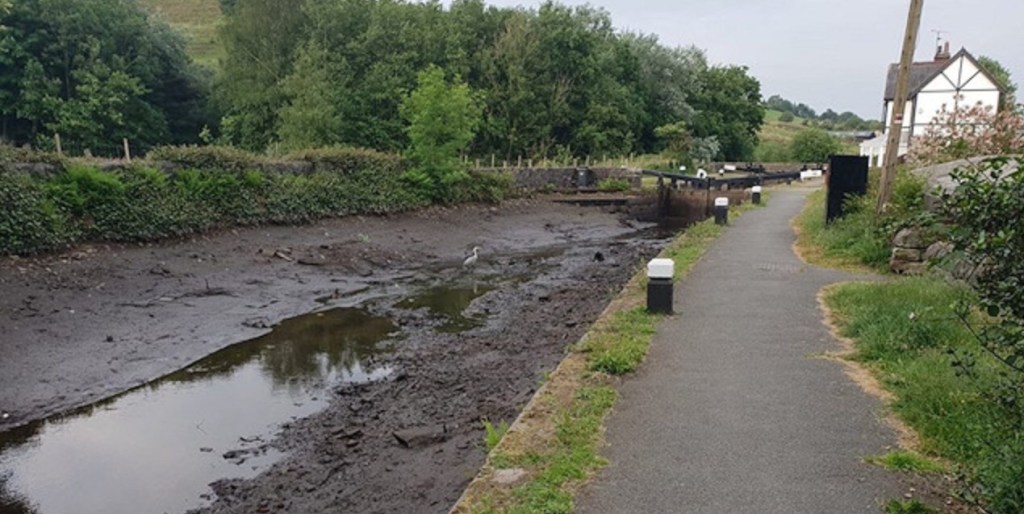
So what do you need when faced by an empty pound? The first and most obvious thing is a lot of water. Somehow you need to fill the canal back up to at least four feet in depth. If you think the canal is maybe twenty feet wide, and the pound is maybe half a mile long, that is an awful lot of water. You have to bring that water down from higher in the canal, maybe using bywaters that go around some locks, and sometimes by opening paddles on the locks themselves.
The second thing you need is time. You need to fill that water without draining the pounds higher up. For this reason, CRT prefer the work to be done by their staff rather than boaters. A short pound may take just an hour or two to fill, but the Wigan and Rufford problems this week took a day each.
The third thing you may need is special equipment. On our boat we carry a windlass to open lock paddles, a CRT key to open water points and swing bridges, and an anti-vandal key to open the handcuff locks used to prevent bad people causing trouble. CRT staff can remove other padlocks and open special paddles to let in water from other sources such as rivers and reservoirs. Again this has to be done very carefully to prevent flooding.
By far the most important thing you need is patience. There is no point getting cross about what has happened. It won’t help. There is no point trying to get through before the water has fully filled, because you will get stuck. Instead, we just wait it out, and look for the best. In Wigan I found a nice local butcher that I would have missed. In Rufford we just moored up and watched a couple of films.
If you are in a hurry on a narrowboat, you have chosen the wrong lifestyle. We are lucky enough to be retired. For us, narrowboating is not just about the wonderful places we go. It is about the journey to get there – however long that takes.

 Pete's Blog