It’s autumn on the Shropshire Union

It really feels that as we have entered September, we have entered autumn. I am waking up in the dark for the first time since March. It rains every day. I am wearing a top as well as a t shirt. I have even started wearing jeans instead of shorts.

So what is good about narrowboating in autumn?
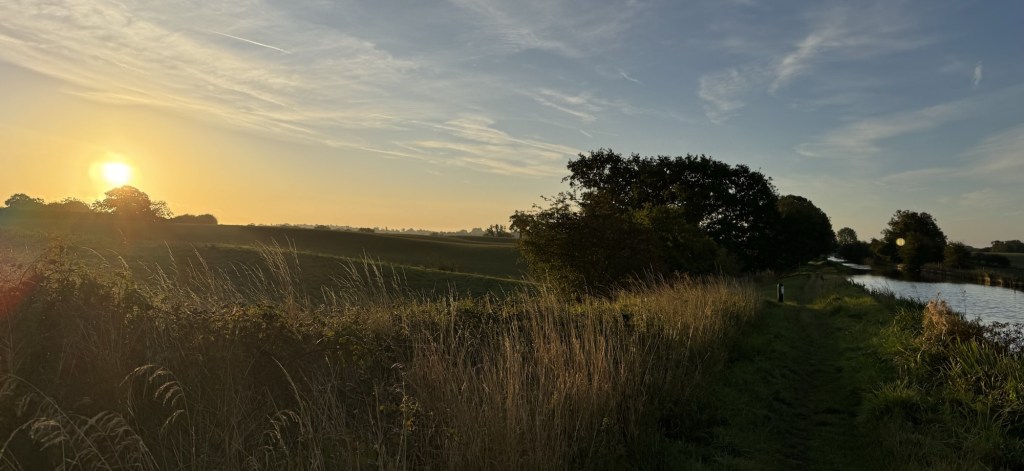
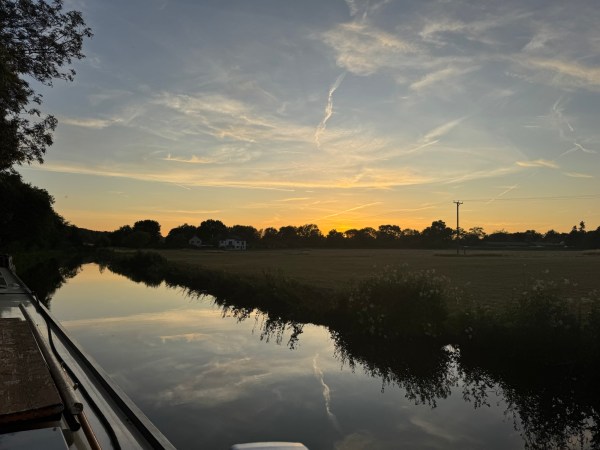
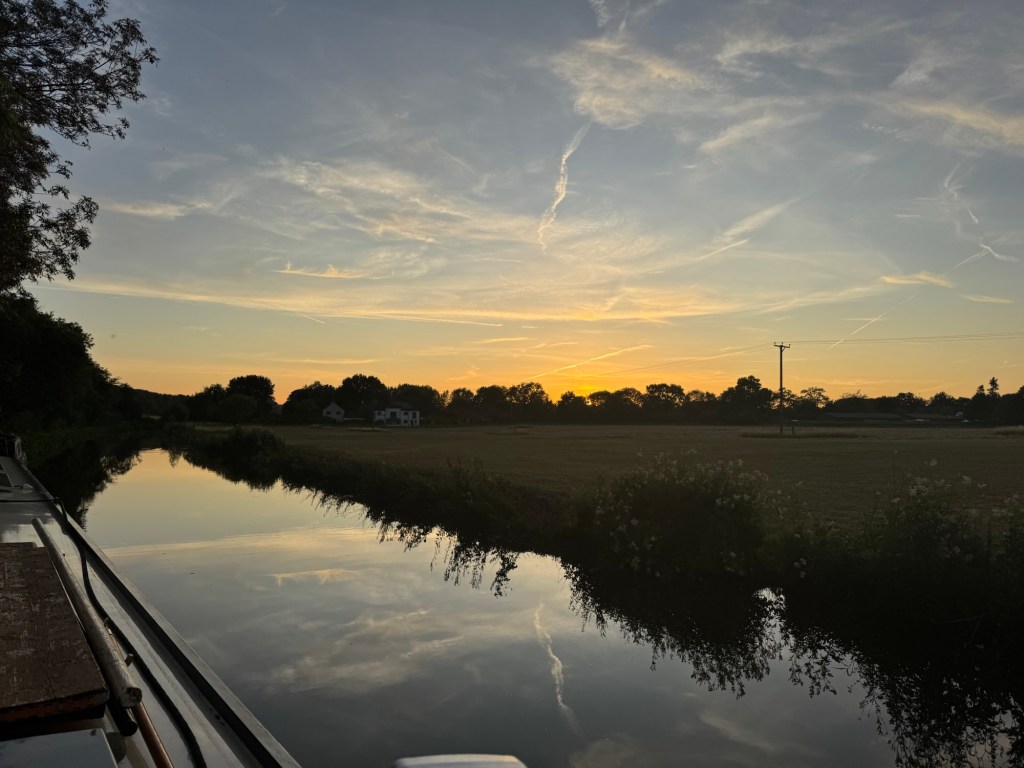
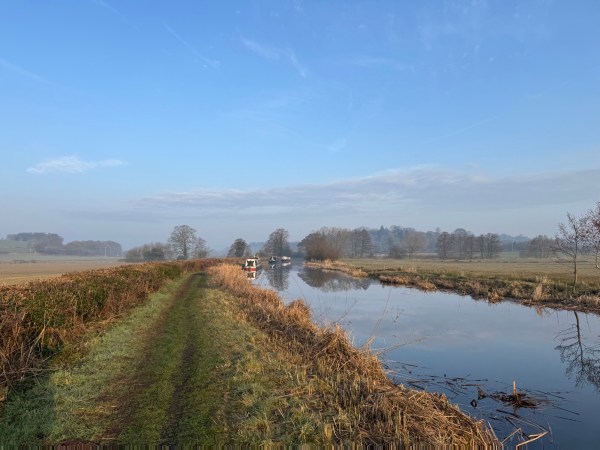
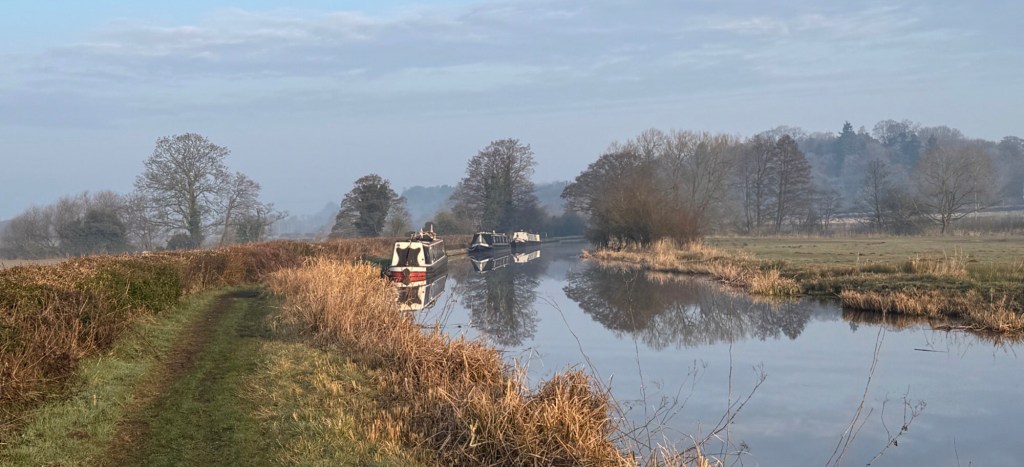
Well one thing is the light. The sunrises and sunsets are just so beautiful. We are currently traveling in the middle of the Shropshire countryside and I look forward to walking the dogs each morning.

Another thing I love is my fellow boaters on the canal. I enjoy boating with the novices during the summer. But it is great at this time of year when my fellow boaters have a little more experience and knowledge. I spent an evening in a proper boaters pub yesterday, geeking out about the life with people who have lived on board since childhood.

And finally, best of all in autumn the insects start to die off. The sunny days have been nice this summer, but the horse flies and wasps less so. I have a boat full of spiders, which helps, but a few frosts will help even more.

But as we head towards winter, there is one thing I am not looking forward to, and that is muddy towpaths. Narrowboats are easy to clean, because they are small, but it is an uphill battle when the dogs bring in their dirty footprints every time they go out.

So what is in like in the “real” world? Are you enjoying autumn too, or missing the sun?
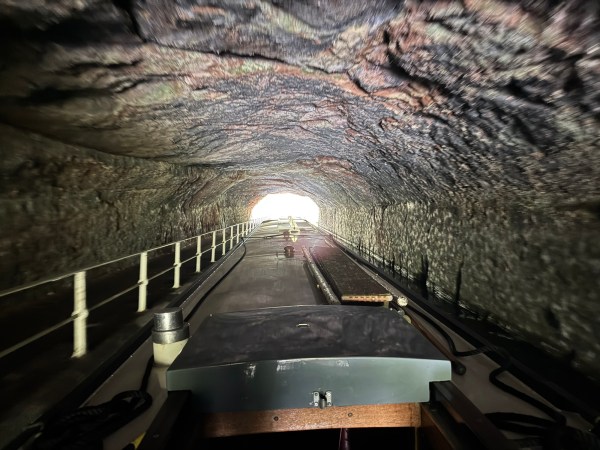
Is narrowboat life tiring?

A lot of people ask us if it is boring to live on a narrowboat. I think they assume that when we are moving so slowly we don’t have to concentrate. And when we are moored, there is nothing to do. So how come we are all feeling tired this week?

I think there are three reasons. Firstly when you drive a narrowboat, even at 3mph, you have to concentrate the whole time. The boats seem to have a mind of their own and after few seconds lacking attention you can be pointing at the canal bank, another boat or more likely a bridge. I love it because you also see wonderful nature and industrial heritage, and every day is different. But all that fresh air can be tiring.

Secondly there is always something to do when we moor up. Perhaps it is fixing something, doing general maintenance, or the day to day tasks of shopping, filling up with water, greasing the stern gland. There is also plenty of time to read, watch TV or even write a blog, but it can be tiring.

Finally this year there is always the nagging concern about canal closures. More than half the network is closed now due to low water levels, and even though we have chosen a route for our final trip of the year that navigates the most reliably wet canals, rumours abound amongst the boating community that where we are now may also suffer. We really don’t want to find ourselves isolated, miles away from our home marina.

So yes, narrowboating can be tiring. But it is a good tiring and one where I fall asleep each night, looking forward to the next day.

Where shall we go for our last boat trip of the year?

We are back on Narrowboat Thuis for the next five or six weeks. It will be our last trip of the year so we need to decide where to go. Normally there would be a great deal of choice with thousands of miles of interconnecting canals and rivers. But this year the water levels are so low that many canals are now closed, and the Canal & River Trust have warned us that worse is to come.

There seems to be only one route where we can be sure of water – across the Staffordshire & Worcester to Autherley Junction, north on the Shropshire Union and then west on the Llangollen and maybe north to Chester. The “Shroppie” and Lllangollen in particular are used to carry water for people so will not be allowed to drain out. We can hope for rain to open other canals, but the reality is that we will need to wait for a wet winter to fill the reservoirs and canals back to normal.

The downside of this journey is that we have done it many times before. The upside is that there is a reason we have done it so many times – because we love it. We are hoping for stunning sunsets, peaceful moorings, places to visit, maybe even a couple of canal side pubs!

Stay tuned to find out how the trip goes.

Why would a village be proud of being “boater hostile”?

Earlier this week we travelled on the North Oxford canal through a village called Ansty in Warwickshire. I was ready to moor up for the day so was looking for a nice stretch of armco to tie up to, with good views. Unfortunately though the whole village there were “no mooring” signs every few metres along the canal.

This is very unusual. We boaters have many rights from hundreds of years of boating and one of them is a right to moor on the towpath side of almost every canal. Sometimes there are short term moorings in the centre of towns where you can just stay for a couple of days. Sometimes there are long term moorings where boaters pay to moor permanently. But mostly you can stay pretty much anywhere for up to 14 days.

So why is Ansty to anti boat? Their Parish Council website front page claims that the village is the most boater hostile on the network but does not explain why.

All I can think is that the canal goes through the village on an embankment and so boaters can see into the upstairs bedrooms of the nearby houses. But that is true in many many parts of the canal network and besides the canal would have been there two hundred years before these houses were built so why not just use curtains? Besides which, we boaters get very used to gongoozlers peering through our windows.

We are very privileged being allowed to moor in the most beautiful parts of the UK so I am not complaining too much, but I won’t be visiting Ansty again any time soon.

A tree is down across the canal. What should we do?

We are back on Narrowboat Thuis this week. We have missed boating these past few weeks. Our son Rob and fiancée Alessa borrowed the boat last week and took it half way round the Four Counties Ring. They took good care of it and finished at Market Drayton. So with some shuffling of cars, we met them there and are now cruising back to the marina in Stone. We need to be back for next Thursday which should have given us plenty of time, but on a Narrowboat, nothing is predictable, and on the first afternoon we saw a warning from Canal and River Trust (CRT) that the canal was closed ahead of us due to a fallen tree.

It was not just any fallen tree. The CRT team had visited it and decided their chainsaws and equipment were not hefty enough for the task. A specialist contractor would be required and that could take a while.

There is no point getting stressed living on a boat, so we moored up by a good pub and prepared to wait it out.

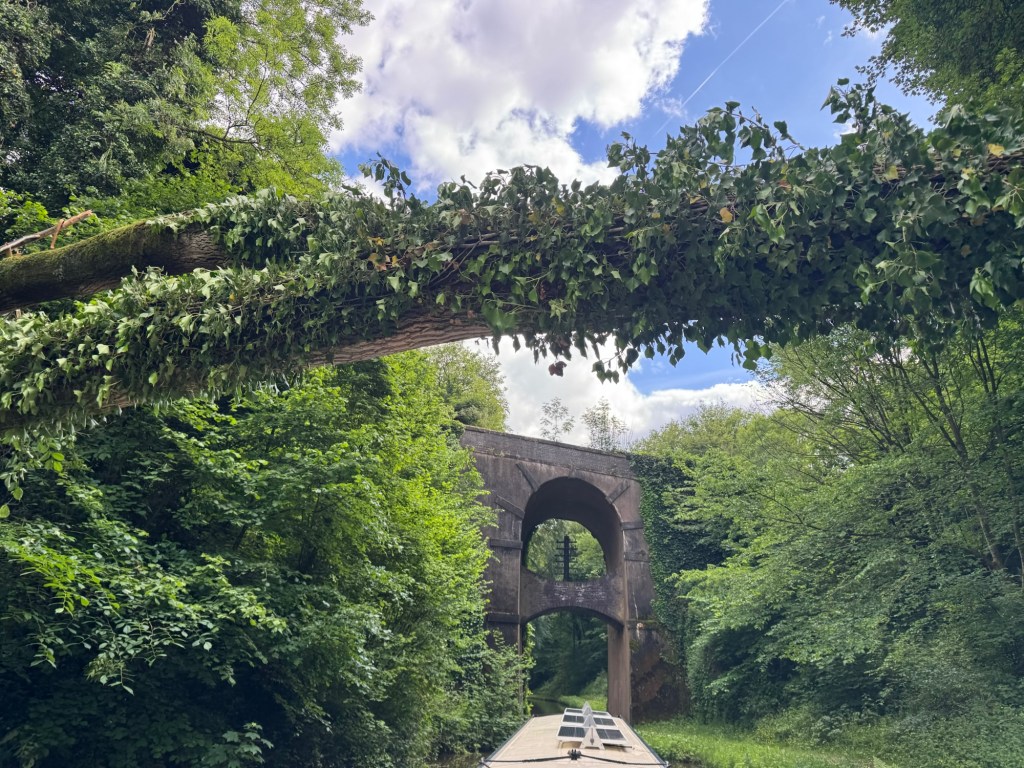
But then we saw a boat coming towards us from the direction of the stoppage and they explained that in fact the tree had fallen in such a way that there was room for a Narrowboat to pass underneath. It might not meet the CRT Health and Safety guidelines but it seemed fine to us, so we set off again and passed happily under the heavy tree before the pesky contractors arrived to close it down.

Life on a Narrowboat is full of adventures. They may not be world changing but each day has surprises and problems to solve. Sometimes it is a physically tiring life, being outside and moving heavy locks. But always it is a mentally tiring life, despite being the coolest most chilled thing we have ever done.

We are glad to be back.

Nottingham in a Narrowboat

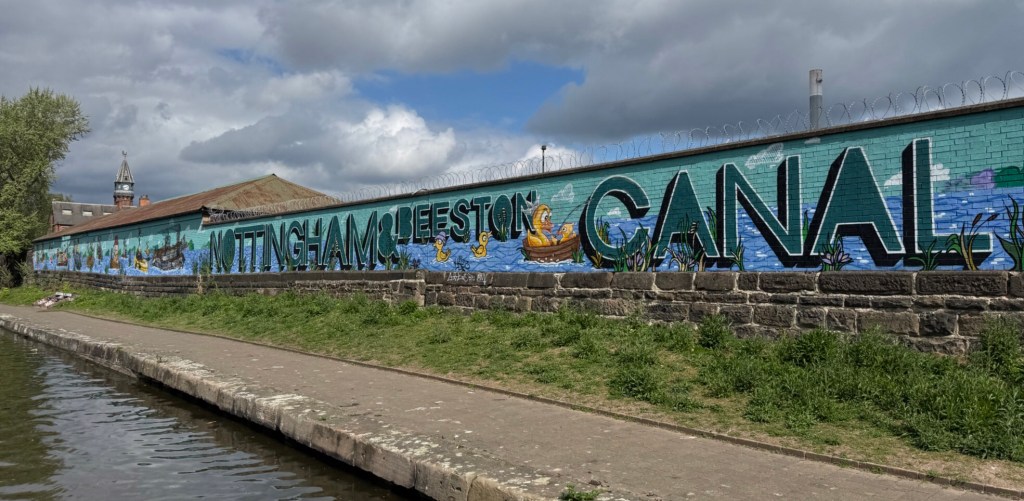
We have travelled most of the UK canal and river network over the past five years. There are a few loose ends and this week we ticked off another of them – Nottingham. Within a few miles this used to be a real hub for water transport. There is the wide river Trent, there used to be a Nottingham canal through the town centre and a Beeston canal past the massive Boots works. Nowadays these are merged into the Nottingham and Beeston. In addition there is the Erewash canal, the river Soar and the start of the Trent & Mersey canal. Two further canals, the Derby and the Grantham have not been navigable for many years.

These days the waterways here are no longer used for industry. There are just leisure boaters like ourselves. A wide variety of people on the cut. Around Nottingham town centre there are homeless people living in tents, and wealthy owners of gin palace yachts. Some of the canal is run down and a bit rough. Other areas have been fully gentrified and look beautiful and expensive.

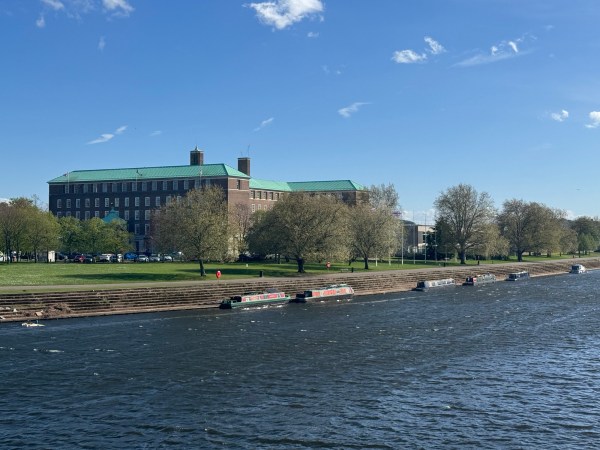
We are currently moored by the steps outside County Hall, a massive piece of architecture from the early 20th Century. Rowers from the nearby National Water Centre glide past us with their coaches shouting at them from the riverside. Swans and geese keep us company. We are overlooked by Trent Bridge Cricket Ground. It all feels very different than the run down industry that dominated the local canals here a few decades ago.

I am glad we have visited Nottingham. I’m off out now to see the museums to see if I can discover more. Every day is a school day.

When do ducklings arrive on the canal?

Our TV on the narrowboat uses old photographs as a screen saver. It shows photos from similar dates in previous years. For two weeks I have been looking at ducklings, goslings and signets. But this year we have seen nothing – till yesterday.

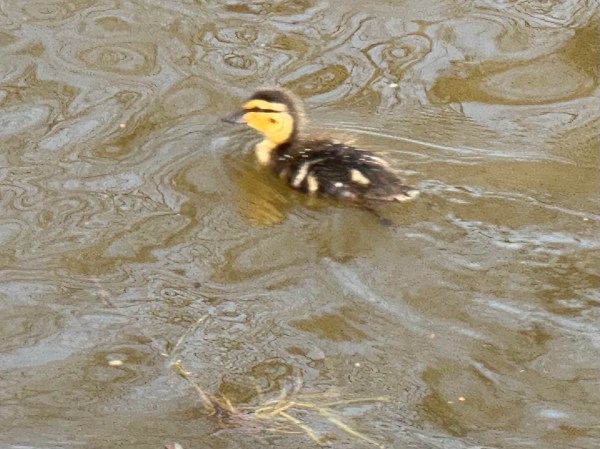
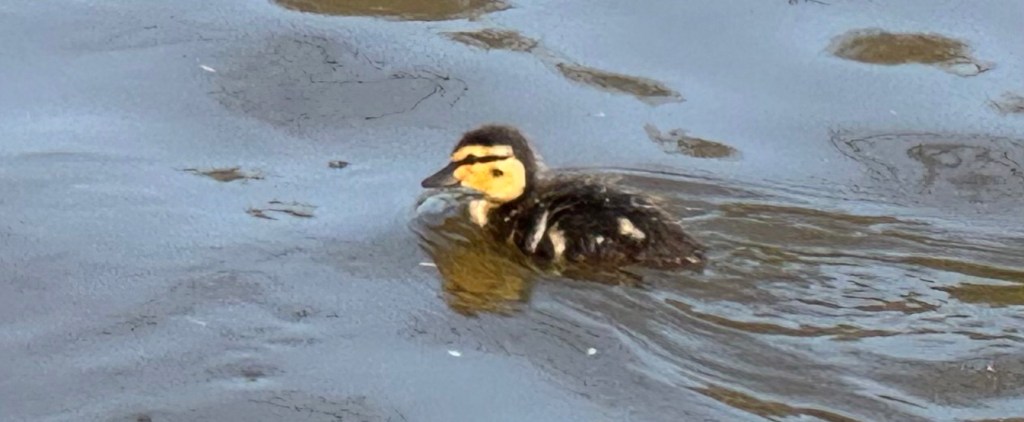
First we saw a new family of red headed ducks. I didn’t get a picture sadly. And then we passed three individual ducklings, including this one. Based on previous years I now expect to see more and more over the next few weeks.

So I have two questions. 1. Why do ducklings all arrive at once? 2. Why are they later this year when the weather is really warm this year?

I am guessing the answer to the first is that being born in Spring gives them the best chance of survival. It is late enough to avoid the worst cold weather, and early enough to keep numbers of predators low. The second is more tricky. Mallards have a 28 day incubation period, so perhaps the current warm weather is irrelevant. The blog I wrote a month ago was entitled “Is it too cold to live on a narrowboat?”. So did the ducks just wait another week to incubate their eggs?

Things that make you say “hmmm”.

Seven things that make a great narrowboat mooring

We were pootling along the canal this week, heading in a generally southern direction. I was lacking energy, having just recovered from some rather unpleasant food poisoning, so was moving even slower than usual and beginning to think of stopping for the night. Then around a bend we came across a perfect spot. So I pulled up and we stayed for a few days. What made this such a great mooring?

  1. Beautiful views. This mooring is on a slight embankment, with views in all directions. Mandy particularly liked the mornings, lying in bed and watching the day wake up.
  2. Peace and quiet. Most of the time there was just one other boat around, and there was no road noise. The only thing disturbing the peace was a couple of geese that seemed to be having a massive argument one morning.
  3. A firm towpath. At this time of year many of the towpaths are quite muddy, but this one had dried out nicely in the sunshine.
  4. Armco. Traditionally boaters would moor by hammering two foot metal “pins” into the ground and tying the boat to them. It is much easier and more reliable when there is Armco along the edge, because we can attach our “nappy pin” hooks and tie up to them. The only thing better is where we find hoops or bollards, but that is rarely in the countryside.
  5. Good solar. In the summer there are so many hours of daylight that charging the batteries is rarely a problem, but in March we need to make the most of the sunshine we have. This week has been ideal weather, and this mooring had no trees or hills to shadow my panels.
  6. Good Internet. It may sound a little incongruous to an off grid boating life, but we do like fast WiFi. That way we can sit in our lounge in the beautiful countryside, binge watching a box set (currently Poirot). We have a mobile router with an external aerial and in this spot it was perfect.
  7. Access to a great walk with the dogs. From the narrowboat there was a lovely circular walk along the canal and then through the grounds of Sandon Hall, up to a monument to William Pitt, and affording expansive views across Staffordshire. The only downside was when we were chased across a field by a flock of inquisitive sheep.

Of course we also love variety. Sometimes it is nice to moor in a city centre. Or next to a wonderful pub. Or close to a supermarket. Or nearby a stately home. But for us this week, I cannot think of a better mooring. Simply lovely.

Am I too boring to write a blog?

I was thinking about what to write this week and realised that the highlight has been a visit to the dental hygienist. I wonder if I am becoming too boring to write a blog. I know some of my fellow retirees, including my wife, will say that this is part of what retirement is about. As well as providing opportunity to do exciting new things for which I would never have time when I was working, it provides opportunity to chill, relax and enjoy a slower pace of life.

Image ©RamseySolutions

I do understand the argument. I have read a couple of books this week, after it was pointed out to me that I never read anymore. I know that Mandy really loves sitting in a corner, doing cross-stitch and watching NCIS. I have no problem with others slowing down. But it is not the person I want to be.

I see myself as a lucky young retiree, enjoying the adventure that life provides. That is why I love being on the narrowboat. That is why I loved spending a month on trains in Europe. That is why I want to go back to the outer Hebrides for a month this autumn. There is so much to do!

And maybe I am wrong about the hygienist being the only highlight this week. We had my god-daughter Kelsey to stay with her mum, my friend Marion. We found a local upholsterer and spent a happy hour with him, looking at options for our dining room chairs. I went for a walk with my brother in law to see the snowdrops in Lytham Hall. I have cooked Baklava for a Greek meal with my cousins tonight. They may not be the most exciting things for a blog, but they have kept me busy.

But I still want to find a new adventure for next week. Slowing down is for old folk. And I ain’t old.

Are you allowed to drive a narrowboat at night?

There are a number of questions we get asked all the time by non-boaters. How often do you fill up with water? Where do you get your electricity? How does the Internet work on a boat? Is it very cold in he winter? Where does washing up water go? Do you need a licence to drive a narrowboat?

Another common question is whether you are allowed to cruise at night.

The answer is “no” if you are a hire boater because your insurance won’t cover it. But for liveaboards like ourselves the answer is “yes” because it has always been allowed. At the peak of canal traffic, in the 19th century, bargees were paid on taking a load from a to b, however long that took, and so often they would travel all day and all night.

Although it is allowed, these days we see almost no boats travelling at night – maybe two or three in a season. Certainly we have never travelled at night. Even with the headlight, you can’t see very well, and it is annoying to fellow boaters who may be sleeping.

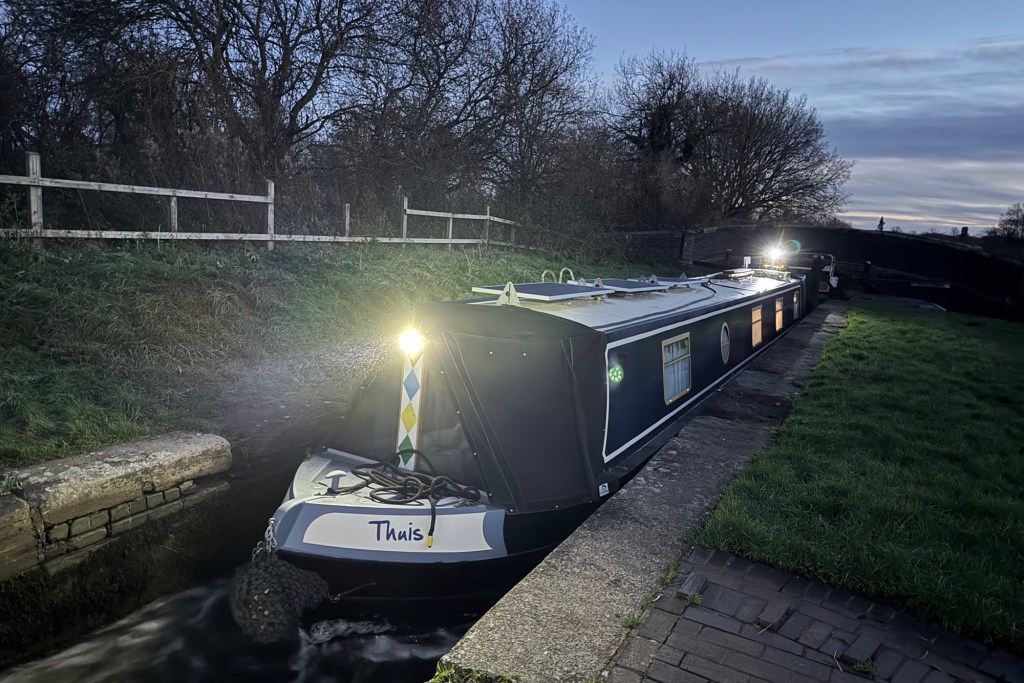
But this time of year the sun sets so early that this week we found ourselves travelling in the dark at just after 4pm. Perhaps we should have moored up as soon as it got dusky, but there was a particular mooring we were heading to, and besides it was an adventure.

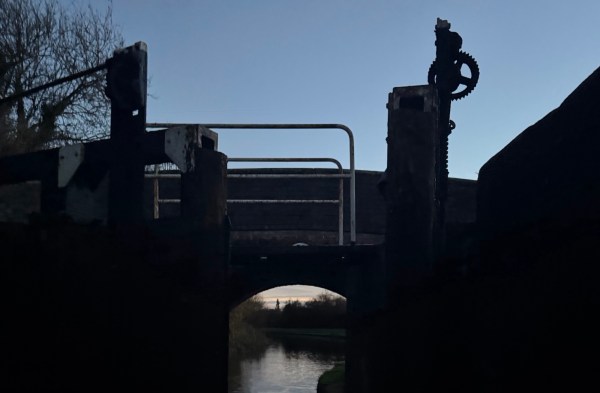
The water looked very beautiful as the sun went down and my eyes acclimatised quite well. Still, I decided to move even slower than usual because seeing obstructions in the canal was very difficult. Surprisingly, locks were less of a problem. The headlight is designed to illuminate tunnels, and a lock is like a tunnel without a roof, so they lit up quite well.

I don’t think we will choose to travel at night again in a hurry, but as Thomas Beecham once said, you should try everything in life once, except incest and Morris dancing. And I love an adventure.

Blog at WordPress.com.

Up ↑