How to deal with a bad day?

I am naturally positive. My instinct is always to see the best out of everything and to look for opportunities in adversity. Indeed, when I was working I would sometimes be criticised because I would not spend enough time on “what went wrong?” because I was always looking for “what can we do now?”.

But even positive people occasionally have bad days, and Wednesday was one of them for me.

Two things went badly wrong. The first was the dentist. I had an appointment for a crown replacement, but my new dentist took one look and told me I have bigger problems. Apparently I grind my teeth at night and they have worn down to a level where the back teeth are rubbing against each other and putting pressure on the side of the crown which was why it had split off. Fixing could cost thousands of pounds which I don’t have. In the meantime he put in a temporary crown and left me in a lot of pain as the anaesthetic wore off.

Then just as I was feeling down, my phone rang. It was the couple who are buying our house. At least they were. Their buyer had just fallen through so while they still want our house, our planned date of March 22nd is now impossible, which means the house we were buying in Lancashire is also off.

So no house and in pain. Not my best day. Mandy also understandably angry and upset. So what to do?

Normally my response would be to switch on my positive energy and find five great reasons to be happy about the day. It would probably have irritated all those around me but it would have made me feel good. But for once it was not what I wanted to do. I just wanted to wallow in my miserableness. I found a quite corner and read a book.

So now it is two days later and and I am very much back to myself. There are lots of good things that will come out of this. My teeth are fine – for now at least. We get to stay in Scotland longer. I will even get my 60th birthday Scottish bus pass. And if the Lancashire house falls through, there will be another one, Fate is our friend.

I have also decided – sometimes even the most positive of people is allowed a bad day.

Of the world population, what percentage lives in low-income countries?

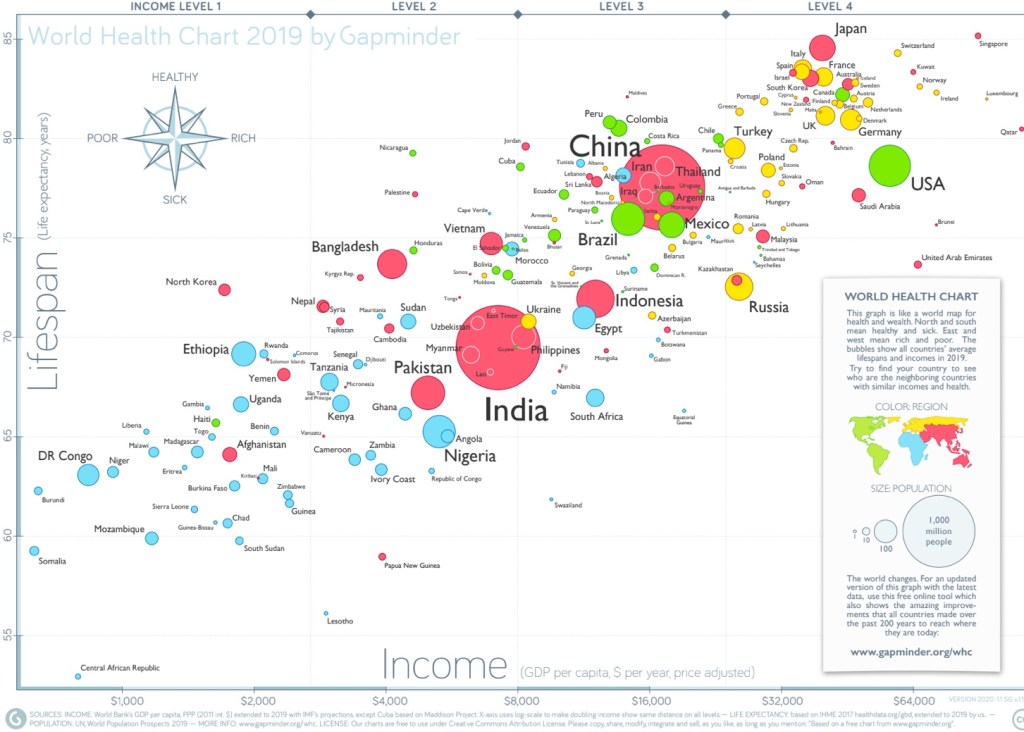
I have been reading a book this week called “Factfulness” by Hans Rosling. It is a fascinating read because it uncovers many of the misconceptions we have about the world. For instance our brains love the simplicity of splitting the world into haves or have nots, rich and poor; while the truth is that most of the world is in the middle. We also tend to have a negative view of the world because we hear many more negative stories than positive ones. As Hans says, a journalist would not last long writing stories such as “plane does not crash” or “child does not die early”. And us slightly older people tend to romanticise our memories of youth, remembering the great days playing out, rather than the nights we went to bed hungry.

The really positive news in the book is that key measures across the world continue to get better. When you read the title of this blog, what percentage did you come up with? Typically people choose a number well over 50%. That was true until about 1990. But it has been decreasing from around 85% in 1800 and the decrease has accelerated. The figure today is around 9%. I have spent a lot of time in India over the past twenty years, and a common comment from me is that alongside the wealth you see so much poverty, But I realise now that comment is based on what I first saw. When I started visiting, around 40% of the Indian population were very poor. The figure today is more like 10%.

The book was written in 2017 so does not have as clear a view as we do today of climate change and the pandemic. Do they halt the progress in its tracks? No, but they are both catastrophic events. Global warming is too late to reverse and some of the same challenges to how we think stop us paying attention. Newspapers in the UK this week have had headlines about the hot weather, but all in a positive light. And the pandemic continues to cause larger numbers of excess deaths than we have seen for years. But if the stats from the UK and US are to be believed, vaccination can break the link between transmission and death, so I remain optimistic that in 12 months time we will have bounced back. And the underlying improvements in society we have seen will continue – less poverty, less hunger, more gender equality, cleaner and available energy, improved health.

There are a whole range of free online quizzes on this subject available at gapminder.org. Go and have a look. You may well find your view of the world needs an upgrade!

Have a positive weekend, Pete

Blog at WordPress.com.

Up ↑