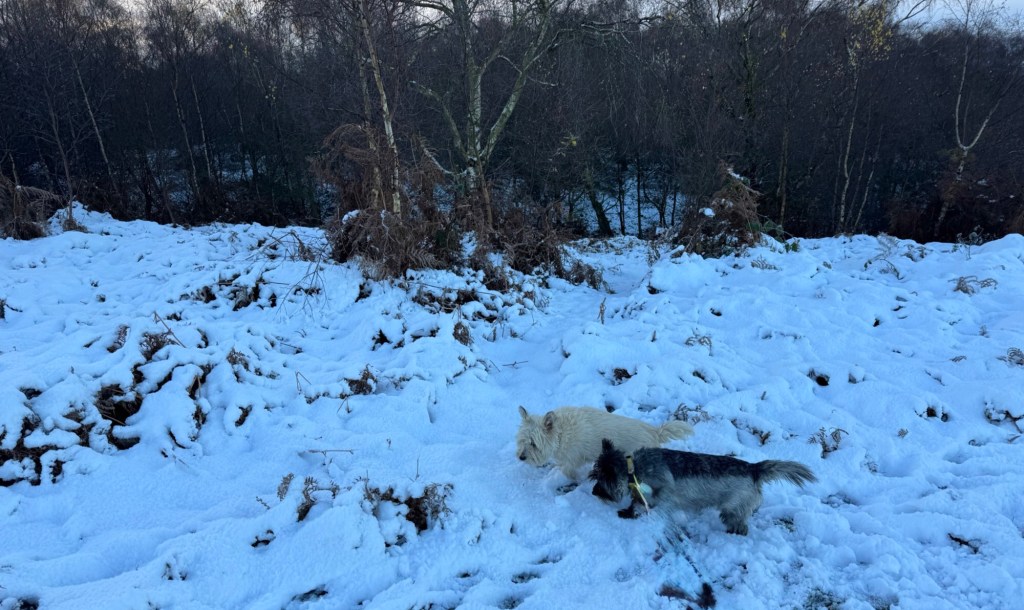
After a month travelling through Europe in largely sunny warm weather, it has been a shock to return to the cold of Britain. This morning it was -6°C when I took the dogs for their walk. Winter has certainly arrived.
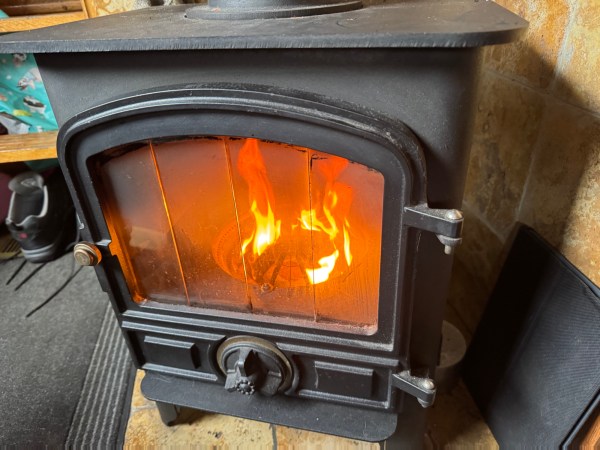
We have a bit more of a challenge on the narrowboat because our “bubble” diesel stove is not working properly, It is not getting to temperature and so sooting up. I need to find an engineer in Staffordshire who can fix it. We still have the “Webasto” diesel boiler so all is not lost and we can get a pretty cozy boat during the day. Overnight we turn the heating off so it does get pretty chilly but underneath the duvet and blanket it still feels safe and warm.
People often ask me how we live on a narrowboat in cold weather. It is after all a single skinned steel tube. But the reality is that the airspace is so small that it warms up pretty quickly. Hot weather in the summer is much more of a problem, when it can get like an oven. Not something we need to worry about this week!
It is a simple life on a boat. You soon realise what really matters. Staying warm in the cold. Staying cool in the heat. Making sure there is water. Making sure you can use a toilet. Getting food in the cupboard. In return we get a lot for free. Beautiful mornings and evenings. A kingfisher sitting on the back of our neighbour’s boat yesterday. A peaceful life.
We are in the process of buying a house. New complexities will arrive such as council tax, sorting out utilities, broadband. We even have to pay the council for a set of wheely bins. When we move in, we will get the benefits of not having to worry about filling up water, pumping out the toilet or replacing bottles of gas. But I know I will very soon want to be back on the boat. Even when it is cold.
Sadly, this is the final week of my adventure, travelling by train around Europe to celebrate my 60th year. I will be glad to be back home with Mandy and the dogs, but if I didn’t have any ties I would have been very tempted to buy a ticket for another month and keep travelling. I have seen so much and had so much fun!
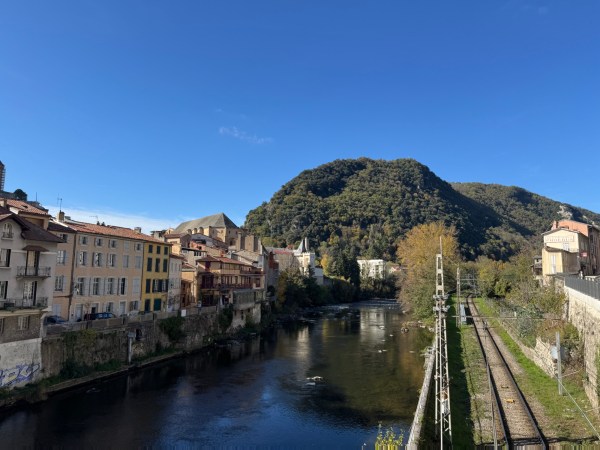
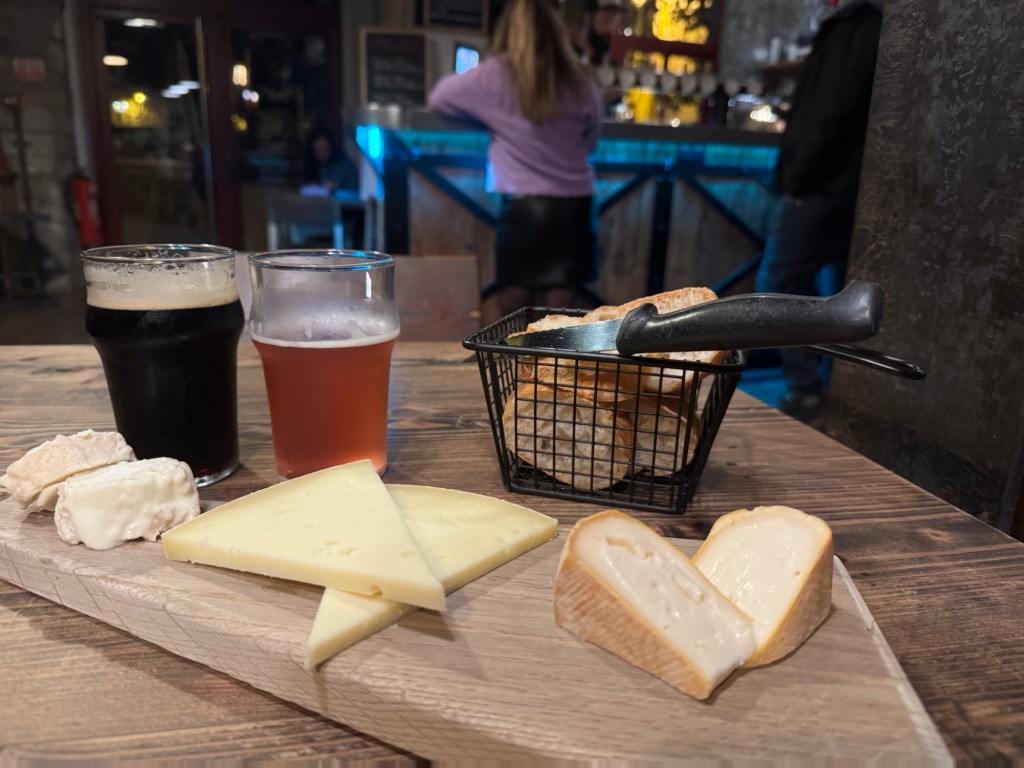
This week was in the west of Europe and unlike my other weeks has been in just one country – France. Fortunately France is a large and varied country and the week started travelling from Marseille on the Mediterranean, west along the riviera and then up into the Pyrenees to the medieval town of Foix. I have never been to this area, and I found it quite stunning and very French. My pitiful requests of “parlez vous Anglais?” were often met with a shrug or a shake of the head. I had the benefit of Google Translate if I needed it, but I actually found that being forced to use my schoolboy French made it easier. I got along, even after a couple of beers in the Foix microbrewery.
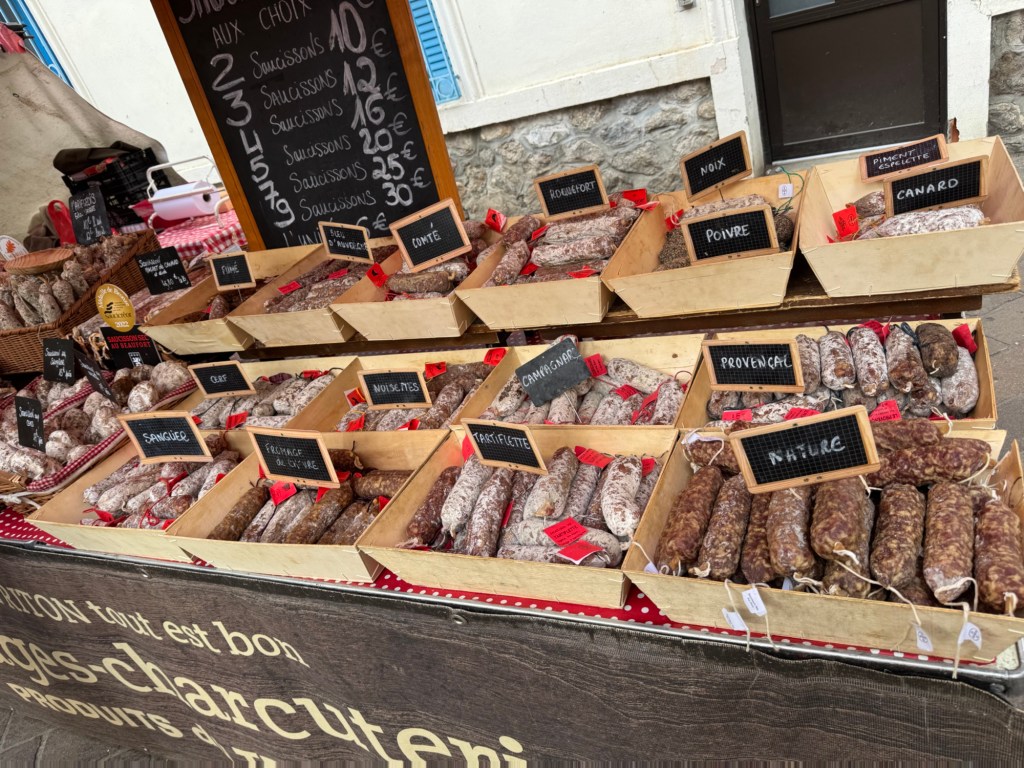
From Foix the train line goes even higher, to the Spanish border at Latour de Carol, 1232m above sea level, the highest station in France. The mountains get more pointy and the air gets thinner. From Latour I dropped back down a bit to spend an hour in the French ski resort of Ax Les Thermes. It is obviously out of ski season, and unfortunately Ax is one of those lower altitude ski areas that are becoming unviable with climate change. But the local market was busy and the town was investing in increasing tourism to take the hot spring spa waters.
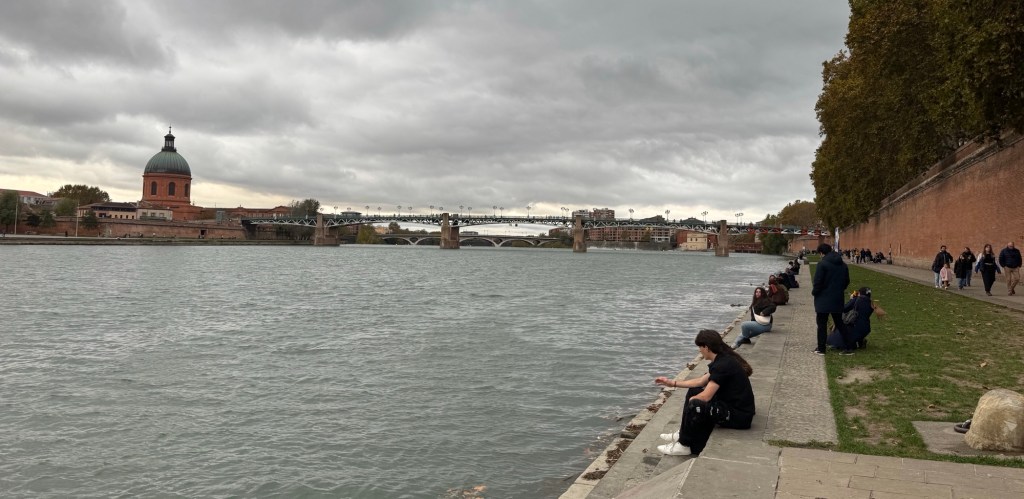
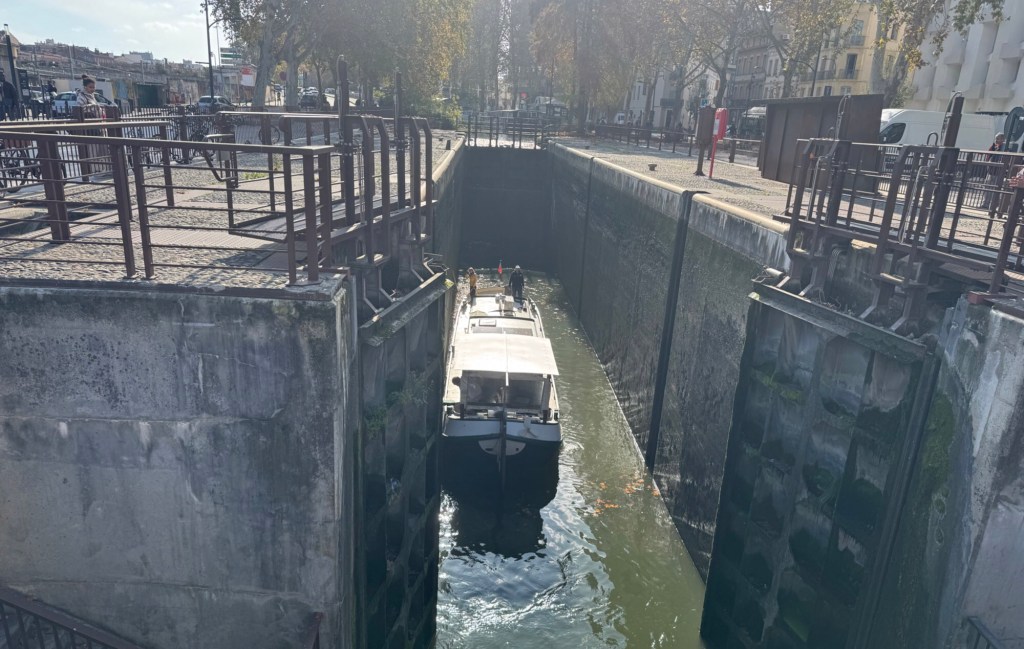
Toulouse was absolutely rammed with people because it was the weekend of the Toulouse Marathon. Avoiding the lycra myself, I wandered down to the river to soak up the history of this ancient port on the Garonne. I was also very glad to see the other Toulouse waterway – the Canal du Midi. I watched a boat coming up one of the locks, with more than a little envy. I will be happy to be back on the narrowboat next week.
From Toulouse it is not far to Bayonne and Biarritz on the Atlantic coast. Although development has merged these two towns, they retain very different characters. Biarritz felt to have faded glory as once the playground of the rich, and now a home for hippy surfers. There was a fine view from the lighthouse along the beach, and I sat for a while and watched them riding their boards, waiting for the perfect wave.,
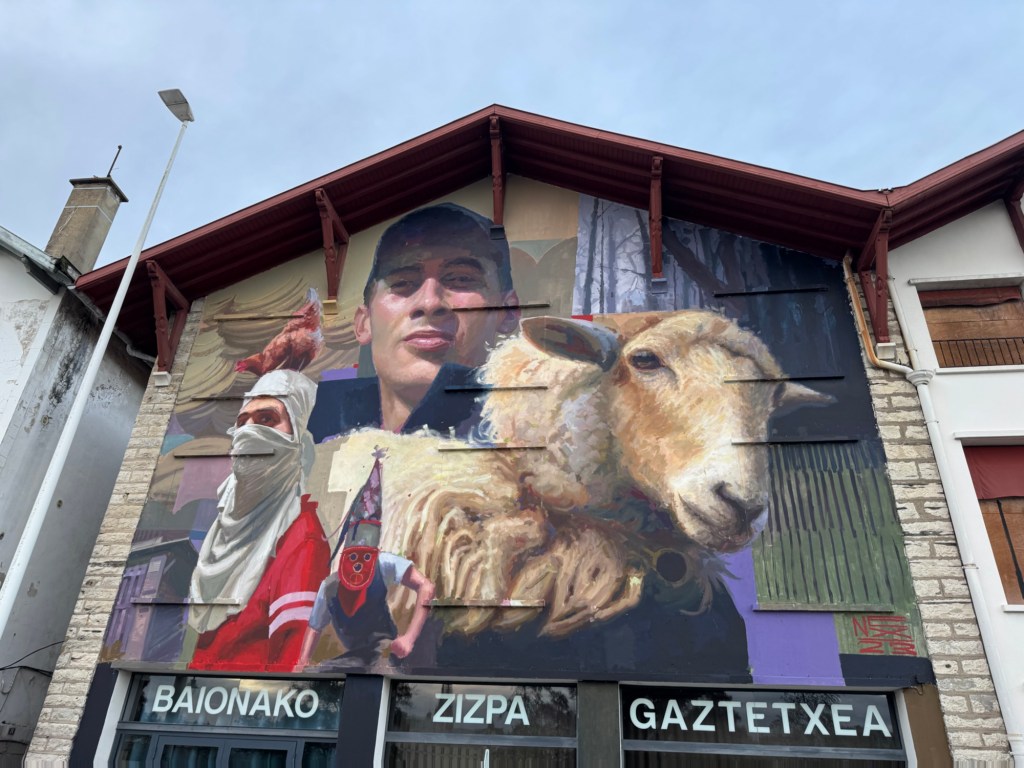
I preferred Bayonne. It is an old walled city, with more of a Basque character than a French one. All the signs were in three languages – French, Basque and Occitan. I spent a happy afternoon, wandering randomly around the town, soaking up the atmosphere. I discovered that Bayonne is famous for its street art. I visited one gallery which was full of such paintings. To me they felt incongruous on canvas and I preferred to see them on walls across the city.
On to Bordeaux. It is much bigger and busier than I expected. I got a little lost amongst the great buildings and monuments that the wealth from wine has brought to the town.
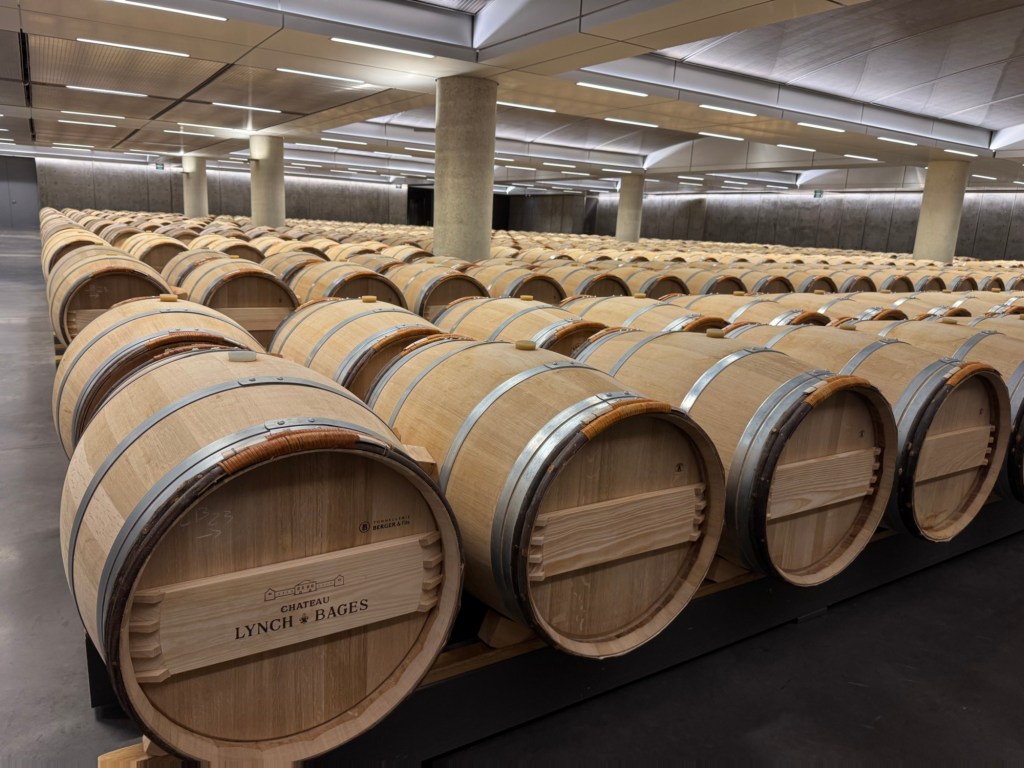
For my second day in Bordeaux I took a local train up the line through the Medoc, passing the vineyards of some of the most famous wine areas of Bordeaux – Macau, Margaux and Pauillac where I got off. I walked up through the vineyards and along the Route des Chateaux, where every few minutes I passed a new great house – Latour, Pichon Baron, Bellegrave, Fonbadet, Saint Mambert. I had a wonderful three course lunch in Pauillac for €21.50 followed by a tour of another Chateau – Lynch Barge – where they make one of the Grand Cru wines of Bordeaux. It was a fascinating tour and finished with a tasting of a few of their vintages – delicious but a little out of my price range.
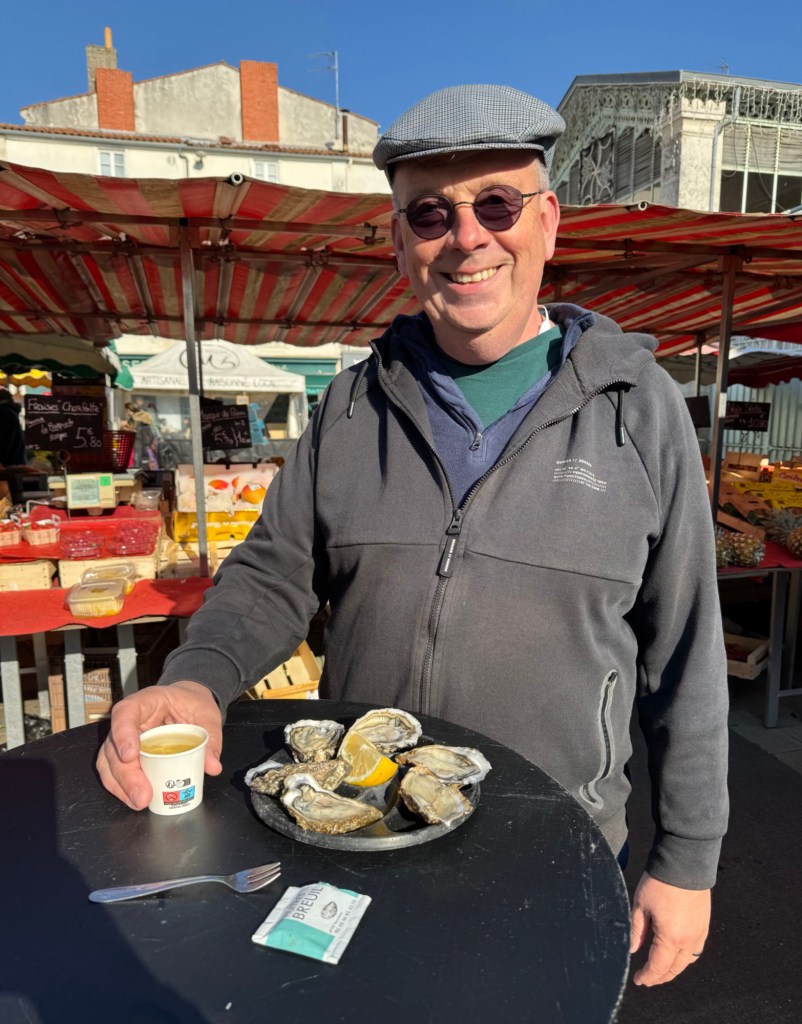
Coming to the end of my journey now, with La Rochelle – famous for its old port and the many sailing boats moored there. It is also famous for oysters, and I arrived at the market just in time for half a dozen of the best with a cardboard cup of wine – not bad for €8.
My last French train is to Paris today (Friday) and then back to the UK on the Eurostar tomorrow morning. This past month has been a life affirming adventure and one I will never forget. My top three tips for old interrailers:
Travel light. I have a 40l rucksack and it has been more than enough.
Be flexible. By all means make a plan, but be prepared to change it as you go.
Do it. Many people have dreams of a journey like mine but they stay dreams. Just do it.
I hope you have enjoyed my four week travelogue. I really really really have. See you next week, back on my boat.
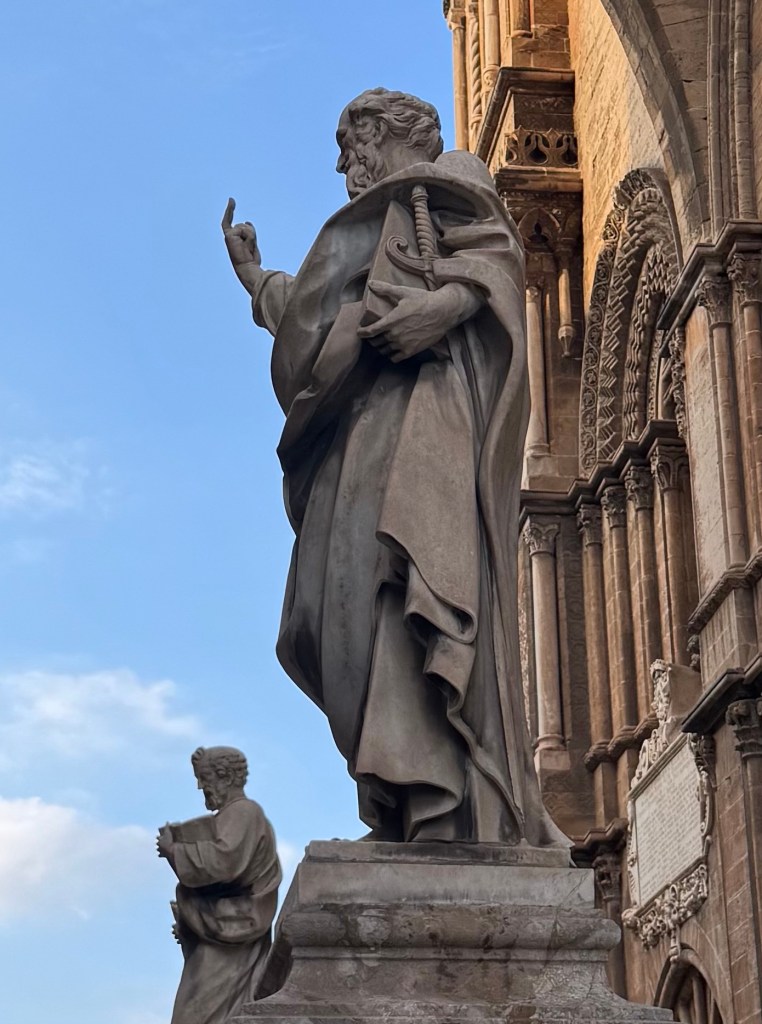
Over half way through on my month long train jaunt around Europe to celebrate being old, and despite all the travelling I am full of energy. Week 1 was in the North, week 2 in the East and week 3 has been in the South. My last blog ended with me arriving in Palermo. The good news is that there was no horse’s head in my bed. Instead I found myself attending mass in the Catholic Cathedral. I do not understand Italian, but my Dad was a vicar and so I could follow the rhythms of the service and it was very peaceful. Mind you, I am not sure what this statue was indicating, outside the door.
Scicily is a slow paced island and I loved my time there. I even bought a cap, like the ones they wear in Godfather 2. It will come in useful next summer on the narrowboat, especially if I need to resolve any family arguments.
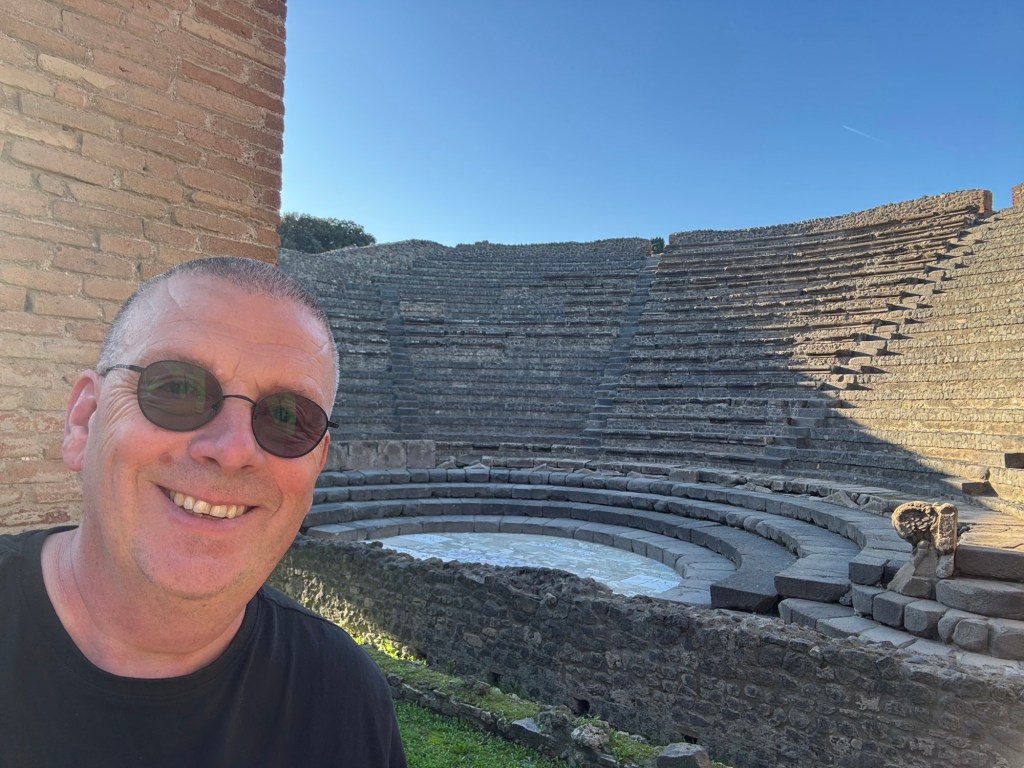
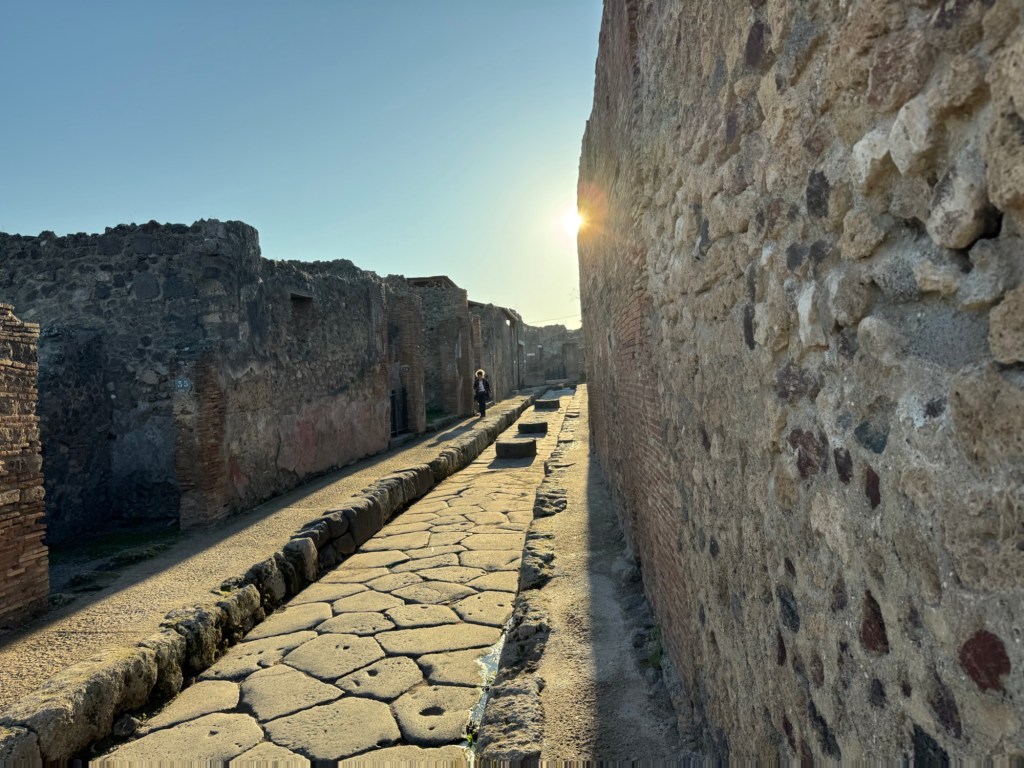
Naples was my next stop – two trains, an Italian haircut and a boat away. I have never been to Pompeii so that was my priority. It did not disappoint. The ruins cover a huge area with so many things to discover. And even better, because it was the first Sunday in the month, entrance was free. In my mind I was back in AD 79, under the shadow of Vesuvius.
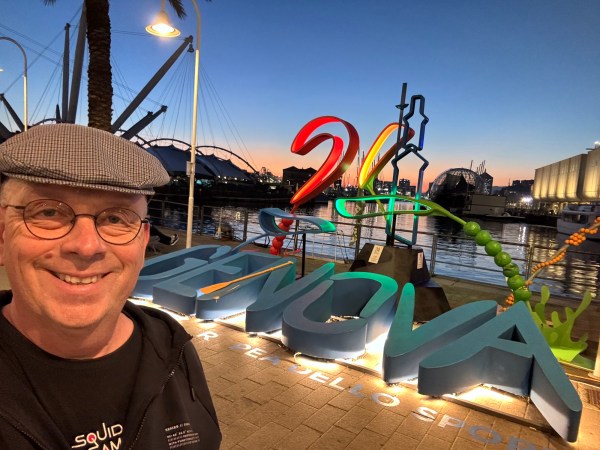
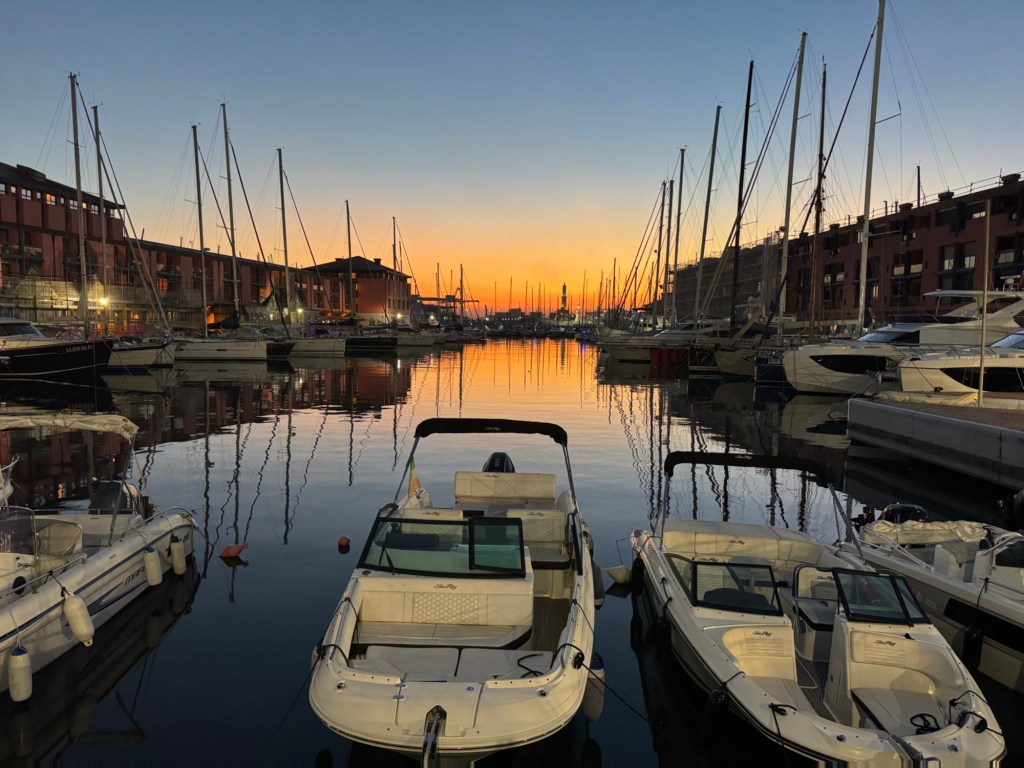
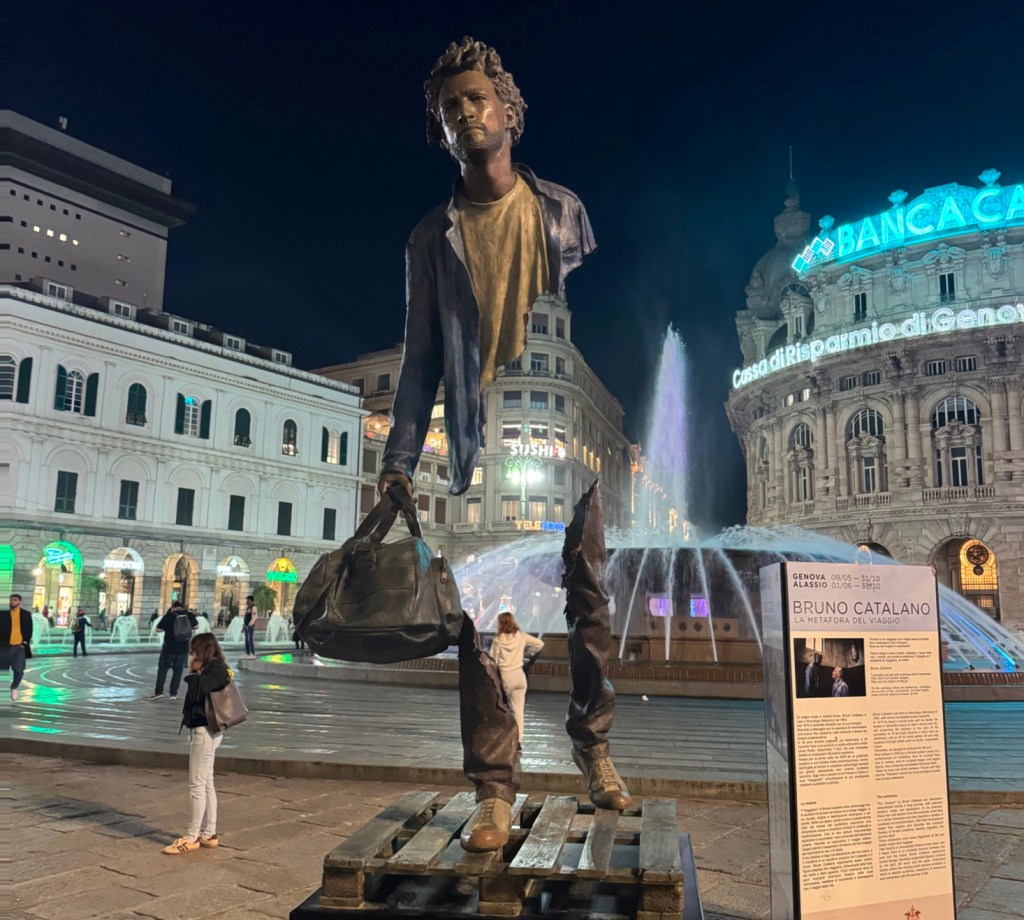
One Pizza Cappricciosa and a good night’s sleep later and it was off to Genoa via Milan. It is a long journey and the train was delayed, so by the time I got to the hotel, it was nearly dark. I decided to take a walk around the harbour to the old town, and I was rewarded with wonderful old buildings and boats. It really is a beautiful historic town.
Tuesday’s trip was on small trains across the border from Naples to Nice. I was lucky because the Italian train strike did not affect my journey. I was even more lucky because the views from the train were spectacular, as the track clung to the cliffs on the edge of the Mediterranean. I have been on some of the world’s greatest train journeys, including the Glacier Express in Switzerland, and the highland line in Scotland. This route is up amongst the very best – Italian Riviera, Monaco and Cote D’Azur.
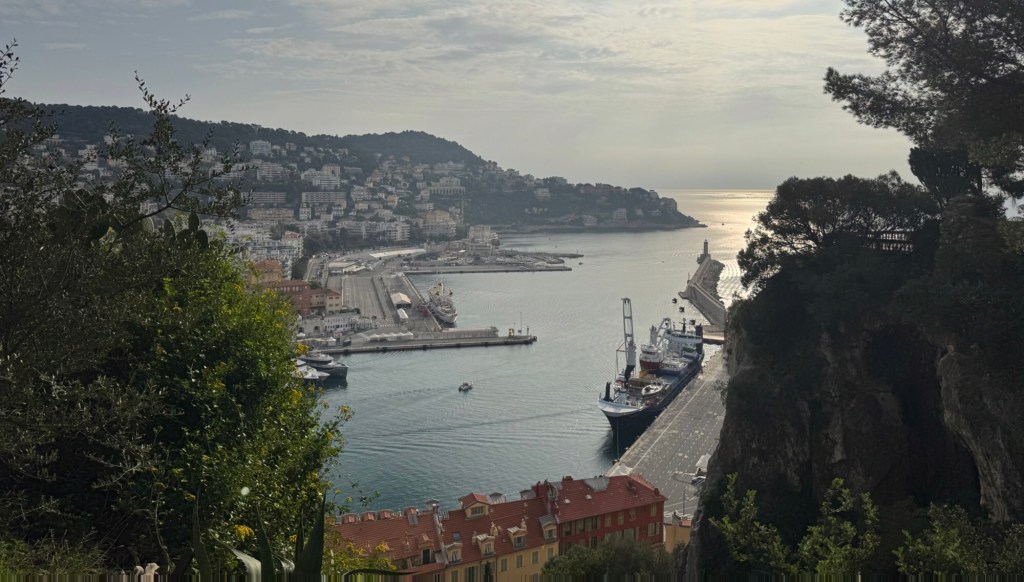
Nice is nice. I spent many hours wandering the streets and discovering old churches, art installations and gelaterias. I climbed the steep hill between the promenade and the port. It had the most stunning views. Another town I was sorry to leave.
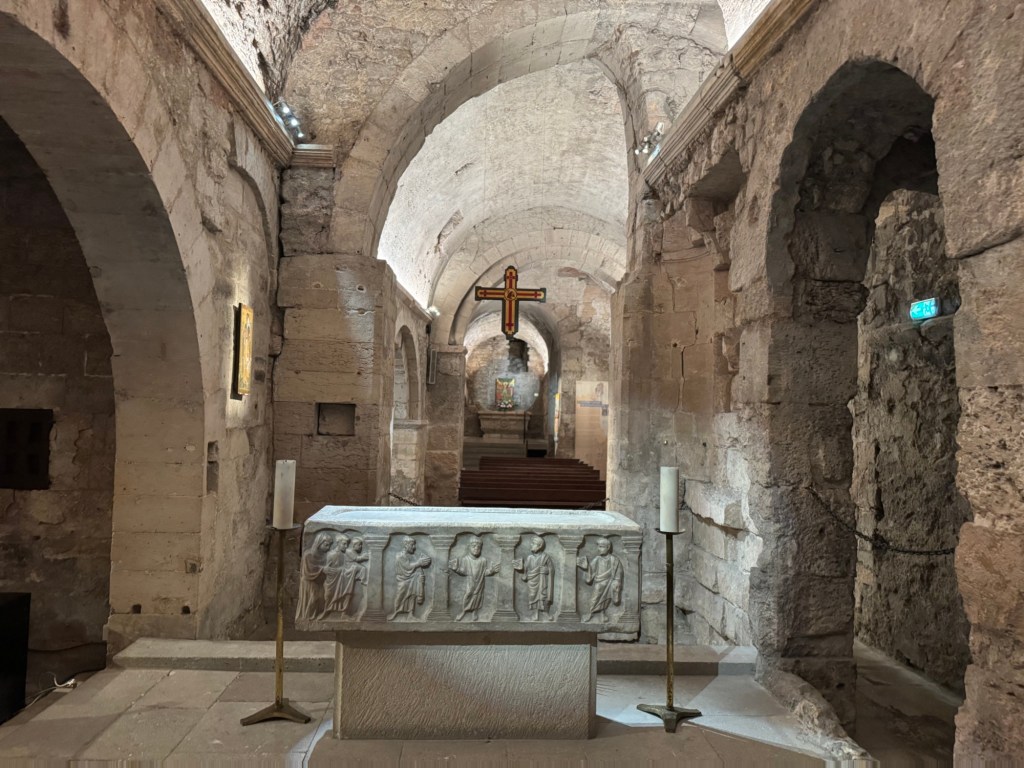
There was one more town to visit this week and that was Marseille. It is a cosmopolitan city, founded 2600 years ago by the Greeks. The basilica of Notre Dame de la Garde sits on a big hill overlooking the town. This time I cheated and took the bus to the top. Again, incredible views and things to see before I walked down the cobbled streets to the port. I love walking when I am travelling because there are always surprises to find. I wandered into one abbey and found an organist practising. I just sat for a while and listened to the free concert. Then, when I got up to go, I discovered a door to the crypt, and found underneath the church a series of small chapels, hewn from the rock. I would never have found any of this had I not been wandering and wondering.
Having travelled through North, East and South Europe, it will not surprise you that I am going West for the last leg of my adventure. I had hoped to get to Spain and Portugal, but a combination of poor train options and bad weather has encouraged me to change my mind and head to the west of France. I’ll tell you more next week.
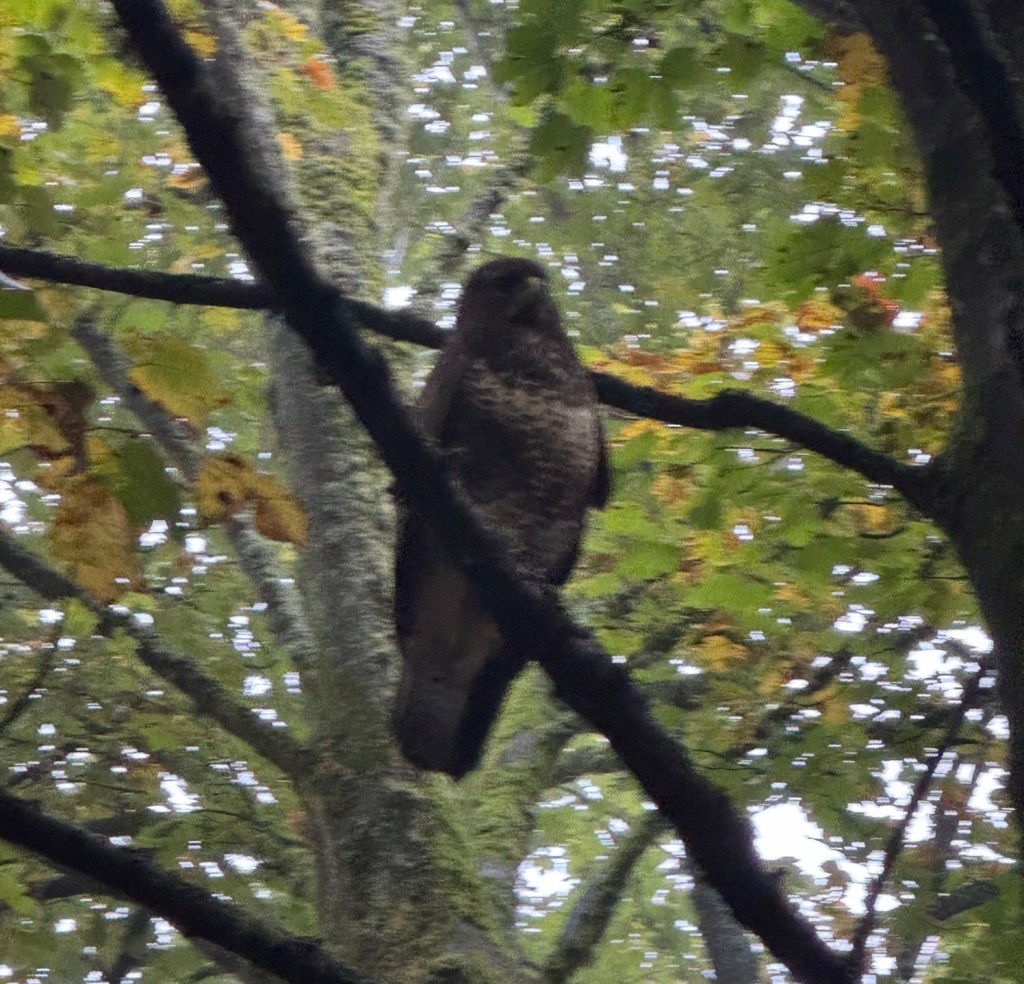
I was walking the dogs in Cannock Chase this week, when I came across this bird sitting in a tree above me.
The bird is about 18-24 inches long and sitting quietly on the branch. Apologies that the picture is not clear. It was early morning and the light was not great. But it is clearly a bird of prey of some kind, and I found it unusual that it would not fly away when it saw me and two noisy dogs.
Apple photos tells me that it is a long eared owl. The size is right but to me it does not appear to have long ears and the head shape is more like a falcon or a kestrel. But it is too big for them, and too small for an eagle. Having googled identifying birds of prey, I wonder if it could be a buzzard. If you have any clue, please let me know. And why was it not scared of me?
It is a week since we moored up for the season. We are still living on the boat because our new house will not be ready for another couple of months. But we do have a car, which is a treat after living without for six months. And it does allow me to go to places like this. Perhaps learning to live a slow pace of life on a narrowboat also frames my mind to notice things more like this bird. But what is it?
We have spent the last six months travelling thousands of miles in our narrowboat around the UK. From Stone we cruised up to Runcorn on the Trent & Mersey and Bridgewater canals. Then across to Wigan and along to the end of the Rufford arm of the Leeds & Liverpool. Over to Liverpool itself for a few days in the docks, and then all the way across the Pennines to Leeds. Then it was down the river Aire to the Calder & Hebble, where we needed to buy a four foot wooden spike to operate the locks. From Sowerby Bridge it was the Rochdale canal, one of the bleakest in the UK, but also very beautiful. That took us to the centre of Manchester, from where we travelled up the Ashton and along to the end of the Peak Forest at Bugsworth basin. After a short stay in Whaley Bridge it was back and down the Macclesfield back onto the Trent & Mersey. This time we took a left turn across the Middlewich arm of the Shropshire Union and up to the very end in the boat museum at Ellesmere Port. Back down again we came to the Llangollen where we joined Mandy’s brothers for a week pretending to be a hire boat. Since then it has been all the way to the bottom of the “Shroppie” and back up the Staffs & Worcester and T&M back to where we started.
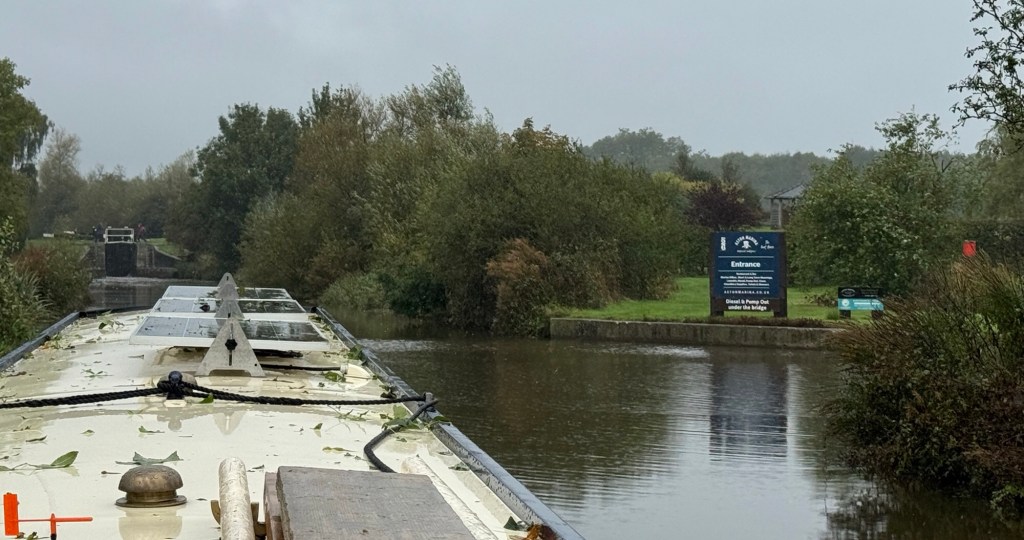
Aston Marina, Stone, Staffordshire
Every year since I retired we have said we had the energy and desire to do just one more year on the boat. And every autumn we look back on our adventures and say “just one more year”. 2024 has been no different – a very successful year on the boat, but not enough for us to say we have finished.
This winter will be a little different this year because we currently have no house. Our home in Scotland was sold in July, and the house we are buying in Lancashire will not be ready till November or December. So for the next couple of months this is home. Fortunately it is a very friendly marina, with all the facilities we need, and after our journeys this year it certainly feels like home. As the storms batter around us we can batten down the hatches, light the fire and relax.
We were travelling up a set of locks on the Shropshire Union canal this week, when I came upon this sad cuddly toy sitting by the lock.
I say “sad” for multiple reasons. Tigger himself looks sad – as if he is missing his owner. The soft toy is looking weather beaten. And I am guessing his owner must also be sad. Tigger looks well loved and someone somewhere will be wanting to give him a hug.
There must be so many special cuddly toys that over the years have been lost or forgotten. I am fortunate enough still to have my blue lamb from my childhood which in point of fact is a grey donkey, but I still call him “blue lamb”. One of my sons had a “puffalump” that became so worn with love that we secretly replaced it one night with an identical one, even going so far as to cut off a strap that had come off the original. My other son use to twiddle cushions and when he is tired (aged 34) still does so.
I guess it is something to do with feeling secure and safe. A special cuddly toy is an important thing to most of us. Where is yours?
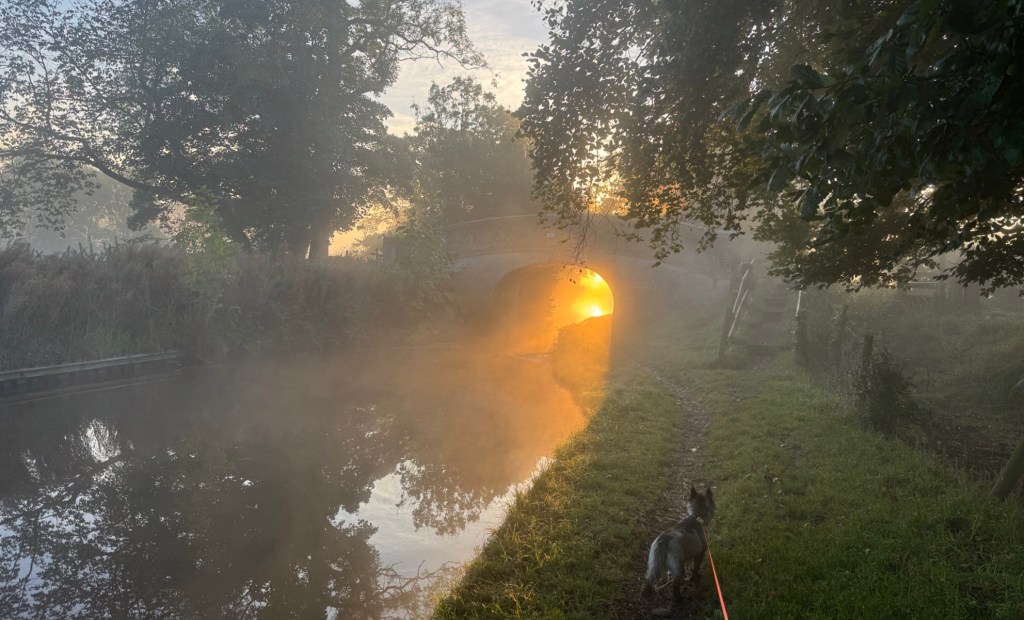
The weather right now is just about perfect for being on a narrowboat. We are waking up to cold crisp mornings with mist rising off the canal. We are getting really beautiful sunrises, sunsets and dramatic moons. During the day the temperature is rising to low twenties – warm enough for shorts and t-shirts.
Narrowboaters are notorious for complaining about the weather. It is either too hot because we live in a tin can, or too cold, because our fingers are going numb driving the boat. It is either too wet, so we don’t want to move the boat, or it is too dry, with water levels falling. It is either too windy, making turning impossible, or too still , encouraging biting insects. We are never happy.
But this week we are. So many smiling faces as we have passed fellow boaters on the Llangollen and Shropshire Union Canals this week. In truth, while I complain, I love living on a narrowboat in all weathers. But this is a very special time of year. Peaceful and very very beautiful.
Thinking back to pre-retirement, I would have been busy in an air conditioned office, missing the weather completely. I loved working but this is so much better.
It has been the quietist summer on British canals for many years. Volunteers from the Canal & River Trust tell me that boat numbers are down a third on last year. There are many reasons for this including a post Covid desire to go abroad, prices being too high from hire companies, and the very wet weather. However that has all changed since the beginning of September and this week on the Llangollen canal has been as busy as any I can remember,
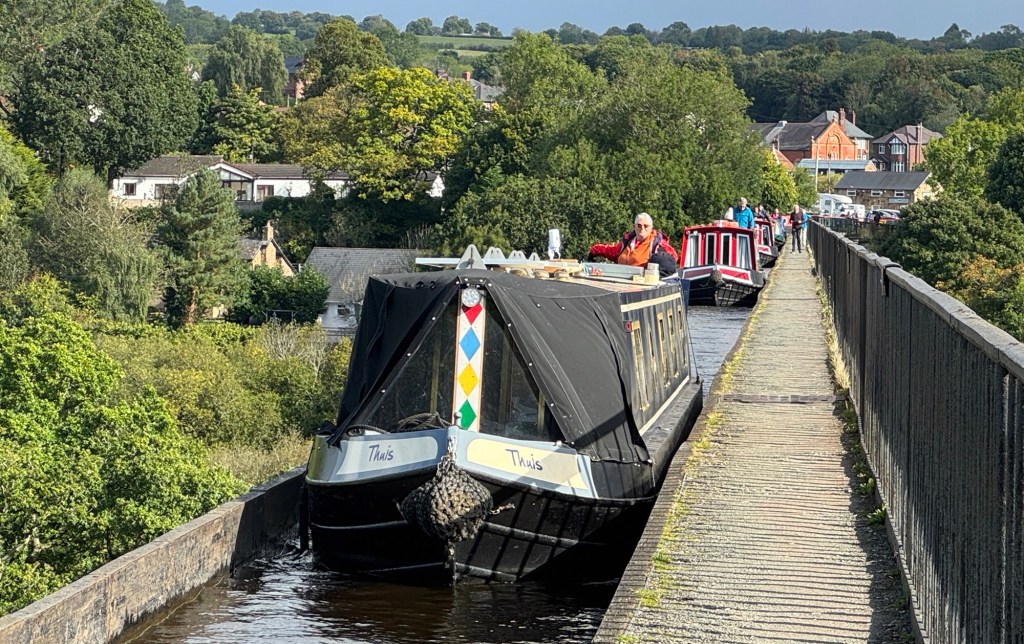
The Llangollen is notoriously a very busy canal and we would not usually have chosen to travel it till later in the month. Often when the kids have gone back to school, retirees get their boats out of the marinas and busy the network. But we had the opportunity to travel with Mandy’s two brothers and their partners, who we’re hiring a boat for a week. It has been a lovely week. We have been down to the very end of the pretty Montgomery Canal, and then along to Llangollen, over the famous Pontcyscyllte aqueduct.
For some reason I don’t understand it is not just old folk like us on the canal this week. Every hire firm seems to have been fully booked for the first time this year, and the cut is full of holiday boaters., We have met groups from America, Canada, Australia, Denmark, Switzerland, Sweden as well as English and Welsh. Why are they all travelling this week?
It has made some of the navigating a little tricky. There was one moment where I thought there would be a standoff between the queue of westbound boats who could not get into a single track tunnel because of boats coming the other way, and a queue of eastbound boats who could not leave the basin after the tunnel because of boats on the aqueduct coming the other way.
Having said that, it has been a really lovely week, full of beauty, adventure, engineering and family. Not a bad way to spend a week… and my life.
There are certain jobs on a narrowboat that are not very nice. Pumping out the toilet tank is perhaps the worst. But pulling weed and rubbish from around the prop comes a close second. And this week’s canal from Chester to Ellesmere Port is one of the weediest in the country.
If you drive through the vegetation at normal speed, the propellor turns and pulls the weed around it. This causes the steering to fail, the boat to go much slower, and even the engine to stall. To avoid this, there are techniques we have learnt. Drive at speed up to the patch of weed, and then take it out of gear. The boat hopefully floats through the weed unscathed. Or if you do get some weed, try a hard reverse to “spin” it off again. But if neither of these works, you have to moor up the boat, lift the deck boards, climb into the engine bay, unscrew the weed hatch cover, reach down into the murky cold water and pull the weed off the prop and rudder. Fortunately this week I have only had to do that a few times.
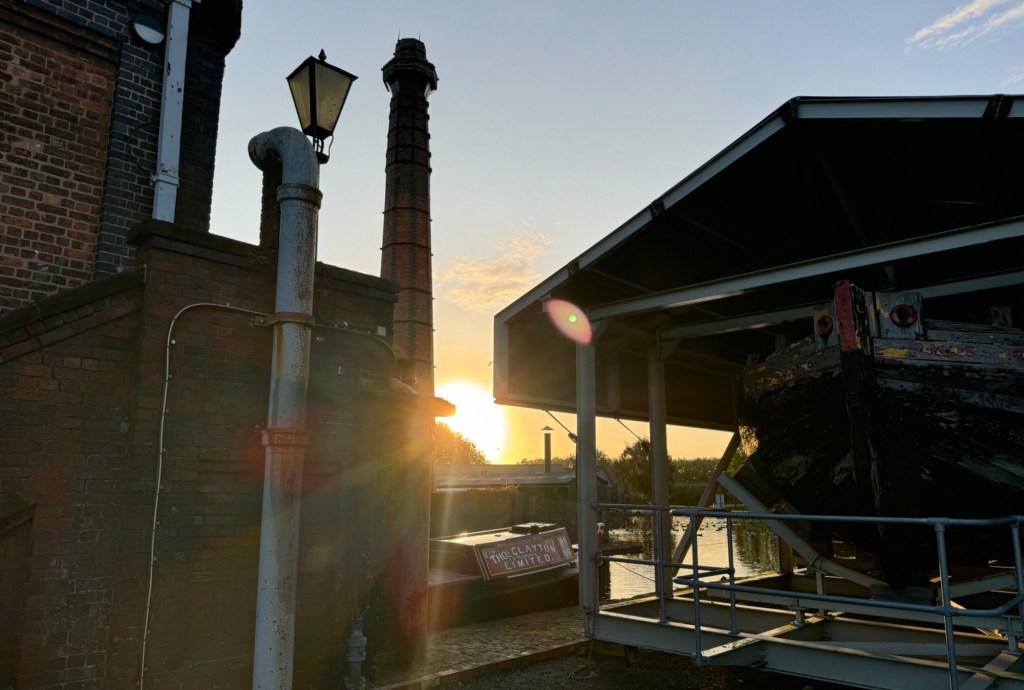
It was worth the effort though, because we were able to moor for two nights in the middle of the National Waterways Museum at Ellesmere Port.
I have written in a previous blog about nights in the museum, but suffice to say it is one of our favourite moorings in the mornings and evenings when no-one is around and we have the place to ourselves. It is also a place full of history, where the Shropshire Union Canal joins the huge Manchester Ship Canal and the River Mersey. In times past it would have been a dirty, noisy dock with hundreds of workers and surrounded by heavy industry. A quiet place today, full of memories.
My son Rob says he loves most of my blogs but not the ones where I complain about something that has annoyed me this week. Sorry Rob but I don’t like weed.
It has been a lovely week on the cut (canals). After last week’s heatwave it has settled down to around 21°C each day which is very pleasant. At the same time we are beginning to notice it is not fully light first thing in the morning, and it is dark when we go to bed. There have been a few mornings where it is cold enough for a mist to rise from the canal when I take the dogs out. And some leaves are just beginning to turn brown at the edges.
August is too early for autumn. It is still the school summer holidays in England and many of the crops are still growing in the fields. But it is the end of summer, and there is a flavour in the air of what is to come.
I love days like these. Warm enough for shorts but not too warm. Sunrises and sunsets. When we set off in March it seemed as if this cruise would last forever, but we are already beginning to plan how we can get in everything we want before the end of this year’s adventure – our annual visit to the boat museum in Ellesmere Port, a week sharing a holiday on the Llangollen with Mandy’s brothers and partners, one last trip on the Shroppie and Staffs & Worcester.
The important thing for me, and not my natural instinct, is to put that planning aside and enjoy every day. Being retired is like being on a narrowboat. It is not about the destination, it is about loving the journey, whether in winter, spring, summer or autumn.














 Pete's Blog