Ten things to look for in a good marina

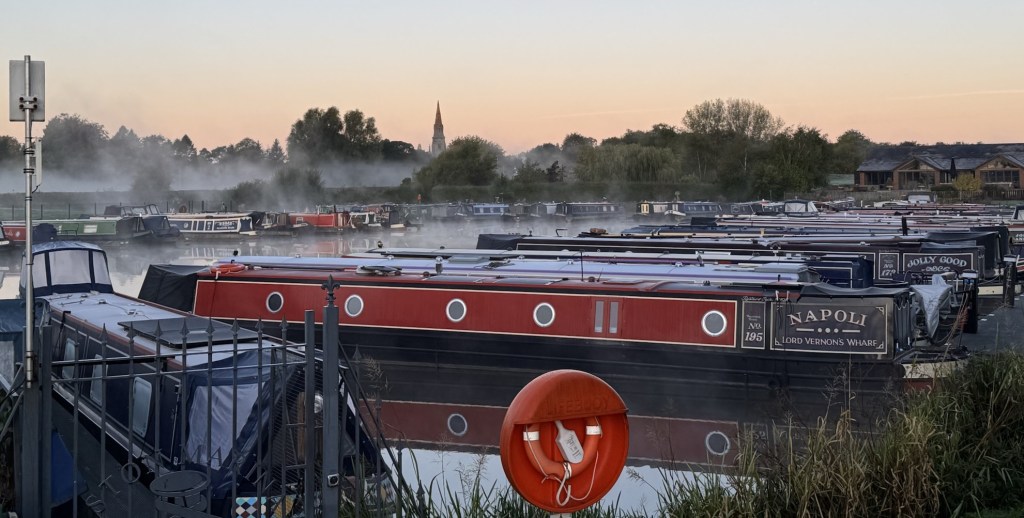
We are currently moored at Aston Marina, in Stone, Staffordshire. We have moored in many marinas over the years and this is our favourite. So what is it that makes a great marina for us?

  1. Location location location. The canal network is extensive and there are marinas all over the UK. For people that work it is important to have a marina nearby. For us, it is important to have a marina near the middle of the network so that we can get anywhere.
  2. Reasonable prices. It is never cheap mooring n a marina. Even basic canalside moorings can cost over a thousand pound a year, and good marinas are quite a lot more. But there are some marinas near fancy places like Henley or Windsor that cost a ridiculous amount – because they can.
  3. A laundry. We have a washing machine on the boat but before we had it, the marina laundry was invaluable and we still regularly use the tumble drier.
  4. Toilets. Sorry to bring the blog tone down but the toilet on the boat empties into a tank that we have to pump out. I prefer to use someone else’s facilities when I can.
  5. A pub. We are spoilt on the UK canals in that there are many pubs along the way so that if we do not fancy cooking we can get a meal and a beer overlooking our mooring. Marinas without pubs can be a bit isolated.
  6. Moderate wind. Narrowboats have long flat sides that act like sails when the wind catches them. On canals and rivers you usually have protection from cuttings and trees, but some exposed marinas are almost impossible to navigate in. So a marina with hills around is always preferable.
  7. Appropriate rules. Without rules, marinas become mess. If one boat gets away with building a pretty garden next to their boat, within months there are things being dumped all over the marina. There are rules that we don’t like. At Aston we are not allowed to dry washing on our whirlygig. But at least the rules are fair.
  8. Security. In general we feel quite secure on the boat, but when we have to leave it for a few weeks, we worry that it might be broken into. Good marinas have the boats on secure jetties behind locked gates that only boat owners can open.
  9. Friendly boat owners. We have stayed on marinas where there are cliques of boat owners that spend their time whinging about others. At Aston we have found just about everyone friendly and helpful.
  10. Friendly marina managers. We have also stayed at marinas where the managers do not understand boating or boat owners, and treat it as “just a job”. Sadly this can be particularly true at large chains of marinas. Great managers uphold the rules equally and are always ready for a chat and to help out.

It is often said that people considering buying a Narrowboat should find a mooring before they look for the boat because good ones are like hens’ teeth. certainly we were on the waiting list for Aston for nearly two years, while we overwintered in other marinas. And for us, it feels like home.

How many tests are needed to tell me that my eyes are deteriorating?

I have had so many eye tests over the past two weeks. And they have not finished.

It all started with a simple test at Preston Specsavers. I use glasses for distance and reading but have not had a test for five years so I thought it was about time. The test was free with the NHS but they asked if I would like to pay £5 for an eye health test while I was there. I thought “why not?”.

The traditional test with me reading increasingly small letters went well. My reading eyesight is slightly worse and my distance sight is slightly better but nothing to require me changing my glasses, so good news.

But the eye health test was more comprehensive. They puffed air at the eyes, took photographs of my retinas and got me to do a field test where I clicked a button every time I saw a light in the periphery of my vision.

This last test showed some anomalous results so they got me to repeat it two more times and had a computer analyse my optic nerve scan. The ophthalmologist was still not happy so referred me to a glaucoma specialist to come back the following day

So day 2, I came back and did another raft of tests with fancier machines. I had eye drops to dilate my pupils, coloured dye in the eyes, lights in my eyes, a better field test, and more precise scanning of my eyes. This time the field test came back clear, but one of the computer analysed images showed potential thinning of the left optic nerve. This was odd because if it was glaucoma we would have expected the eye pressures to have been high on the puffer test, and missing areas on the field test. So the glaucoma specialist decided I needed to be referred to a more advanced expert.

I was expecting months to wait but I heard back in days and had an appointment with another optician, in Lytham, for yet another field test. I called to check whether this was really necessary because I had already had four of these tests, but was told that because I was now seeing people from CHEC (Community Health Eye Care) I had to do their tests.

Two days later I was back with a consultant , this time in Blackpool. More eye drops, more eye exams, more detailed pressure tests and cornea thickness measurements. The result – guess what – I need more tests. Apparently I am a Glaucoma suspect but not a Glaucoma patient. The symptoms are something called “cupping” in the left optic nerve and could be caused by short sightedness when I was a child. I will need to wait another 6 weeks but need better scanning of the optic nerve and unbelievably yet another field test!

Maybe I should be grateful for the NHS and that I can get so many tests for free. Maybe I should be grateful that I am retired and can take whatever time I need for appointments. But I have to think that there has to be a more efficient way to diagnose common eyesight problems for oldies like me.

Hey – I am in a Facebook group called “Dull men’s club”. Would this week’s post be suitable?

Is this the year when flying things take over the world?

It has been a very dry start to the year, and often a hot one. This week we have had a few days of rain which are very welcome for gardens and for canals although we will need literally months of rain to fill our reservoirs again. But one thing the rain does seem to have done is to bring out the flies and wasps.

Fortunately the flies have not quite grown this big

It is like we are all living in a jungle. Small flies, big flies and worst of all those horrible horse flies that cover my legs and arms with itchy lumps as they munch their way through me. And wasps – so many wasps buzzing around and annoying the dogs.

We have been trying all sorts of things to prevent these insects. Citronella has no effect. Mandy’s home built sugar trap has trapped nothing. We have ordered some peppermint oil to spray around but I have little confidence. My window frames are covered in tin drops of fly poo. Yuk.

I have seen many dire warnings of the impact of climate change – fires, floods, heat waves. But the world being taken over by flying things is a new one.

Do you have any good solutions?

Why would a village be proud of being “boater hostile”?

Earlier this week we travelled on the North Oxford canal through a village called Ansty in Warwickshire. I was ready to moor up for the day so was looking for a nice stretch of armco to tie up to, with good views. Unfortunately though the whole village there were “no mooring” signs every few metres along the canal.

This is very unusual. We boaters have many rights from hundreds of years of boating and one of them is a right to moor on the towpath side of almost every canal. Sometimes there are short term moorings in the centre of towns where you can just stay for a couple of days. Sometimes there are long term moorings where boaters pay to moor permanently. But mostly you can stay pretty much anywhere for up to 14 days.

So why is Ansty to anti boat? Their Parish Council website front page claims that the village is the most boater hostile on the network but does not explain why.

All I can think is that the canal goes through the village on an embankment and so boaters can see into the upstairs bedrooms of the nearby houses. But that is true in many many parts of the canal network and besides the canal would have been there two hundred years before these houses were built so why not just use curtains? Besides which, we boaters get very used to gongoozlers peering through our windows.

We are very privileged being allowed to moor in the most beautiful parts of the UK so I am not complaining too much, but I won’t be visiting Ansty again any time soon.

The perils of narrowboating in a drought

We have been tootling along the Oxford Canals this week. It has been a little disappointing because we have had to turn around before reaching our destination.

We had hoped to make it to Oxford, city of dreaming spires. It is a beautiful town and a lovely route to get there through canal history in Banbury, Aynho and Thrupp. We would have been able to catch up with our friends Martin & Saskia and my Aunt Dorothy. I was really looking forward to it.

Unfortunately there is a drought in this part of the country. There has been very little rain since February and the Canal & River Trust (CRT) are really struggling to maintain water levels so that boats can continue to navigate the canals.

The photo above shows one “pound” between two locks where we completely grounded this week, and had to wait for a CRT chap to let water down to us before we could continue with our journey.

We have seen more and more notices from CRT about lock openings being restricted and canals closed because of lack of water. I am pretty confident we would have made it down to Oxford but the big risk was that the South Oxford Canal, already 30cm down, would be closed for months and we would not be able to get back.

So at Fenny Compton we winded the boat (turned it around) and are now heading back to the Midlands, hoping that we will not be held up too much. I reckon if we can get through the Atherstone flight of locks in a few days time, we will be OK.

I am well aware that such inconveniences from Climate Change are nothing compared with people losing their livelihoods and even lives in fires and floods. But it is a reminder in our little bubble that the world is changing.

On a brighter note we did see one solution to dry canals:this week.

We saw this narrowboat landlocked in a field. The owner has cut a small canal into his land, moved his boat into it and then filled the canal in behind him. This means he can live on the boat near the canal without paying a licence to CRT. He even has his own greenhouse to grow food. It is not what I boat for. I love the travelling. But it is one way to deal with droughts!

I don’t miss work, so why am I crying?

I have been retired now for 4½ years. I can honestly say that during that time I have never wanted to go back to work. I am a very lucky person to be able to enjoy a retired life travelling on Narrowboat Thuis around the canals and rivers of the UK. During the winter I get to go on long holidays and enjoy just having time.

So why this week did I find myself with tears rolling down my cheeks after finding an old work email?

Don’t get me wrong. I really loved working. I was passionate about work and passionate about my team. We worked hard, made a difference and had fun. Many work colleagues could not believe I was retiring early because I threw myself into everything I did.

The truth was that a few years earlier a friend had passed away and it had made me and Mandy re-evaluate everything in our lives. We had the opportunity to take some of those adventures we had always talked about and so with a bit of financial planning we moved on.

But when I was going through some old emails this week I came across the leaving video that my team had made for me when I retired in December 2020. It was a stark reminder of Covid, with everyone at home under lockdown, but each of them said some very lovely things about me and I realised that while I do not want to go back to work, I do miss being with my team.

So I raise a glass this week to GB, Gopal, Jamie, Jude, Kathy, Linda, Matt, Mike, Nat, Om, Prerana, Si, Toni, Veerle and all my previous teams. It was always a pleasure and I miss you.

Why does the Coventry Canal have a gap in the middle?

We are travelling towards Oxford on Narrowboat Thuis. That means navigating the Trent & Mersey, The Coventry, the North Oxford and finally the South Oxford Canals. It will take us about three weeks. There is one complication in this route. The Coventry Canal starts at Fradley Junction and travels down to Coventry city centre. But there is a gap of a few miles in the middle.

The good news is that this gap is filled by a chunk of the Birminghams and Fazeley Canal. Why?

In a week in which the HS2 train scheme overran yet again, it is reminder that in history nothing changes. In 1768, at the height of canal building mania, a group of rich entrepreneurs got together to build the Coventry Canal, with the aim of connecting Coventry to the Bedworth coal fields and then the Trent & Mersey Canal at Fradley junction, joining Coventry to the North of England. They employed the greatest canal engineer of the time, James Brindley, who had previously planned the Bridgewater, the Chester, the Trent & Mersey and the Staffordshire & Worcester. Everyone was very optimistic.

At first, everything went well and in just a year they were bringing cheap coal from Bedworth to Coventry. But then the money began to run out and by 1771 they had sacked Brindley and gone bust. Eventually more money was found but it took till 1790 to extend the canal to Fazeley, where by that time the Birmingham and Fazeley canal had been built, connecting Birmingham to the Trent & Mersey at Whittington Brook.

Around the same time the Oxford Canal was completed, connecting the Coventry to Oxford and hence London on the Thames. This was immensely successful and at last the shareholders began to make money, big money. They wanted to realise their original plans, and were able to buy the stretch from Whittington Brook to Fradley from the Trent & Mersey. But the Birmingham and Fazeley refused to sell.

So there we are today, with the Coventry Canal split in the middle.

I love canal history. Our life today was enabled by a small number of entrepreneurs who lost or gained fortunes. And by thousands of poorly paid navvies, cutting the navigations with picks and shovels.

We are so lucky to be able to enjoy the fruit of their labours. And to remember their sacrifices.

How long is 29 years?

I went to the cinema this week, to see “Mission Impossible – The Final Reckoning”. It started slowly, but once it got going, wow what an adventure! I have been a fan since the first film in 1996, and this final film brings all the stories together. It seems only yesterday that the franchise began, and now it is all over. The time since 1996 has gone in a flash.

By coincidence I have also this week been listening to podcasts and watching videos about the end of the Second World War. That was a different time; a time for my grandparents, a very long time ago. And yet, when I was born in 1964, that was only 19 years after the war.

So how can 29 years be no time at all and yet 19 years be an age? It must be a bias we all have to our lifetimes. My mid thirties children would probably classify the fall of the Berlin Wall as being part of history. For me it is not long ago. Current teens would probably classify a world without smartphones as being part of history, but for me, I remember my first brick like mobile phone with great affection. It was a Nokia 2140 and I paid for 15 minute of calls every month, with no texts and of course no data. It was the coolest thing in the world.

I love researching family history so I decided to ask my Mum about her own childhood recollections of times that I consider to be history. Interestingly her strongest memories are about family and friends. Yes there was a war on, but that was just background to growing up. It was normal.

She did say that her favourite film was Bambi. That was before even Mission Impossible 1. A very long time ago.

Five reasons why I like Narrow Escapes

You would think that living on a narrowboat would be enough boating for anyone, but over the past few weeks when we have moored up for an evening we have been enjoying watching “Narrow Escapes” on Channel 4. This was a surprising hit for the channel when the first series came out last year. I say surprising because it has no celebrities, no fast action, no mystery. It is just a wholesome look at real people living in boats on the UK canal network.

I think we enjoy it so much for a number of reasons

  1. We know the locations. Each programme follows a number of boaters on rivers and canals around the UK. Since we have now travelled pretty much the whole network ourselves, it brings back so many happy memories.
  2. We know the people. Some of the boaters featured are new to us, and I look out for them on the cut. Others we have met before and we can reminisce about what we thought of them in real life.
  3. We know the life. The programme is designed for people who do not boat, and shows what boaters get up to. There is many a knowing look between me and Mandy when they show the trials and tribulations of living on the water.
  4. We know what not to do. A lot of the people they feature are new to narrowboating and we can spot many mistakes they make before they happen.
  5. It is not a vlog. There are many many narrowboaters who produce video blogs. I confess I do enjoy some of these but some of them are pretty self indulgent and often far too long. Professional editing is a wonderful thing.

The OG of Narrowboat TV is Robbie Cumming, with his Canal Boat Diaries, which is now on the Yesterday Channel. He started off on YouTube eight years ago and I still watch him. But for boaters and non-boaters alike I recommend Narrow Escapes. Wholesome TV.

A tree is down across the canal. What should we do?

We are back on Narrowboat Thuis this week. We have missed boating these past few weeks. Our son Rob and fiancée Alessa borrowed the boat last week and took it half way round the Four Counties Ring. They took good care of it and finished at Market Drayton. So with some shuffling of cars, we met them there and are now cruising back to the marina in Stone. We need to be back for next Thursday which should have given us plenty of time, but on a Narrowboat, nothing is predictable, and on the first afternoon we saw a warning from Canal and River Trust (CRT) that the canal was closed ahead of us due to a fallen tree.

It was not just any fallen tree. The CRT team had visited it and decided their chainsaws and equipment were not hefty enough for the task. A specialist contractor would be required and that could take a while.

There is no point getting stressed living on a boat, so we moored up by a good pub and prepared to wait it out.

But then we saw a boat coming towards us from the direction of the stoppage and they explained that in fact the tree had fallen in such a way that there was room for a Narrowboat to pass underneath. It might not meet the CRT Health and Safety guidelines but it seemed fine to us, so we set off again and passed happily under the heavy tree before the pesky contractors arrived to close it down.

Life on a Narrowboat is full of adventures. They may not be world changing but each day has surprises and problems to solve. Sometimes it is a physically tiring life, being outside and moving heavy locks. But always it is a mentally tiring life, despite being the coolest most chilled thing we have ever done.

We are glad to be back.

Blog at WordPress.com.

Up ↑