Nottingham in a Narrowboat

We have travelled most of the UK canal and river network over the past five years. There are a few loose ends and this week we ticked off another of them – Nottingham. Within a few miles this used to be a real hub for water transport. There is the wide river Trent, there used to be a Nottingham canal through the town centre and a Beeston canal past the massive Boots works. Nowadays these are merged into the Nottingham and Beeston. In addition there is the Erewash canal, the river Soar and the start of the Trent & Mersey canal. Two further canals, the Derby and the Grantham have not been navigable for many years.
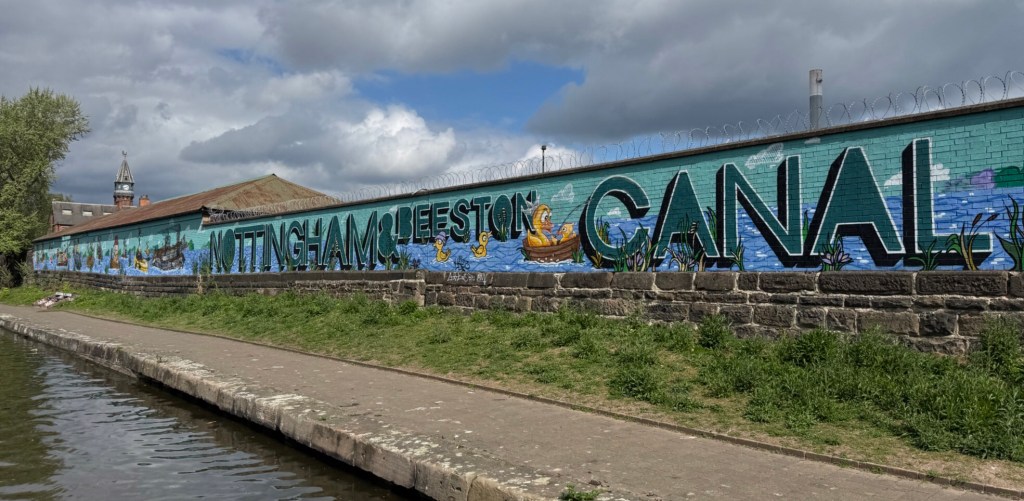
These days the waterways here are no longer used for industry. There are just leisure boaters like ourselves. A wide variety of people on the cut. Around Nottingham town centre there are homeless people living in tents, and wealthy owners of gin palace yachts. Some of the canal is run down and a bit rough. Other areas have been fully gentrified and look beautiful and expensive.

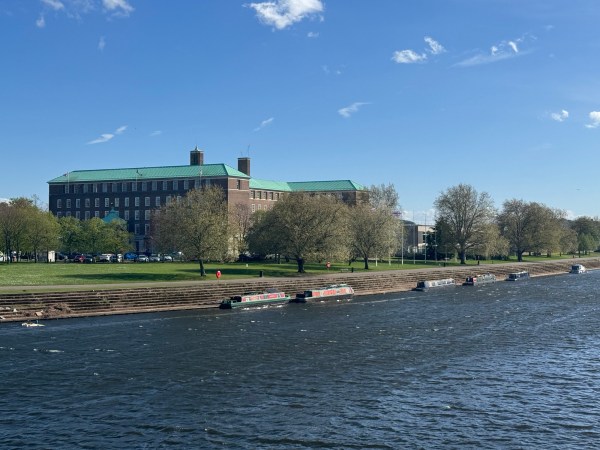
We are currently moored by the steps outside County Hall, a massive piece of architecture from the early 20th Century. Rowers from the nearby National Water Centre glide past us with their coaches shouting at them from the riverside. Swans and geese keep us company. We are overlooked by Trent Bridge Cricket Ground. It all feels very different than the run down industry that dominated the local canals here a few decades ago.

I am glad we have visited Nottingham. I’m off out now to see the museums to see if I can discover more. Every day is a school day.

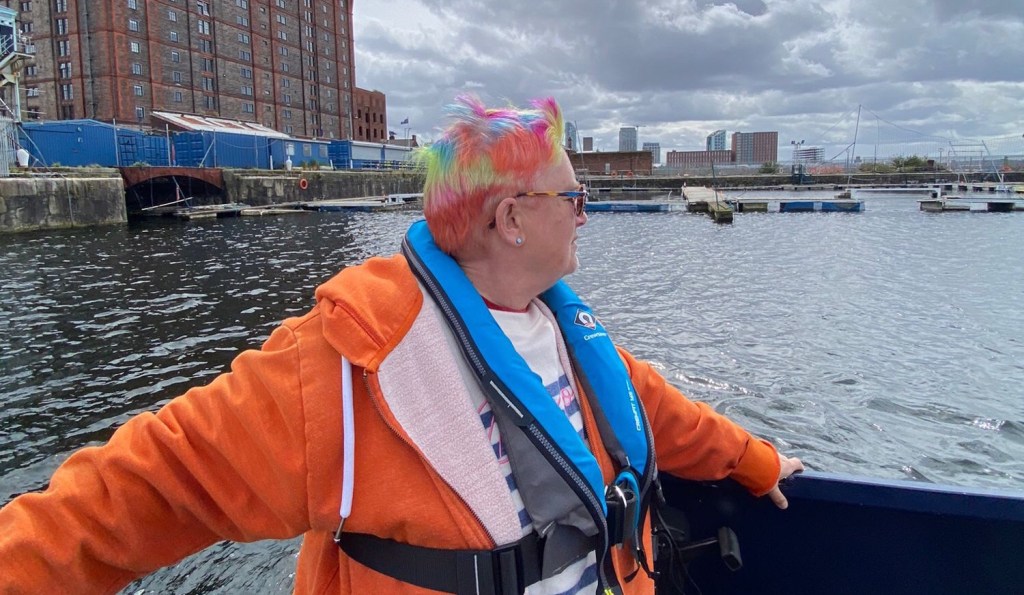
Life jackets that would not save our lives

Most of the time as narrowboaters we are “ditch dwellers”. The canals we navigate are surprisingly shallow – say three to four feet deep . So if you fall in you can just stand up and you will normally be fine. For this reason we do not wear life jackets on the canals. But rivers are something more challenging.

Liverpool docks this year

Rivers are more dangerous because they have a current, may have a tide, and can be much deeper. They are also unpredictable. For instance flat bottomed narrowboats do not have much protection against strong lateral gusts of wind.

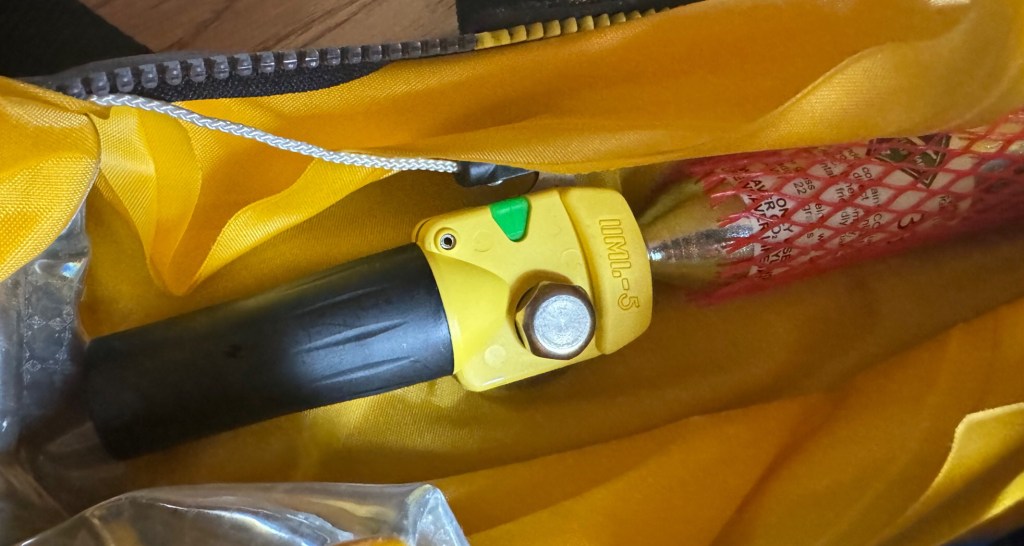
So on rivers we do usually wear light life jackets that would automatically inflate if we fell in the water. Unfortunately I found out this week that they might not work. I read an article on a boaters’ update that told me that the water detector has a relatively short life of just a few years and then need replacing. I also discovered that they can set themselves off where there is condensation in the air over winter.

So I checked our life jackets and found that both water detectors were out of date, and one also needed a new compressed gas bottle.

The good news is that replacing these is neither difficult or expensive, but it was still quite a shock to find that things we were confidently thinking could save our lives may well have failed when we needed them.

We have been boating for many many years but we are very much still learning. Every day is a school day, and this lesson could well save a life.

What have you learnt this week?

Which is the prettiest canal in the UK?

One of the reasons we love narrowboating is the amazing scenery we see. I do enjoy the old industrial warehouses and mills, but there is something special about finding beautiful countryside with the canal meandering through it.

This week we travelled down the Coventry Canal to join the Ashby, an isolated canal in the midlands. Originally it was used to bring coal from the local mines and was probably filthy, but that industry is long gone and the water is now clear. The countryside is mostly fields with wide views from the boat. It is one of the most beautiful waterways we have travelled.

But perhaps not the most beautiful of all. There are the “curly wurlys” west of Skipton on the Leeds Liverpool. High up in the Pennines and winding around the hills. There are the final few miles of the Caldon to Froghall, in a stunning wooded cutting, with a steam railway for company. There are the Llangollen and the Montgomery, providing a great mixture of winding round the contours of Wales, and cutting through tunnels and over aqueducts. The Sharpness was a revelation for us this year. Straight and wide with great views over to the River Severn. All of these are wonderful but I think the prettiest of all would be the Peak Forest. The Peak District is one of the most dramatic National Parks in the UK, and this canal skirts the edges of high hills, with views for miles.

We are just so lucky to be have the chance in retirement to discover such great countryside.

Do you have a different view of the prettiest waterway in the UK?

How to find your way around the British Canals

I am getting excited now as we get nearer to returning to our narrowboat and travelling around the British canals this summer. We have been having work done on the boat including a new kitchen, but that should be ready soon, so hopefully by the end of the month we will be back.

The UK canal and river network is extensive – some 2000 miles – travelling through vast tracts of countryside, and connecting most towns & cities. Before the railways it was the best and fastest way of carrying goods from place to place, and despite falling into disrepair in the first half of the twentieth century, most of the navigations (the official name) are now open to traffic again. Volunteers and the Canal & River Trust keep the waters clear and the locks operating. It is somewhat easier than other countries because most of the equipment is self service and we can take our narrowboat anywhere we like, whenever we like.

Just a few of my guides

So of course that begs the question of how we know where to go. The answer is a mixture between 21st and 19th century technologies. There are some great apps and websites. One of our favourites is “Canal Plan AC” website, which is brilliant at working out how long it will take us to make a journey, and where likely stops are along the way. It takes account of fast and slow navigations, and time to get through locks, as well as how many hours a day we want to travel, and where are good places to moor. The other app on my phone is “Open Canal Map” which allows me to track our journey live and zoom in and out of the canal maps, for instance to see where a water point is, or a recent stoppage.

But I have to admit, despite the advantages of technology, I prefer to use proper paper books. There are two sets of canal books in common use in the UK – the Nicholson Guides and the Pearson Guides. Pearsons are more chatty and have simplified maps. Nicholsons are more comprehensive and have the detailed Ordnance Survey maps. Both guides have been around for over 50 years and are updated every few years. I had always thought that was done by hundreds of editors but by coincidence we have become friends with Jonathan Mosse, who lives on a boat near us in Scotland, and does most of the work to keep Nicholson guides up to date. When he started in the 1970s, he would spend his days boating and cycling along canals. These days he can do a lot of the research online, but he is still always grateful for updates from boaters like ourselves, who travel the canals every day, and can let him know when a bridge number has changed or a pub has closed.

This week, he kindly sent me the guides that have been updated for 2023 – covering the North West of England. They are shiny and new but it will not take long till they are covered in muddy thumb prints and hand marked updates. I feel privileged to play a small part in keeping everyone informed as we share the navigations.

If you have never had a narrowboat holiday in the UK, I recommend it. The slow pace of life will bring mindfulness and calm, even if just for a week. And don’t forget to get a copy of your local guides.

Life as a canal dog

We are back travelling on the narrowboat and this week have been on the oldest navigation in the UK – the River Wey – with its 17th Century shallow cuttings and locks. And then back on the RIver Thames, heading into London – one of the widest rivers we have been on. As I write this I am feeling distinctly nervous about tomorrow, when we travel on the tidal Thames for the first time, from Teddington to Brentford. But two of the family on the boat don’t seem nervous at all – our dogs.

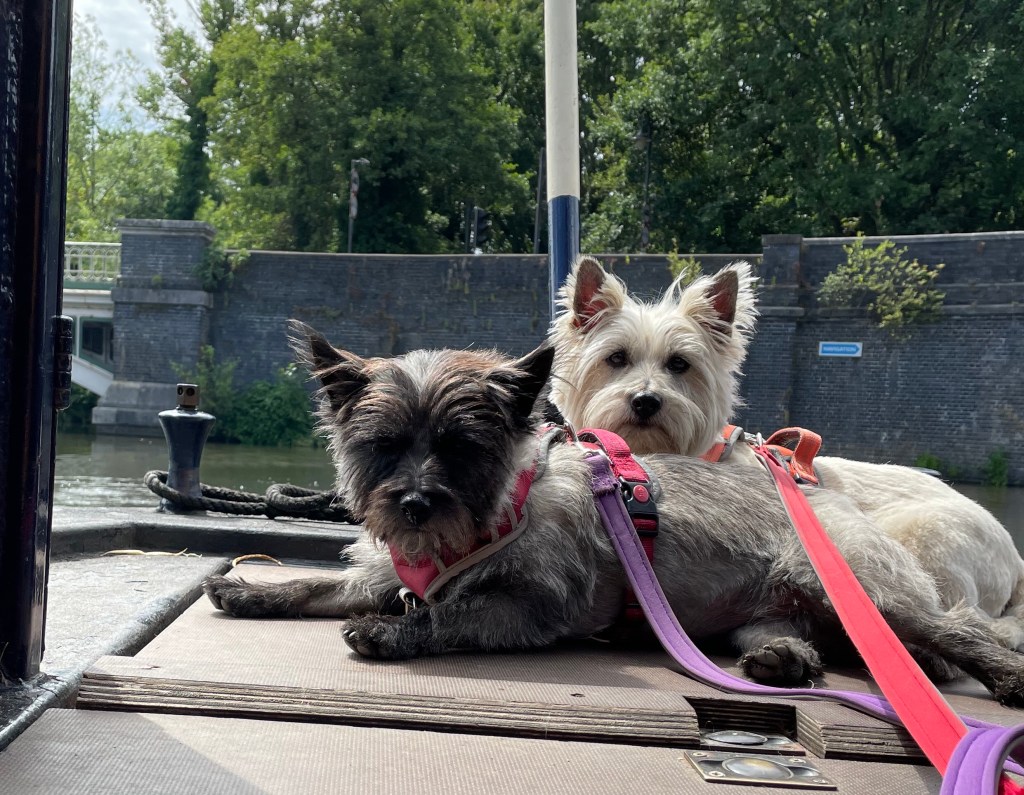
Lulu and Ziggy

The dogs adapt very quickly to canal life when we return to the boat from a house. They wake up about 7am and I take them for a walk, to get their main exercise of the day and to do their ablutions before breakfast. We like to go for a walk early before the day gets too hot, so that they do not get in the way of any boating plans we have. We usually set off on the boat about 9am with the dogs in their harnesses and tied to a pole in the middle of the back deck. This allows them to get around the deck to see anything they want, but prevents them falling in, which has happened a couple of times.

Sometimes they just sit or lie down, and take in the world. Sometimes they bark at other dogs on the towpath, or at Canadian geese, which for some reason they seem to dislike. Either way, just being there seems to tire them out. Their brains must be so full of the new things they can see, hear or smell. Sometimes they are so tired or hot that we put them back in the boat for a snooze. Sometimes they stay our with us. At locks their preference is to come onto the land with me and “help”. They usually sit by a lock ladder, watching and judging everything that is going on. If there are no locks, we will usually take them for a wander at some point, just to stretch their legs.

We often finish boating in the early afternoon, and if the dogs want, they get another walk. When they are in the boat, they can’t climb out without being lifted but it is surprising how rarely they ask to go out. They must have strong bladders! They have their tea at 5pm and then usually cuddle us while we watch TV, before their final micro walk around 8.30. When they come back from that they are so tired they take themselves to bed and sleep through.

It is not a bad life being a canal dog. Certainly Lulu and Ziggy seem to enjoy it, and we love to have them with us.

Why am I prejudiced about yoghurt pots?

There are broadly two types of boats on the rivers and canals of the UK. Barges (narrowboats, widebeams, Dutch barges) are usually steel, have flat bottoms, are long and relatively narrow (typically 10-25m long). They are great in shallow, silted canals and are traditional in style. Cruisers, which can be anything from dinghies to huge yachts are usually white fibreglass, have a proper keel underneath, and look smart and modern. They are great on open rivers and even the sea.

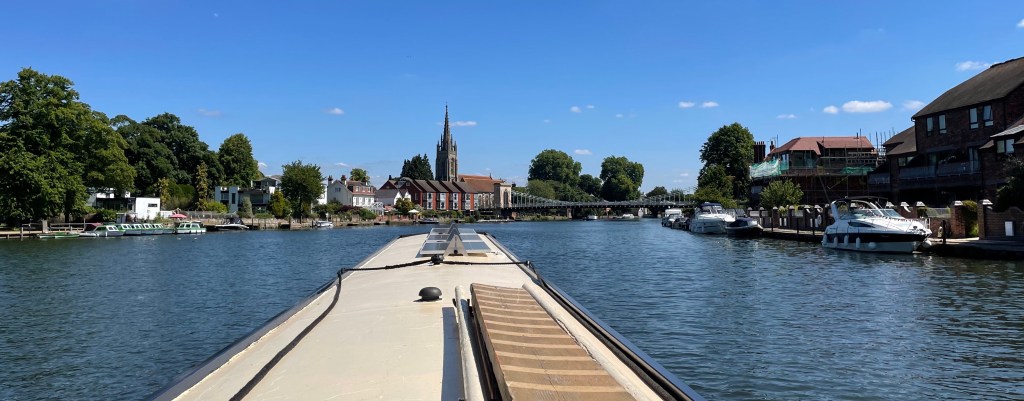
Marlow this week

These two types of boat are crewed by two types of boaters. Of course there are exceptions, but barge owners are usually more hippy, less tidy, more chilled. Cruiser owners are often more wealthy, and more proud of their boat. The two communities take the mickey out of each other. Cruiser owners call barge owners “ditch dwellers” because of our love of canals. Barge owners call cruisers “yoghurt pots” or “plastic bathtubs” because of their fragility. I had always thought this jest was in fun and that we got on OK. After this week, I am not so sure.

We have been travelling along a wide section of the River Thames from Reading to Windsor. Lovely weather this week, magnificent nature and expensive houses to gawk at along the river. We have had a great time. But we have also detected quite a lot of passive aggression from the cruisers. They clearly feel this river should be for them. They resent the space we take up on a mooring. They think we make their beautiful river look messy. Some of them have been quite direct with me.

Clearly I believe they are wrong. I have written before how good it is that different people get along in this boating life. But being in the minority this week has made me wonder how inclusive I really am with cruisers when we are back in narrowboat heaven on the canals. Perhaps my flippant jokes towards the cruiser owners are not just banter, but prejudice. We will be back on canals soon, and I will do my best to change my stereotypical views. I can’t promise I won’t call their boats yoghurt pots though!

Blog at WordPress.com.

Up ↑