Interrailing at 60 – week 4

Sadly, this is the final week of my adventure, travelling by train around Europe to celebrate my 60th year. I will be glad to be back home with Mandy and the dogs, but if I didn’t have any ties I would have been very tempted to buy a ticket for another month and keep travelling. I have seen so much and had so much fun!

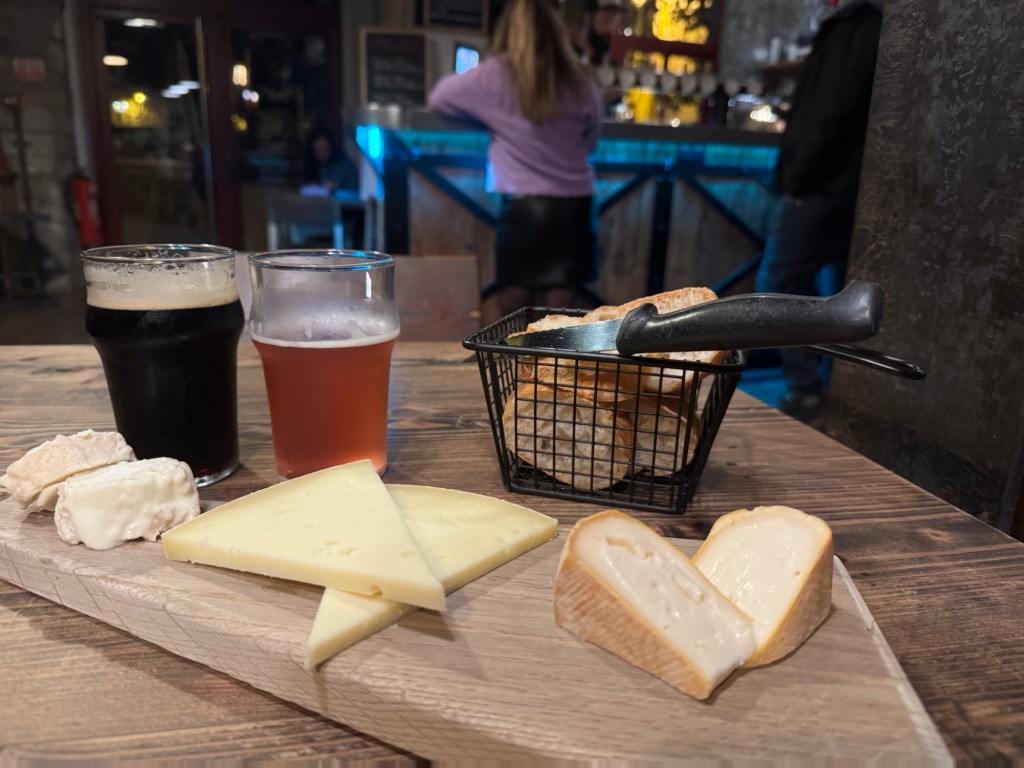
This week was in the west of Europe and unlike my other weeks has been in just one country – France. Fortunately France is a large and varied country and the week started travelling from Marseille on the Mediterranean, west along the riviera and then up into the Pyrenees to the medieval town of Foix. I have never been to this area, and I found it quite stunning and very French. My pitiful requests of “parlez vous Anglais?” were often met with a shrug or a shake of the head. I had the benefit of Google Translate if I needed it, but I actually found that being forced to use my schoolboy French made it easier. I got along, even after a couple of beers in the Foix microbrewery.

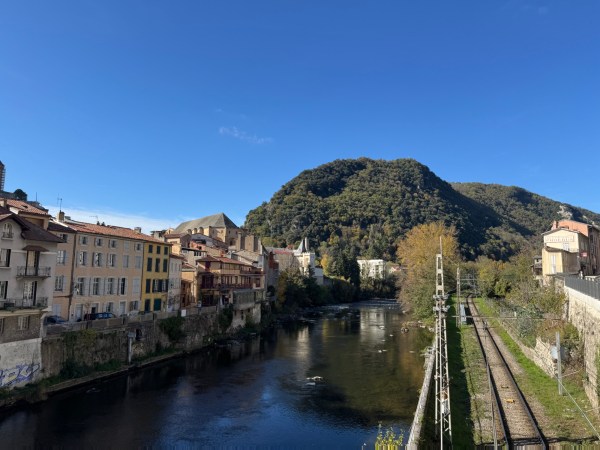
From Foix the train line goes even higher, to the Spanish border at Latour de Carol, 1232m above sea level, the highest station in France. The mountains get more pointy and the air gets thinner. From Latour I dropped back down a bit to spend an hour in the French ski resort of Ax Les Thermes. It is obviously out of ski season, and unfortunately Ax is one of those lower altitude ski areas that are becoming unviable with climate change. But the local market was busy and the town was investing in increasing tourism to take the hot spring spa waters.
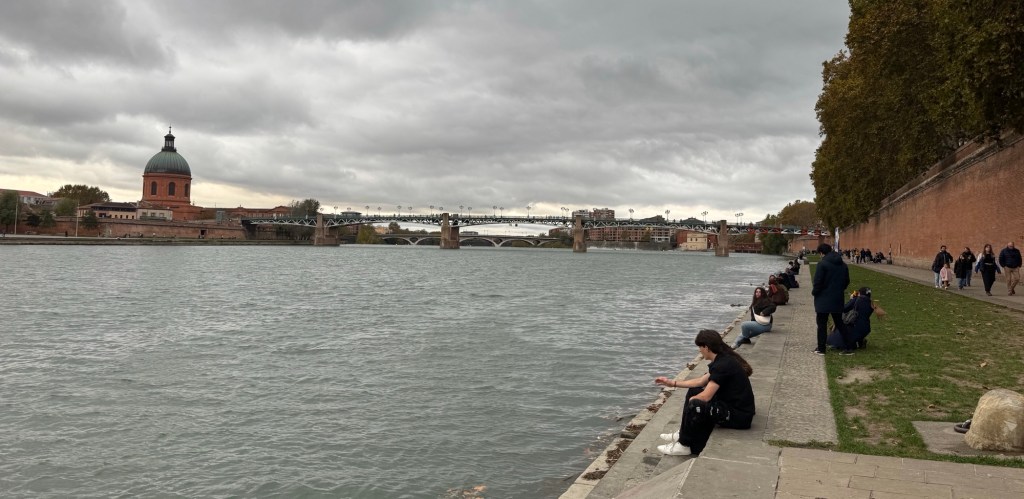
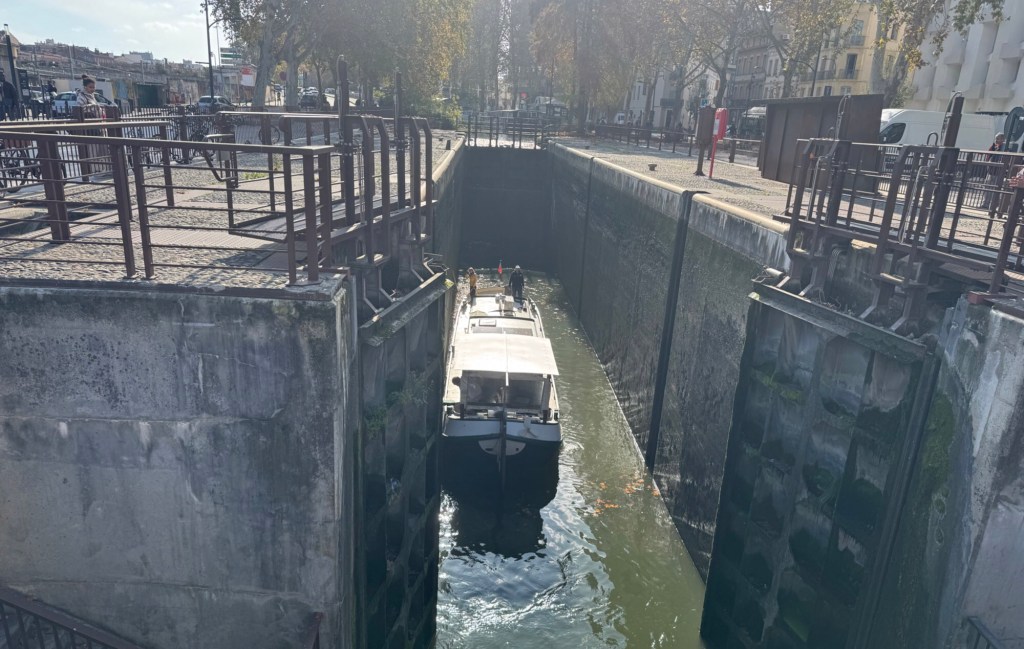
Toulouse was absolutely rammed with people because it was the weekend of the Toulouse Marathon. Avoiding the lycra myself, I wandered down to the river to soak up the history of this ancient port on the Garonne. I was also very glad to see the other Toulouse waterway – the Canal du Midi. I watched a boat coming up one of the locks, with more than a little envy. I will be happy to be back on the narrowboat next week.
From Toulouse it is not far to Bayonne and Biarritz on the Atlantic coast. Although development has merged these two towns, they retain very different characters. Biarritz felt to have faded glory as once the playground of the rich, and now a home for hippy surfers. There was a fine view from the lighthouse along the beach, and I sat for a while and watched them riding their boards, waiting for the perfect wave.,

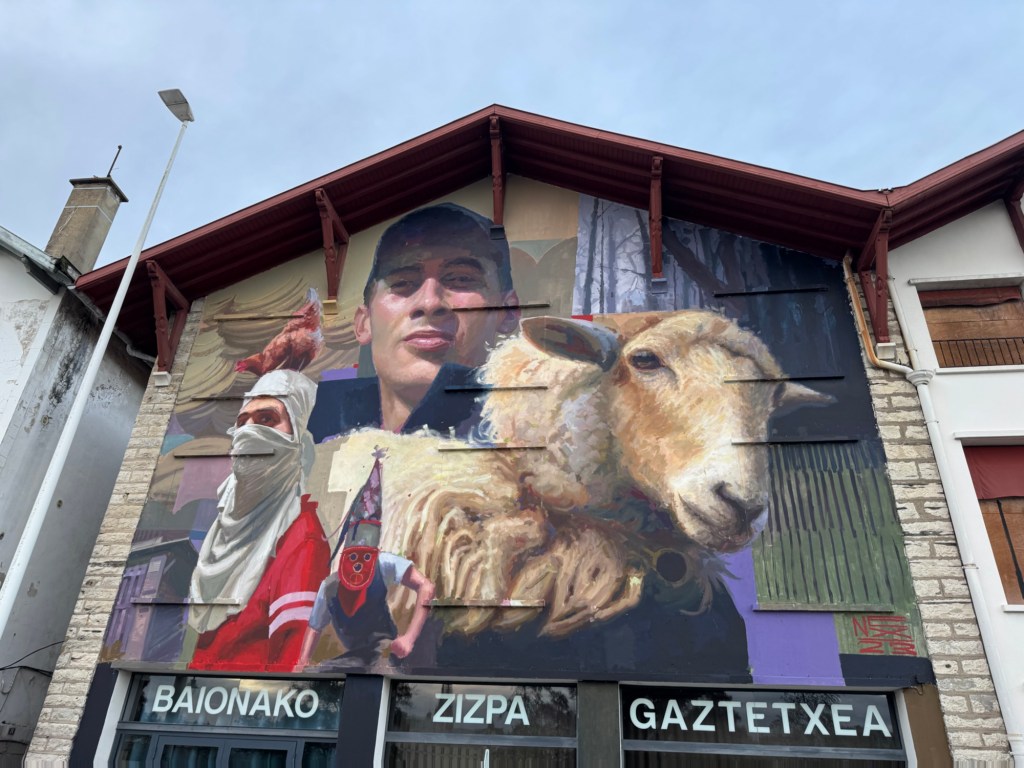
I preferred Bayonne. It is an old walled city, with more of a Basque character than a French one. All the signs were in three languages – French, Basque and Occitan. I spent a happy afternoon, wandering randomly around the town, soaking up the atmosphere. I discovered that Bayonne is famous for its street art. I visited one gallery which was full of such paintings. To me they felt incongruous on canvas and I preferred to see them on walls across the city.
On to Bordeaux. It is much bigger and busier than I expected. I got a little lost amongst the great buildings and monuments that the wealth from wine has brought to the town.

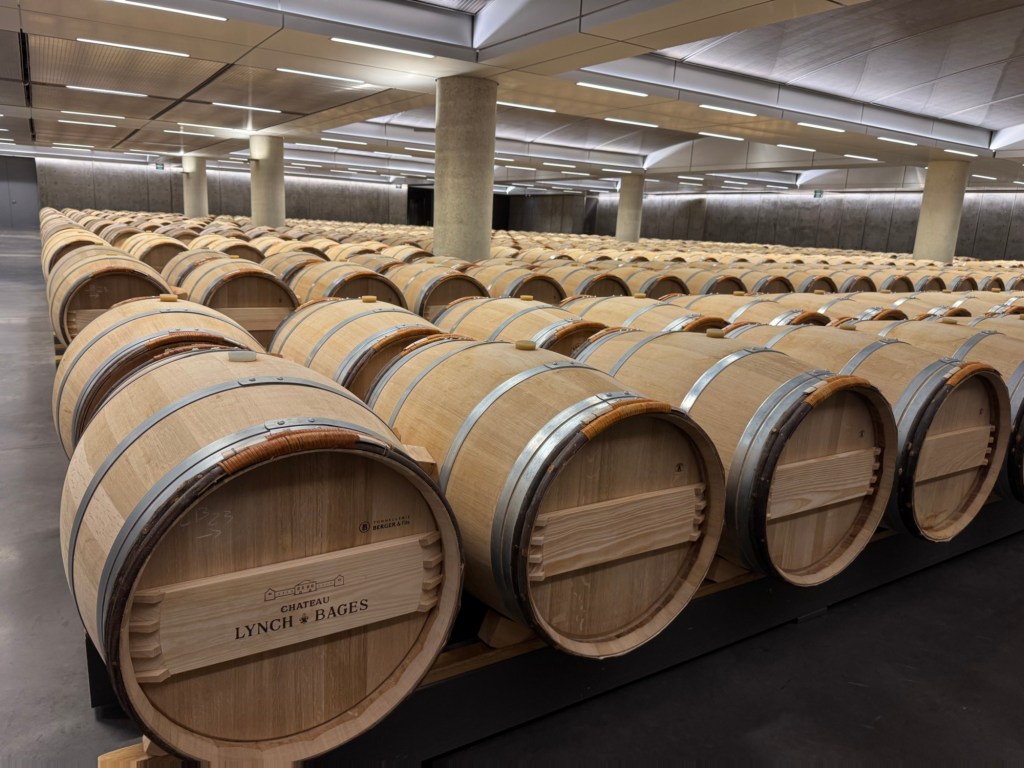
For my second day in Bordeaux I took a local train up the line through the Medoc, passing the vineyards of some of the most famous wine areas of Bordeaux – Macau, Margaux and Pauillac where I got off. I walked up through the vineyards and along the Route des Chateaux, where every few minutes I passed a new great house – Latour, Pichon Baron, Bellegrave, Fonbadet, Saint Mambert. I had a wonderful three course lunch in Pauillac for €21.50 followed by a tour of another Chateau – Lynch Barge – where they make one of the Grand Cru wines of Bordeaux. It was a fascinating tour and finished with a tasting of a few of their vintages – delicious but a little out of my price range.
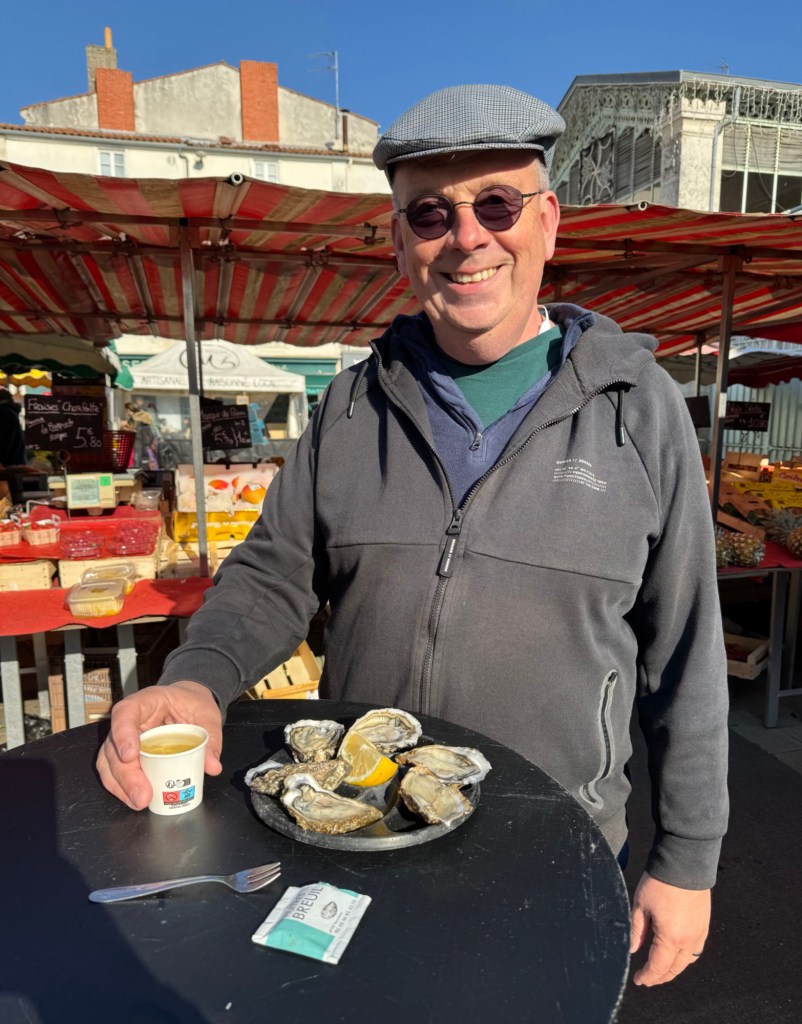
Coming to the end of my journey now, with La Rochelle – famous for its old port and the many sailing boats moored there. It is also famous for oysters, and I arrived at the market just in time for half a dozen of the best with a cardboard cup of wine – not bad for €8.
My last French train is to Paris today (Friday) and then back to the UK on the Eurostar tomorrow morning. This past month has been a life affirming adventure and one I will never forget. My top three tips for old interrailers:

  1. Travel light. I have a 40l rucksack and it has been more than enough.
  2. Be flexible. By all means make a plan, but be prepared to change it as you go.
  3. Do it. Many people have dreams of a journey like mine but they stay dreams. Just do it.

I hope you have enjoyed my four week travelogue. I really really really have. See you next week, back on my boat.
Interrailing at 60 – week 3

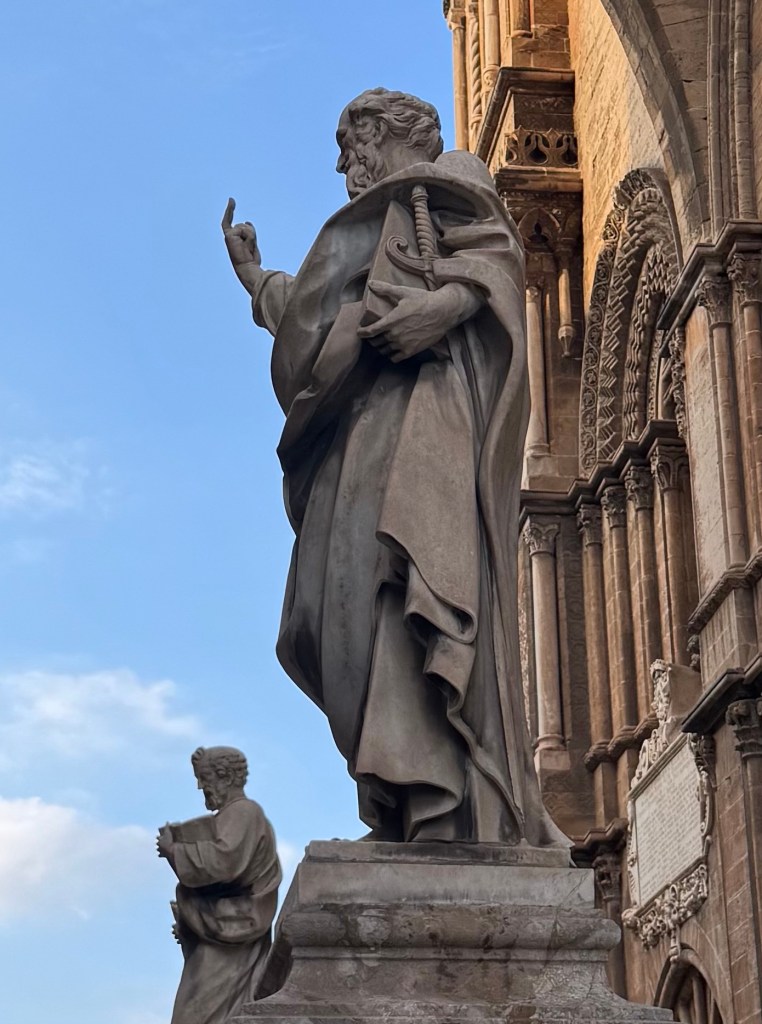
Over half way through on my month long train jaunt around Europe to celebrate being old, and despite all the travelling I am full of energy. Week 1 was in the North, week 2 in the East and week 3 has been in the South. My last blog ended with me arriving in Palermo. The good news is that there was no horse’s head in my bed. Instead I found myself attending mass in the Catholic Cathedral. I do not understand Italian, but my Dad was a vicar and so I could follow the rhythms of the service and it was very peaceful. Mind you, I am not sure what this statue was indicating, outside the door.

Scicily is a slow paced island and I loved my time there. I even bought a cap, like the ones they wear in Godfather 2. It will come in useful next summer on the narrowboat, especially if I need to resolve any family arguments.

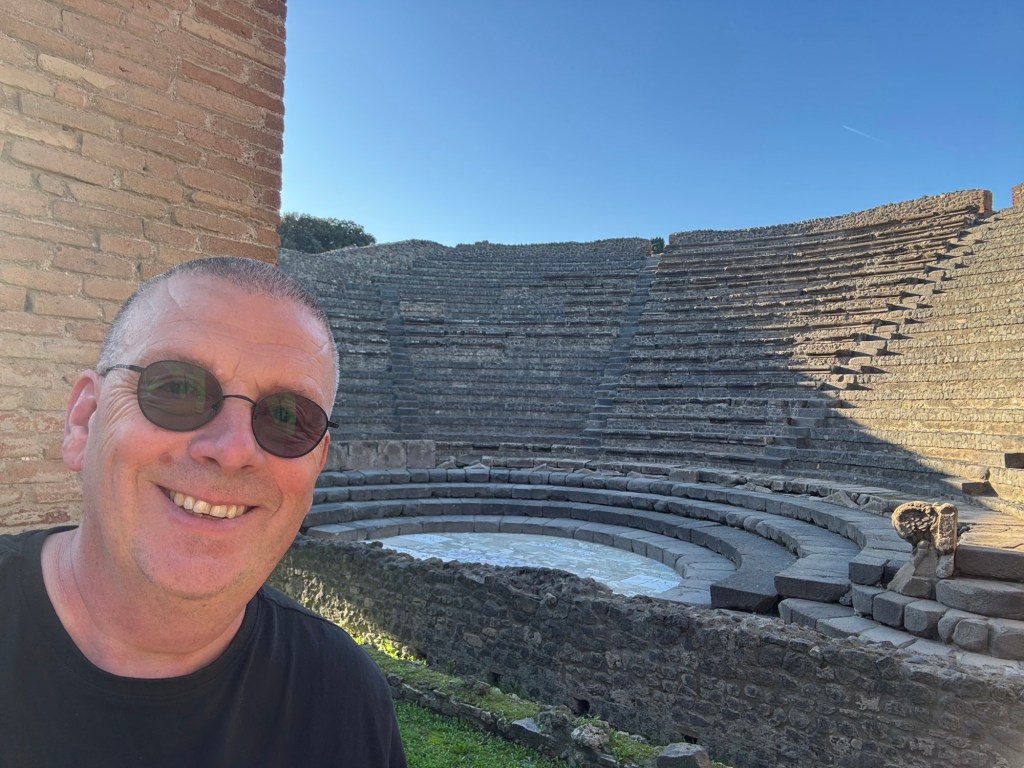
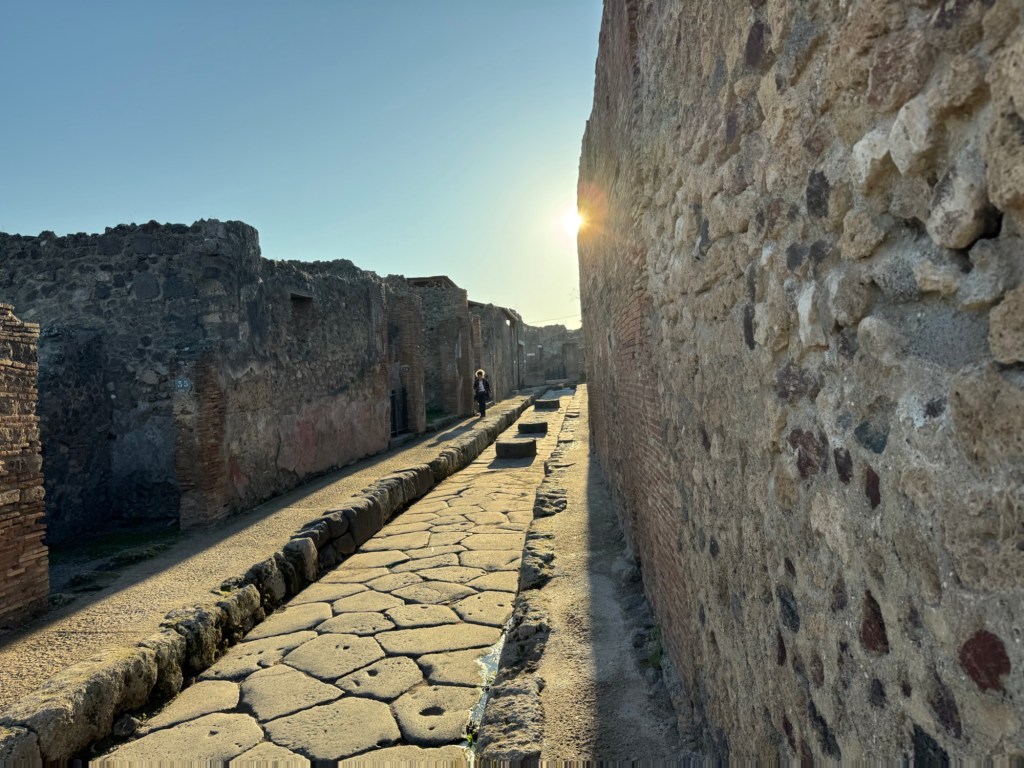
Naples was my next stop – two trains, an Italian haircut and a boat away. I have never been to Pompeii so that was my priority. It did not disappoint. The ruins cover a huge area with so many things to discover. And even better, because it was the first Sunday in the month, entrance was free. In my mind I was back in AD 79, under the shadow of Vesuvius.

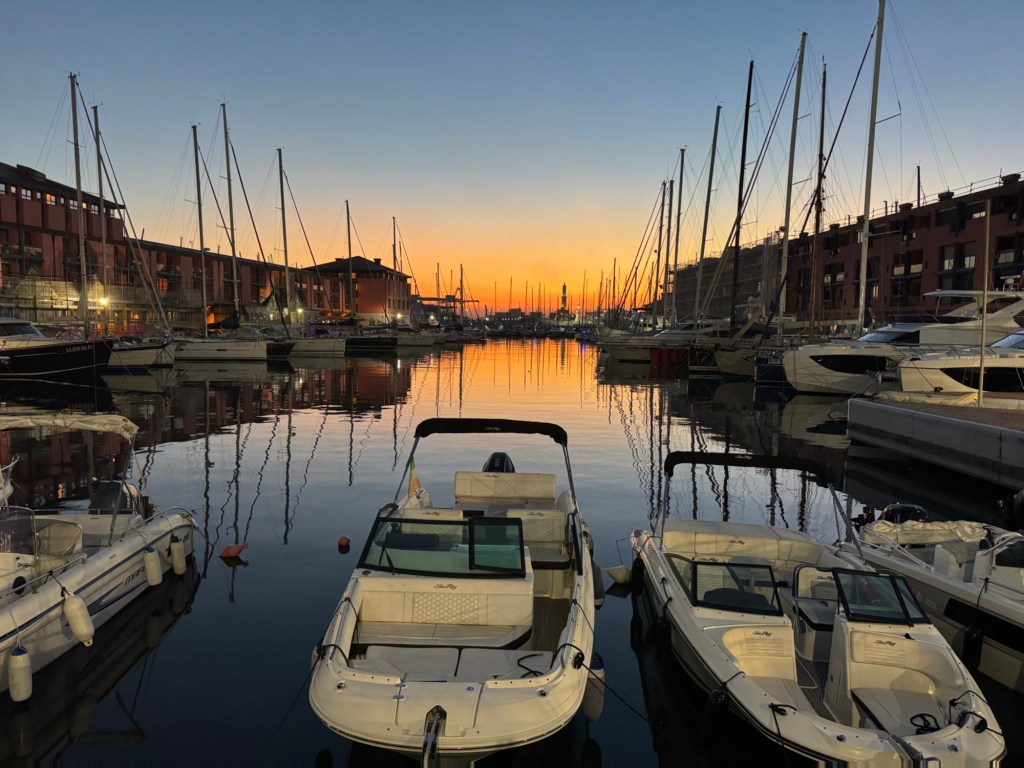
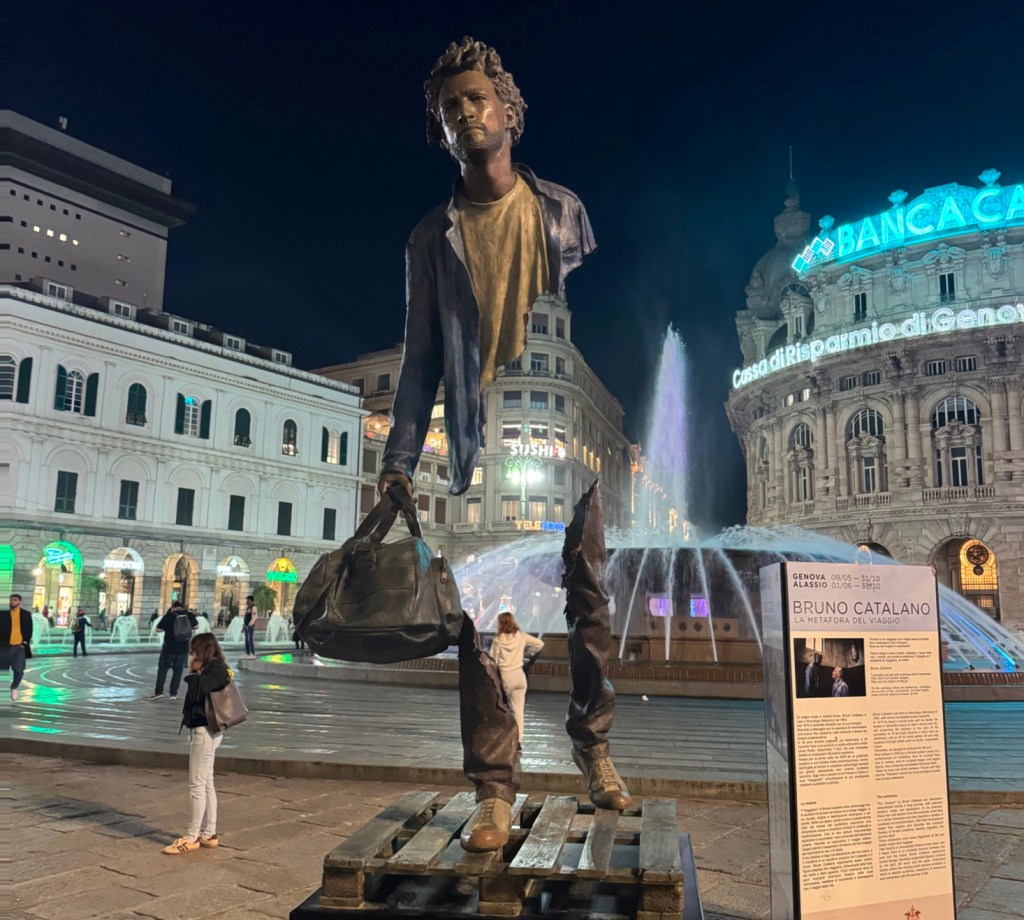
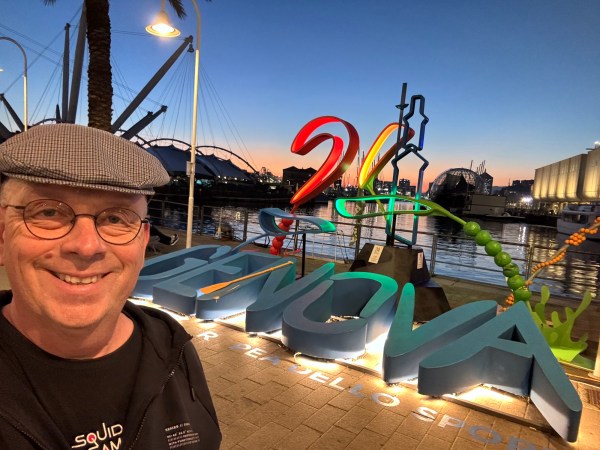
One Pizza Cappricciosa and a good night’s sleep later and it was off to Genoa via Milan. It is a long journey and the train was delayed, so by the time I got to the hotel, it was nearly dark. I decided to take a walk around the harbour to the old town, and I was rewarded with wonderful old buildings and boats. It really is a beautiful historic town.

Tuesday’s trip was on small trains across the border from Naples to Nice. I was lucky because the Italian train strike did not affect my journey. I was even more lucky because the views from the train were spectacular, as the track clung to the cliffs on the edge of the Mediterranean. I have been on some of the world’s greatest train journeys, including the Glacier Express in Switzerland, and the highland line in Scotland. This route is up amongst the very best – Italian Riviera, Monaco and Cote D’Azur.

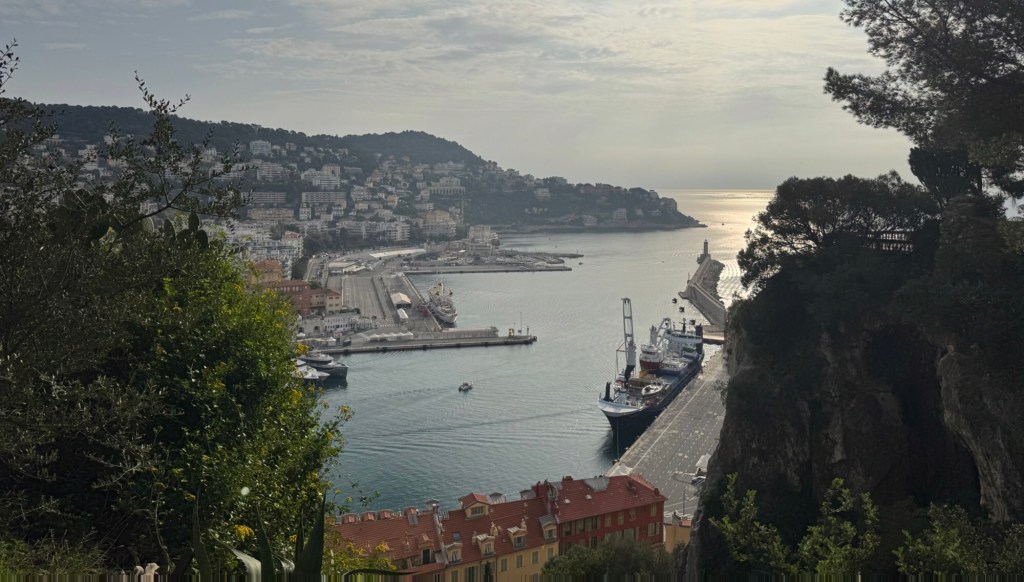
Nice is nice. I spent many hours wandering the streets and discovering old churches, art installations and gelaterias. I climbed the steep hill between the promenade and the port. It had the most stunning views. Another town I was sorry to leave.

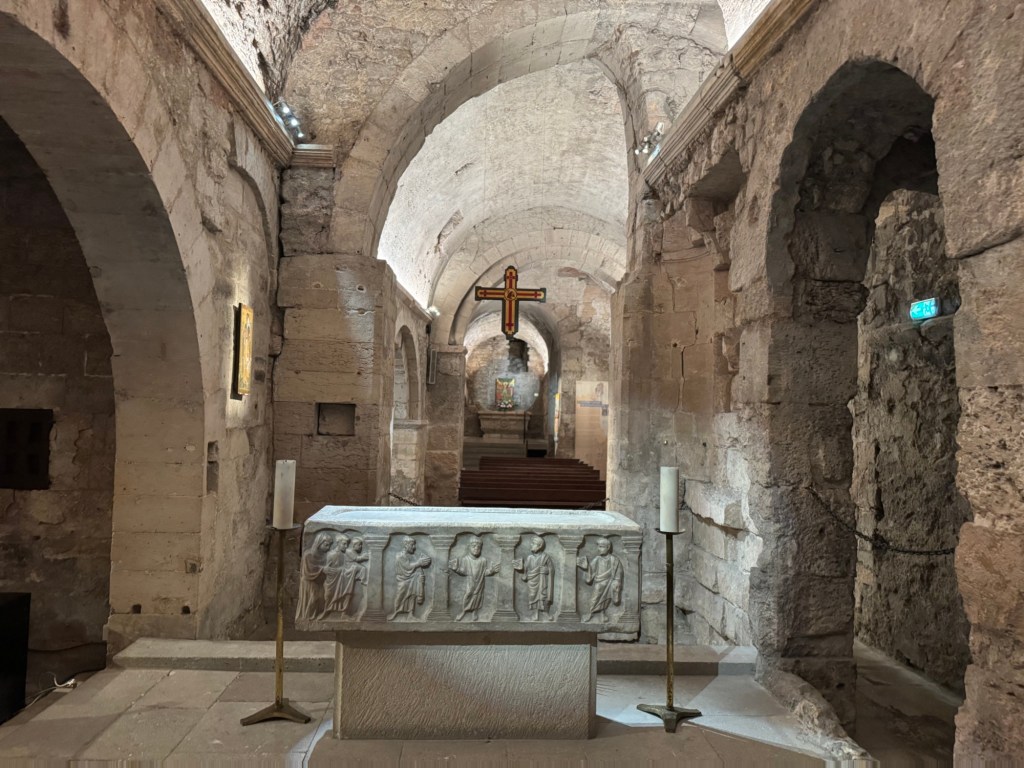
There was one more town to visit this week and that was Marseille. It is a cosmopolitan city, founded 2600 years ago by the Greeks. The basilica of Notre Dame de la Garde sits on a big hill overlooking the town. This time I cheated and took the bus to the top. Again, incredible views and things to see before I walked down the cobbled streets to the port. I love walking when I am travelling because there are always surprises to find. I wandered into one abbey and found an organist practising. I just sat for a while and listened to the free concert. Then, when I got up to go, I discovered a door to the crypt, and found underneath the church a series of small chapels, hewn from the rock. I would never have found any of this had I not been wandering and wondering.

Having travelled through North, East and South Europe, it will not surprise you that I am going West for the last leg of my adventure. I had hoped to get to Spain and Portugal, but a combination of poor train options and bad weather has encouraged me to change my mind and head to the west of France. I’ll tell you more next week.

Interrailing at 60 – week 2

I feel that I have now got into the swing of this trip – a month travelling by train through Europe. I am already nearly halfway through and feeling a little tired but I am not complaining. What a whirl it has been. If the first week was a celebration of the north of Europe, this week has been concentrated in the east.

I finished last week in Prague and from there I travelled to the far eastern corner of Czechia in an old industrial town called Ostrava. The industry closed down soon after the fall of communism, but there are many remnants including a huge coal slag heap overlooking the town. It is now a nature reserve and very beautiful, but as I climbed to the top I could still smell burning coal, as some of the “slag” still cooks underground. Early the following morning I ventured out to walk around a massive old iron works. It was dramatic and somewhat spooky.

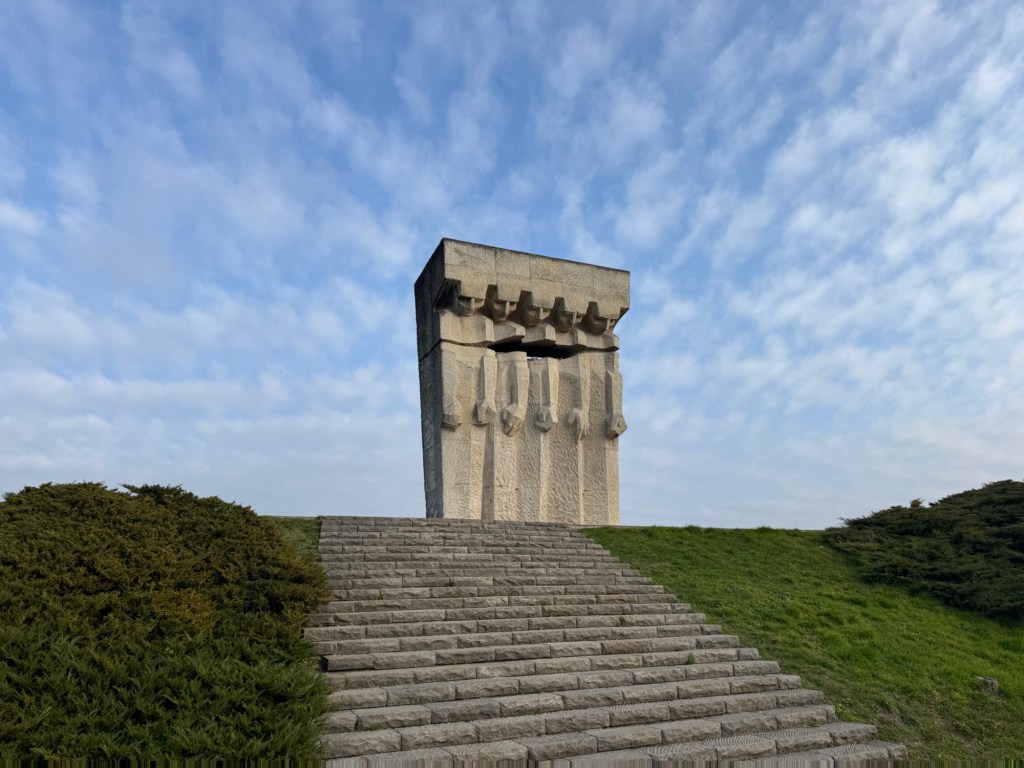
From Ostrava it is a hop and a skip over the Polish border to Krakow. I had not realised that this is the train line that took Jews to the death camp Auschwitz. I did consider going to see the camp myself, but could not get a ticket. Instead I went to Oskar Schindler’s factory and then to the Krakow concentration camp Plaszow. Until recently I would have just found woodland with one memorial but this year a great deal of work has been done at the site, with many explanatory plaques and pictures telling the story. The visitor centre is not yet complete and the extensive site is not advertised. As a result I was the only person there for much of my visit, which in some ways made it even more poignant.

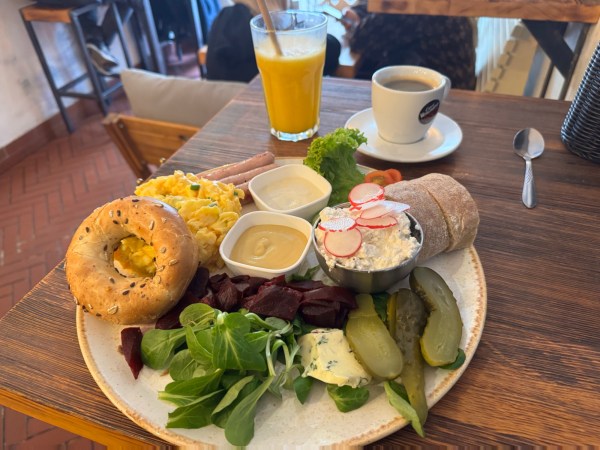
I did also enjoy myself in Krakow. It is another beautiful east European city, with lovely churches and museums everywhere. I took a trip out to see the salt mine, where over 300 years miners have carved out underground chapels and statues. Stunning. Krakow is also so cheap. I got a huge Polish breakfast for about £5. I will definitely come back.

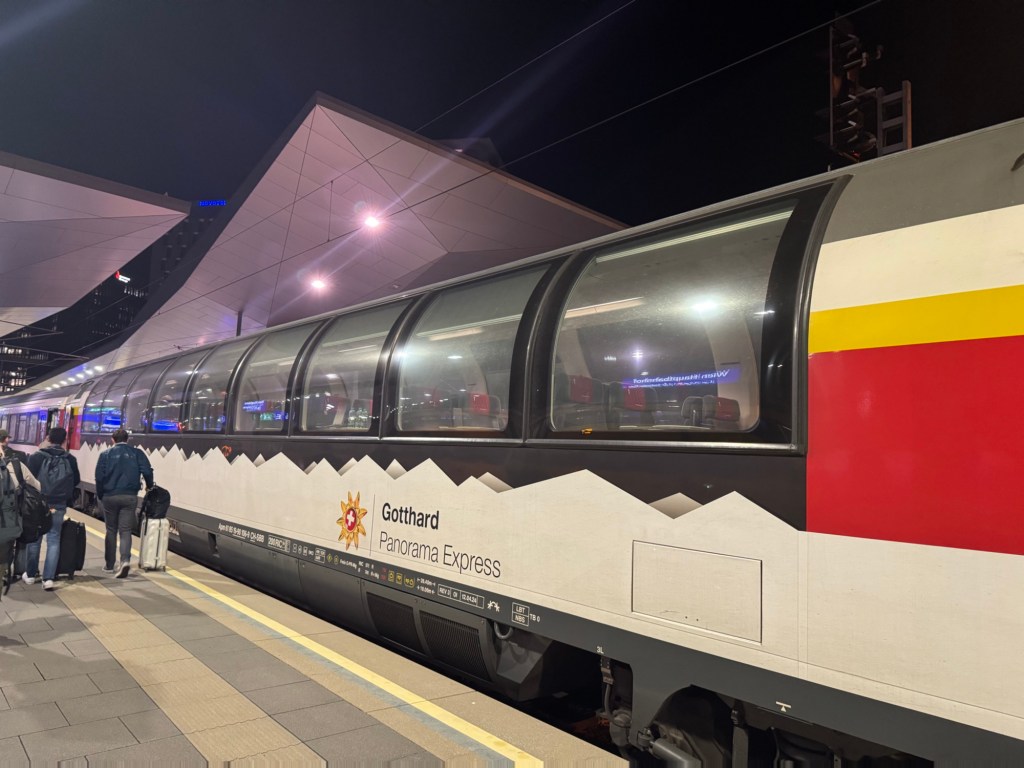
Krakow to Vienna was on a lovely new train with a panoramic coach borrowed from Swiss Railways. It gave me great views over the countryside as the sun went down.

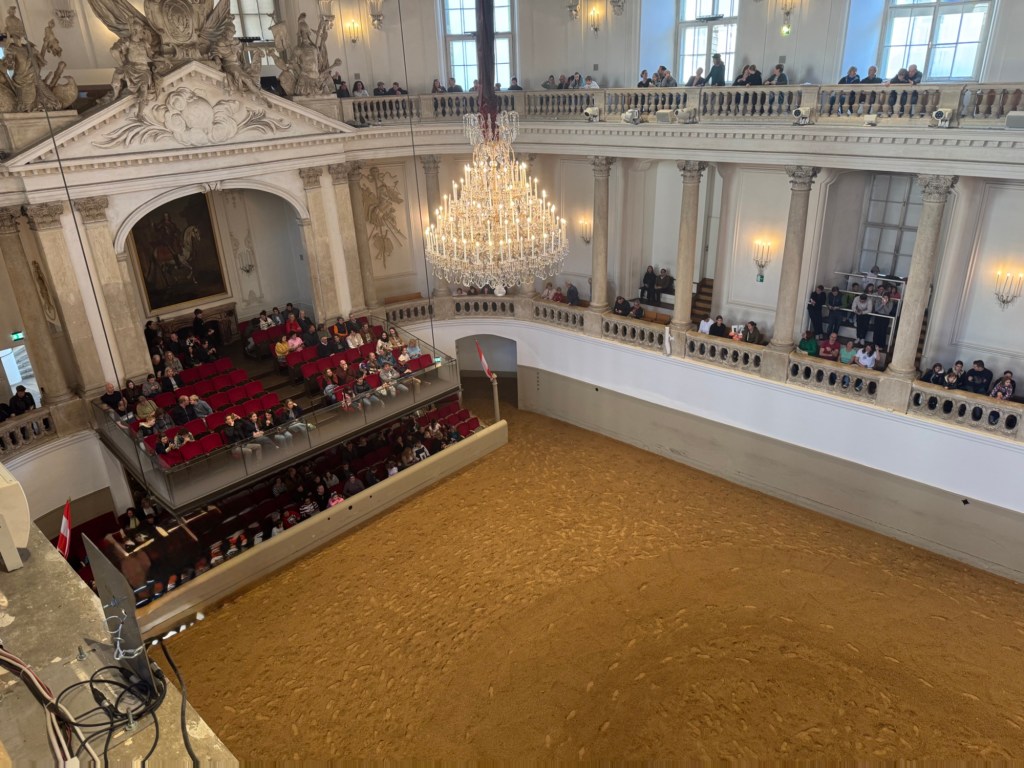
Vienna is famously beautiful and another great city for walking. I went to see the Spanish Riding School training their horses (no photos of horses allowed) and took a tram out to the outskirts of the town just so that I could take it back in again past the most famous monuments. A lovely place but after Krakow boy is it expensive! My wallet was happy when I got on the night train to Rome.

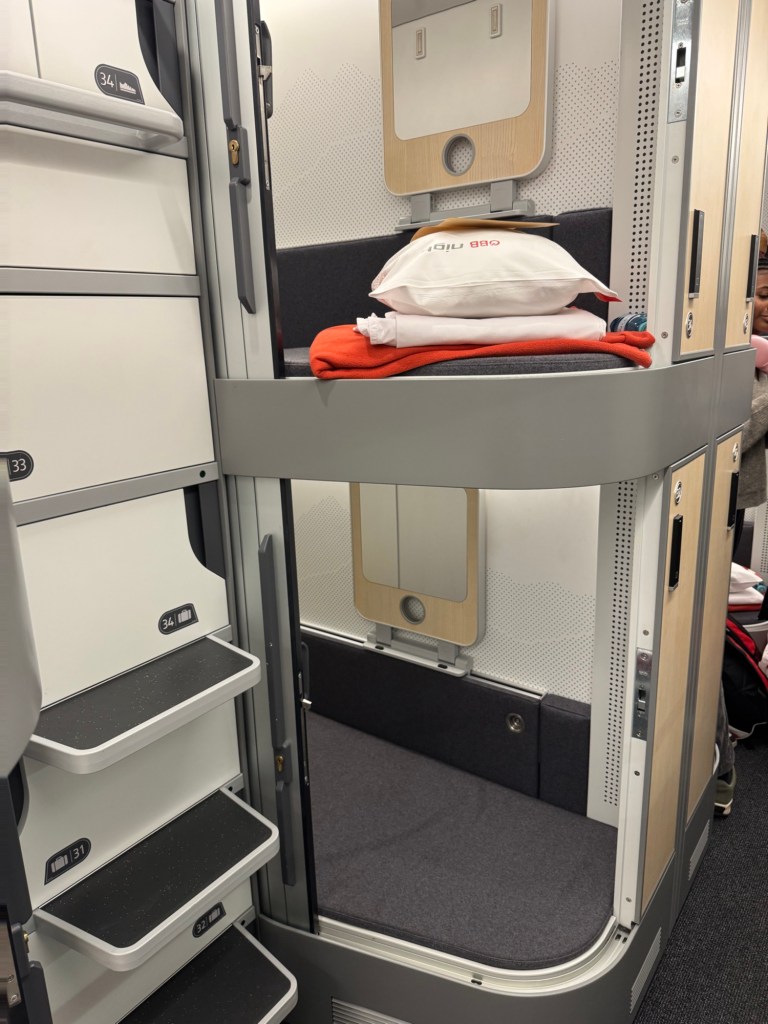
This is one of the newest night trains – having been put into service a month ago. As well as sleeping compartments for 4 or 6 people, it has the innovation of sleeping pods, known as mini cabins. These are the price of a bed in a couchette but for individual travellers like me, offer privacy and all the mod cons, such as being able to choose whether I want the lighting red, blue, yellow or white.

Rome was busy but not quite as expensive as Vienna. Most of what I do in these towns is free – I walk around and see what I can see. In Rome I did splash out €20 to visit the museum of the ancient Roman Forum. It was a fascinating and huge museum, with few visitors but a great deal to see, imagining myself wandering through the buildings in my toga, two thousand years ago.

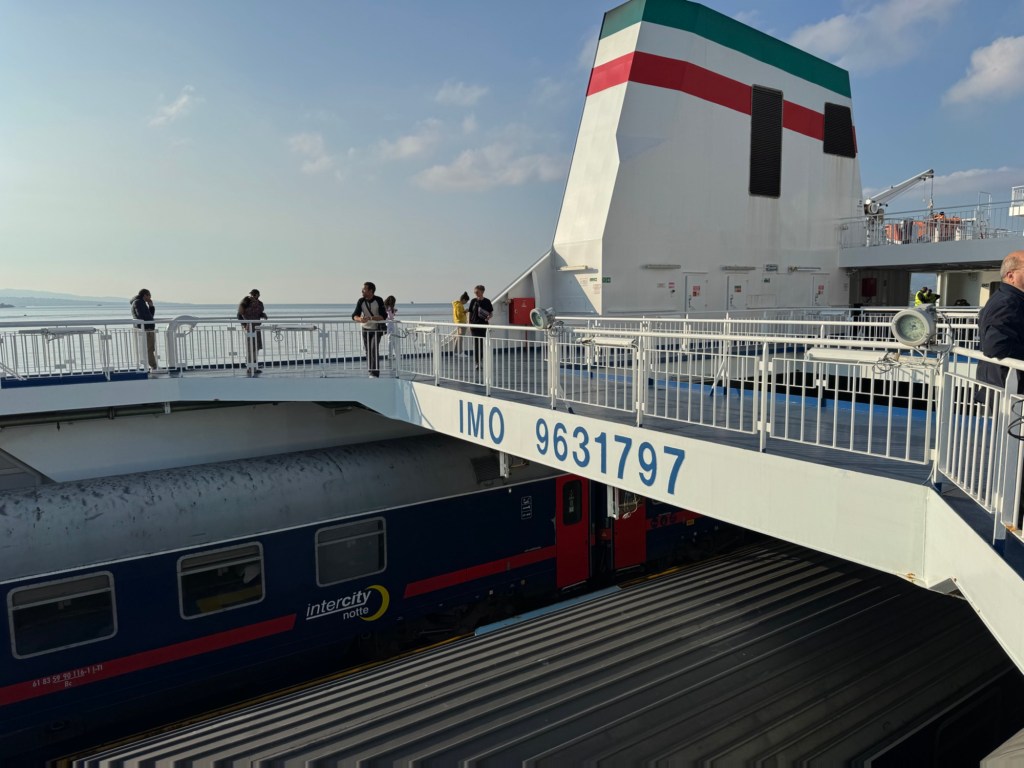
Finally this week I took another night train from Rome to Palermo. This is the only train left in Europe where the rolling stock is shunted onto a ferry during the journey. The ferry took us from mainland Italy to Sicily where it unloaded the train again and off we went. The line along the coast in Sicily is one of the most beautiful I have travelled, looking across the blue Mediterranean Sea.

And so, after about 40 hours travelling on just three trains, I have arrived in Palermo, for a couple of days off. It is warm here, and I feel like I am on an old fashioned holiday. But the trains back up the west coast of Italy to France are calling. See you next week!

Interrailing at 60 – week 1

I explained in last week’s blog that I will be spending a month travelling by train around Europe to celebrate my 60th year. This has been my first week, and what a week it has been.

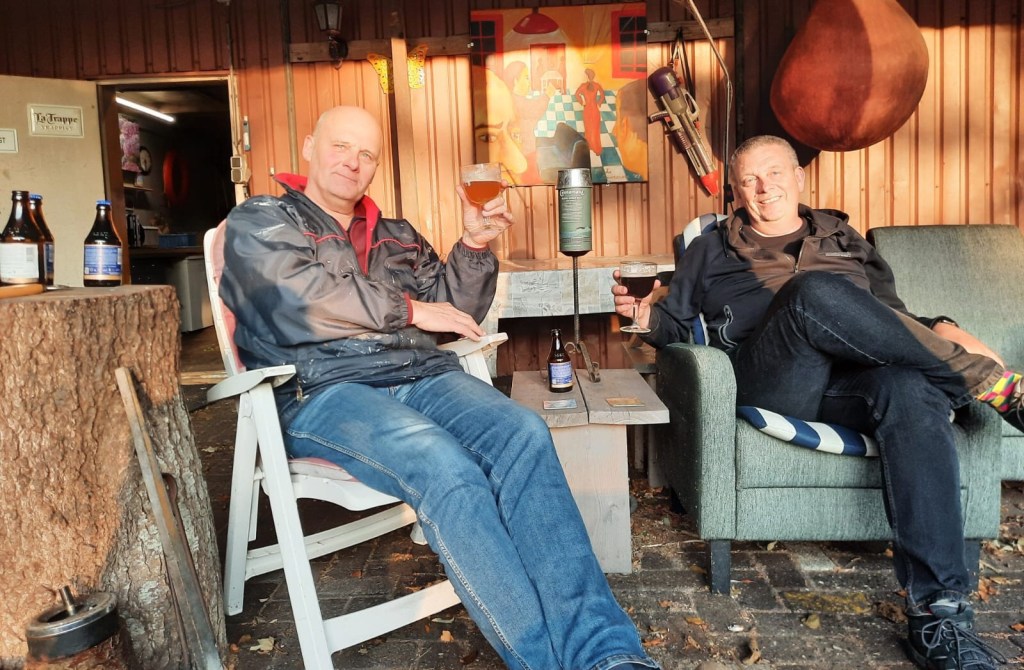
Through England and France to Belgium, where I stayed the night in the Flemish town of Antwerp, and enjoyed the famous Belgian beers.

Up to Dordrecht (where we once lived), Rotterdam (where I once worked) and finally to Groningen in the northern Netherlands, where I stayed with Christel a friend of nearly 40 years and her partner Gert-Jan.

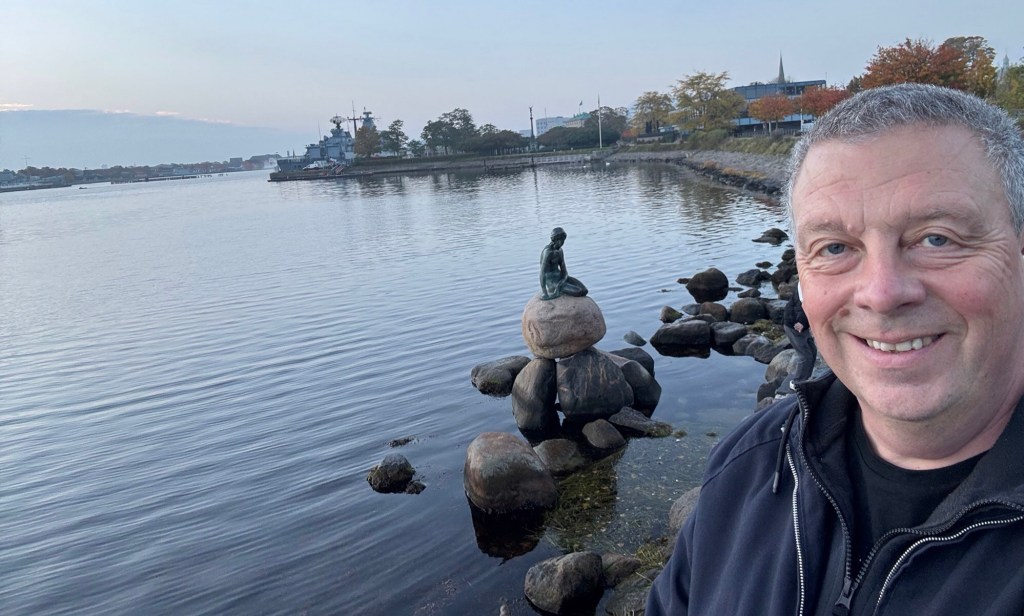
On through Germany to Denmark, to stay in Copenhagen. Oh my goodness what a beautiful and peaceful city. And so walkable. Loved it.

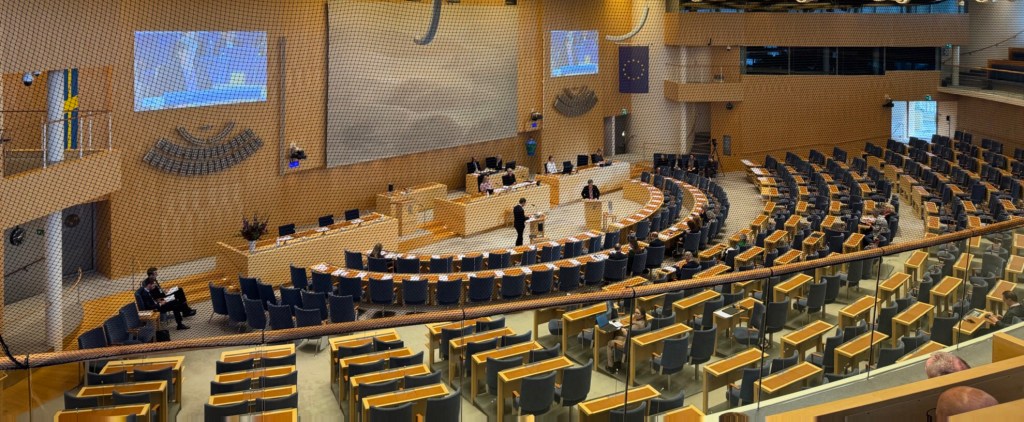
From Denmark I stayed in Scandinavia, travelling to Stockholm in Sweden. This is the furthest north I have been in my life, and I made it a few miles further by hopping on a local ferry to see the archipelago that Stockholm sits on. I was obviously missing my boat! I also went to see the Swedish parliament. So much politer than the British one.

My first night-train of the trip was from Stockholm to Berlin, taking 17 hours. I shared a cabin with a Frenchman called Pierre, from Marseilles. He was a lovely chap, but after 12 hours in a confined space I was quite glad when he got off at Hamburg!

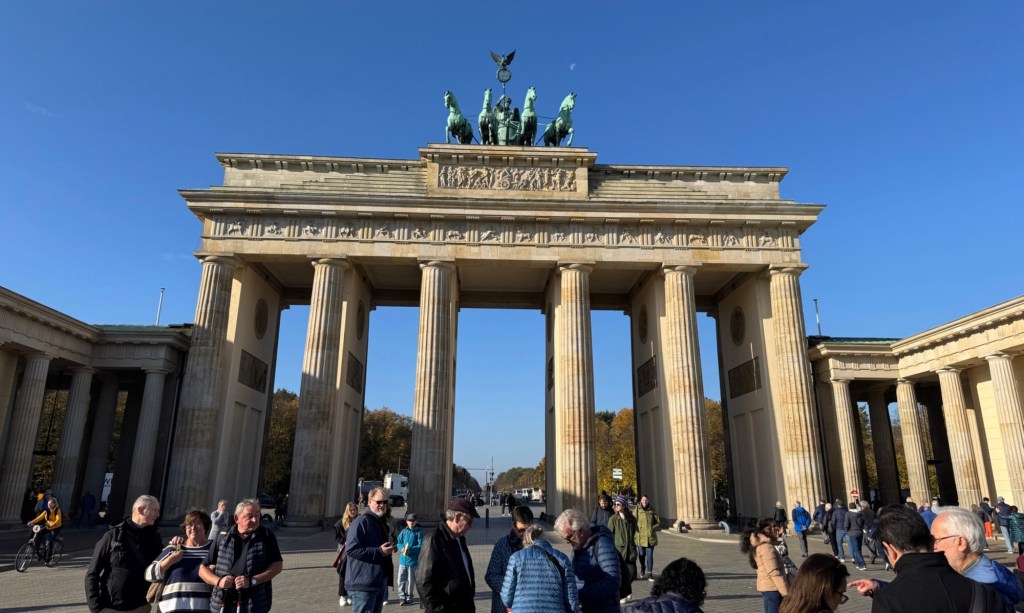
I dashed around Berlin in a couple of hours because It was too expensive to stay overnight and I chose instead to visit Dresden. I was expecting a bleak grey concrete city, that had been destroyed by the British bombs in the Second World War and then rebuilt by the East Germans. Instead I was greeted by tremendous “old” buildings that have been restored with a great deal of care.

My last trip of the week was to Prague. The train journey from Dresden was perhaps the prettiest so far, through a dramatic valley by the river Kirnitzch. No wonder this area is sometimes called the Saxon Switzerland. I was last in Prague in 1980 under communism. The lovely architecture has not changed but there are now so very many tourists. Too many.

It has already been quite an adventure and I have hardly started. I’m a very lucky boy. I miss sharing the experience with Mandy, but if she was here we would be going at half the speed and staying in twice the price hotels. Next up for me is a coal mining town in East Czechia, Kracow in Poland and then on to Vienna. I’ll let you know how I get on.

How should I spend a month in Europe?

When I was 18 I really wanted to go on an interrail trip. Interrail is a train pass that allows you to travel pretty much anywhere in Europe, and was introduced back in 1972 for people under 21. Unfortunately I was broke and impatient to get to Uni so never went. This year I am 60 and Mandy asked me what I would really like to do to celebrate. It did not take me long to decide that what I really wanted was to interrail. These days there is a senior pass for people over 60 and that is what I have purchased. And this week I have set off on my journey.

Mandy was originally going to come with me for the first week but one of our dogs has a serious disease so not surprisingly she is staying. That is sad but it does give me the ultimate flexibility to go wherever I want and to see whatever I want. So where should I go?

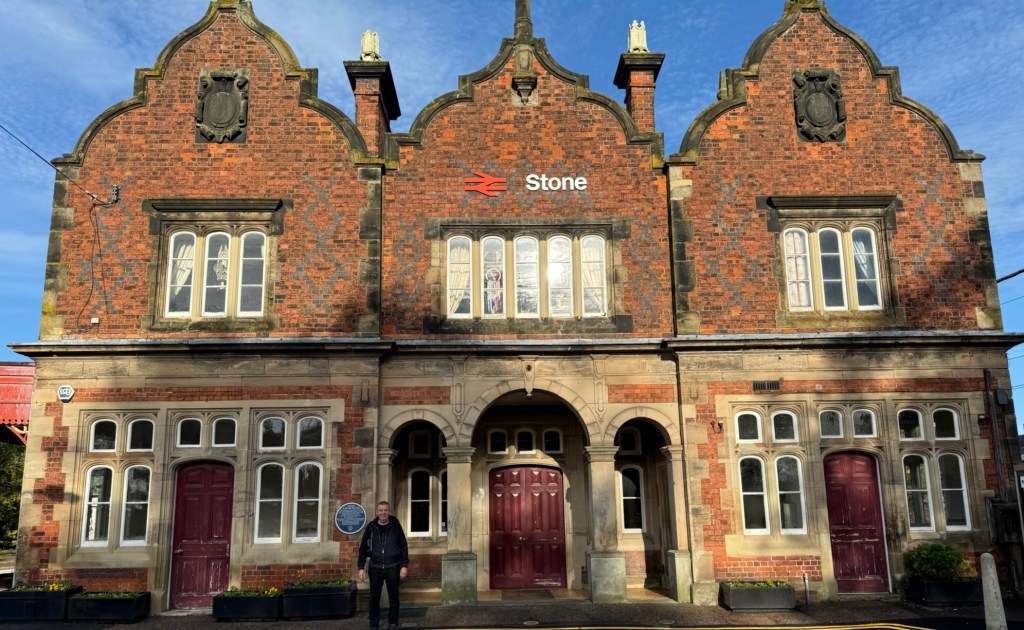
It will not surprise those that know me that my first instinct was to do a detailed plan, and that is exactly what I did. But then I read lots from people who have interrailed before and their regular advice is to take it slow, and make decisions as you go along. So just the first few days are now planned . I am currently in Groningen in the Netherlands, staying with a friend after travelling yesterday from Stone to London to Brussels and ending up in Antwerp. Tomorrow I will take four trains to end up in Copenhagen for a couple of days before moving on to Stockholm, and then a night train to Berlin. From there who knows? I could go further east to Poland, Czechia, Hungary. Or I could go south through Austria, Switzerland and Italy. Or I could stay in Berlin for longer. Not having a plan makes me nervous but also excited.

What a privilege it is to embark on such an adventure. I am a very lucky man. Please bear with me as my next few blogs will be more about trains than narrowboats. Where will I go? Let’s find out.

It’s beginning to look a lot like a long journey

We will be getting up early tomorrow (22nd) because we need to be on the road b y 0530. We are travelling from Edinburgh to Brighton to spend Christmas with our son Rob and his fiancée Alessa. At best it is a nine hour journey plus break stops. However, the BBC website says that tomorrow will be the busiest road day of the year, with many people still working and many others, like us, travelling for Christmas. So we expect the worst.

There is also a yellow weather warning for high winds, and with the roof box on the car that does make us a little like a sail. We will have to be particularly careful on bridges.

I am not looking forward to it. When we are on the narrowboat we also have to be careful for winds. Particularly in marinas it can be exceptionally difficult to steer. But we are only going at 2 or 3 mph, and the beauty of being retired is that if we do not like the weather we can just moor up.

I think the biggest difference between travelling in a car and travelling in a narrowboat is that in a car, it is all about looking forward to the destination, while in a narrowboat, it is all about the journey itself.

But there aren’t any canals between Scotland and England, and even if there were, the 380 miles would take us about two months.

Christmas will not wait for us, and so we just need to grit our teeth tomorrow and face into the journey. At least we can stick on some Christmas songs to cheer us up. And when we get there I am sure we will have a really lovely week with our family and Alessa’s family,

So instead of Bah Humbug, I will be Ho Ho Ho and wish you and yours a very very merry Christmas.

Why I love Kerala

I have just returned from a two week trip to India, seeing many sights across the country and meeting old friends. I enjoyed every moment but I have to say that my favourite few days were in Kochi, Kerala. I have never been to Kerala before, although many people have told me how wonderful it is. Kerala state is the pointy bit at the bottom of India and much of it is made up of jungle and rivers. Trivandrum is the capital but many tourists (like me) go to Kochi instead.

Th lunch we were given after our backwaters trip

I think there are three reasons why I loved it so much – the beauty, the peace and the history.

It is very very beautiful. I went on a backwaters tour, walked around Kochi a lot, frequented the very cheap ferries between the islands, and used quite a few tuk tuks (auto rickshaws). It seemed as if around every corner I would see a fresh “wow” view.

So very lovely

Saying it is peaceful may seem a little odd. The narrow streets of Fort Kochi are as filled with vehicles blaring horns as every other town in India. But get away from the streets, in the Dutch Palace, or the synagogue, or the Cathedral, or in the backwaters, with our boat pushed along by poles rather than an engine. Suddenly everything seems silent and reflective. I even went to a modern art event called Biennale, set in a series of old spice warehouses, and I felt so relaxed just sitting quietly, looking at the exhibits.

Our driver
One of the many exhibits at the Biennale

As for the history, Kochi was one of the first Indian areas visited by western countries. The Roman Empire traded at Muziris, a port believed to be a couple of kilometres north of Kochi. The Dutch, the Portuguese and the English all ruled over the town at one time or another, often working jointly with the local maharaja. Just before Indian independence, a new island – Willingdon – was dredged from the sea, making a port that large ships can now visit, for the trade in spices, particularly pepper. I was able to explore many of these sites. I even popped into Kochi Chamber of Commerce which was near my hotel, and one of the gentlemen there gifted me a copy of a history book celebrating a hundred years of the chamber. India is not just about seeing the famous tourist sites. It is also about exploring and talking to people you meet.

The famous Chinese fishing nets in Kochi.
A statue I found hidden in the merchant navy headquarters on Willingdon island.

I was only in Kerala for three days, but I think I have fallen in love. What a magnificent state. And so much more to explore if I ever return.

Do I need a PA?

I am probably from the last generation of managers that worked with a personal assistant (PA). As I was promoted in my last few years, I found my successors did not get the privilege. Automation and cost cutting meant that PA’s were seen as a thing of the past, like smoking at work, or executive dining rooms.

This week I have been organising a visit to India in February. It is just for a vacation but when I was working this would have always been a job for my PA. And this week I realised quite how hard it is. Getting flights, hotels and meetings all to fit is no easy thing. I think I have managed it but I do wish I had a PA.

You can see how old I am from the fact that I have printed off my confirmations. I can give you the excuse of experience of India airports where you can’t enter the terminal without a printed ticket, but in truth I needed the paperwork to give me confidence that I had everything booked. I think I did OK but I do know that when something goes wrong while I am travelling (which it will) I will want to call my PA and will miss them.

So I want to say thank-you to all my PAs over the years. You were awesome and made me successful.

Can robotics really ever replace a great PA? What do you think?

Blog at WordPress.com.

Up ↑