Why is the Calder and Hebble unique?

We have cruised most of the canals and rivers in the UK in recent years. There are over 2000 miles of navigation and every one is different. But this week we have been along the Calder and Hebble and that really is unique.
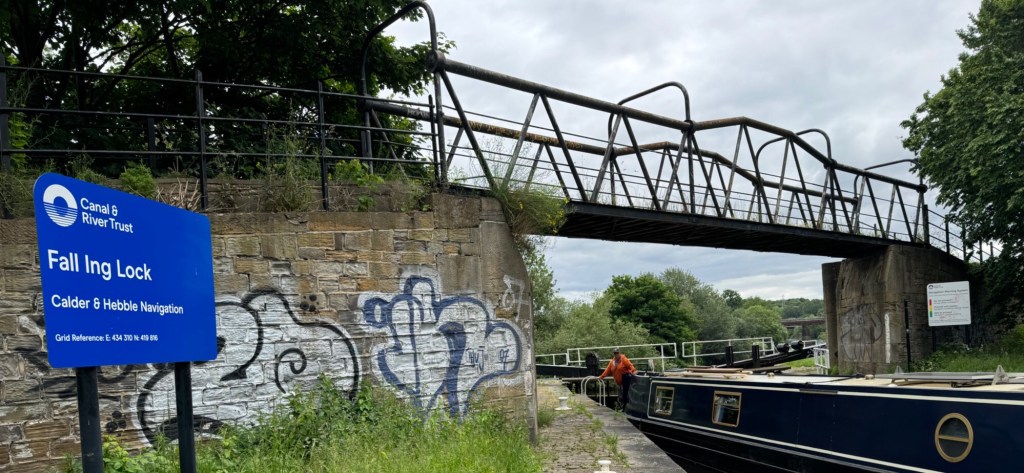
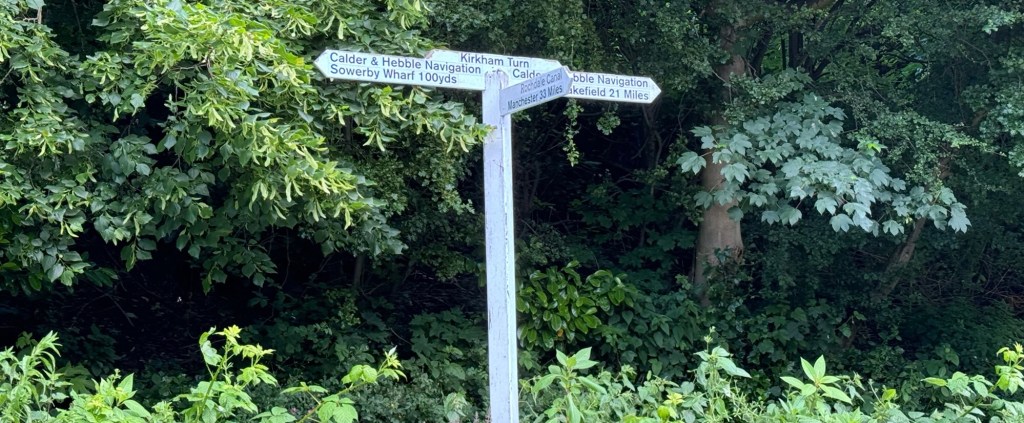
From Fall Ing lock near Wakefield, to Sowerby Bridge, the canal and river navigation is just 23 miles long, built in around 1770 to connect the mill towns of Yorkshire to the rest of the country.

Let me tell you about three things you will not find anywhere else. The first is the short length of the locks. They can just about fit our narrowboat at 57.5 ft, but any longer and you really are in danger of getting stuck or flooded. There are other canals known for short locks, including the Leeds and Liverpool that we have recently left, but none as consistently short as the Calder and Hebble.

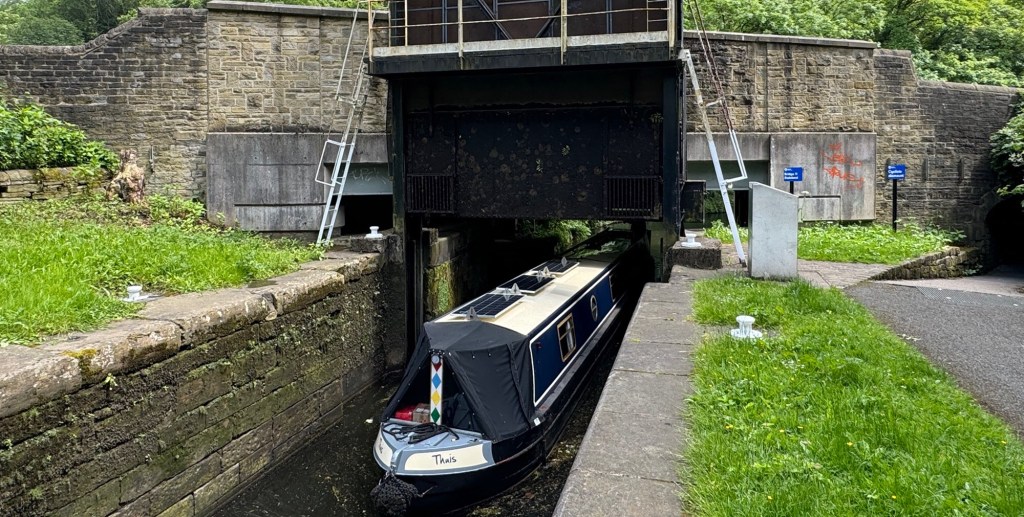
The second uniqueness is the Guillotine lock at Salterhebble. Most locks have pairs of wooden or steel gates that close together to hold the water back. Sometimes these are electrically operated but this one also operates as a guillotine, a single metal gate that goes up and down. It was installed after a road widening meant there was no room to keep normal gates. I have read that there are a few other guillotines around the country but as far as I am concerned this is unique.
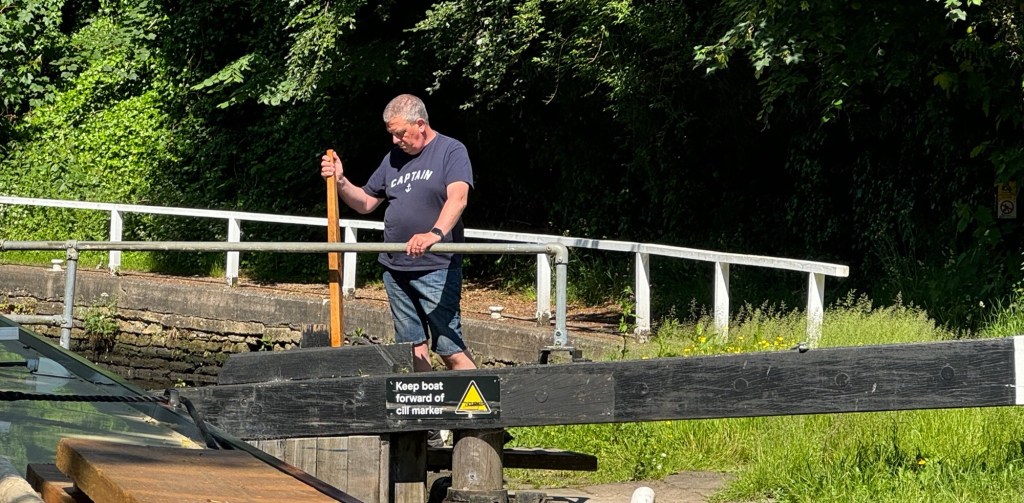
The third unique thing is the “Hebble spike”, a piece of 3” x 2” shaped hardwood that is used to open and close lock sluices. I have no idea why these were used when this canal was built, rather than the windlasses we use on almost every other canal, but it has certainly been a unique experience to use this week. It is hard work!
I have enjoyed the week of uniqueness. Next week we travel the Rochdale canal. Maybe not so unique but even more of a challenge. I’ll let you know how we get on.

Life jackets that would not save our lives

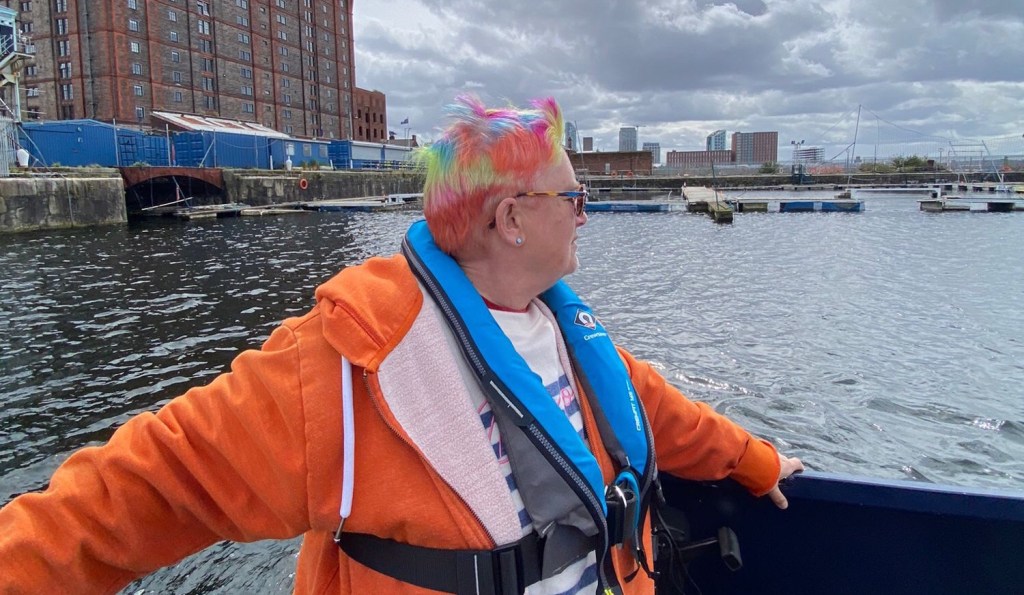
Most of the time as narrowboaters we are “ditch dwellers”. The canals we navigate are surprisingly shallow – say three to four feet deep . So if you fall in you can just stand up and you will normally be fine. For this reason we do not wear life jackets on the canals. But rivers are something more challenging.

Liverpool docks this year

Rivers are more dangerous because they have a current, may have a tide, and can be much deeper. They are also unpredictable. For instance flat bottomed narrowboats do not have much protection against strong lateral gusts of wind.

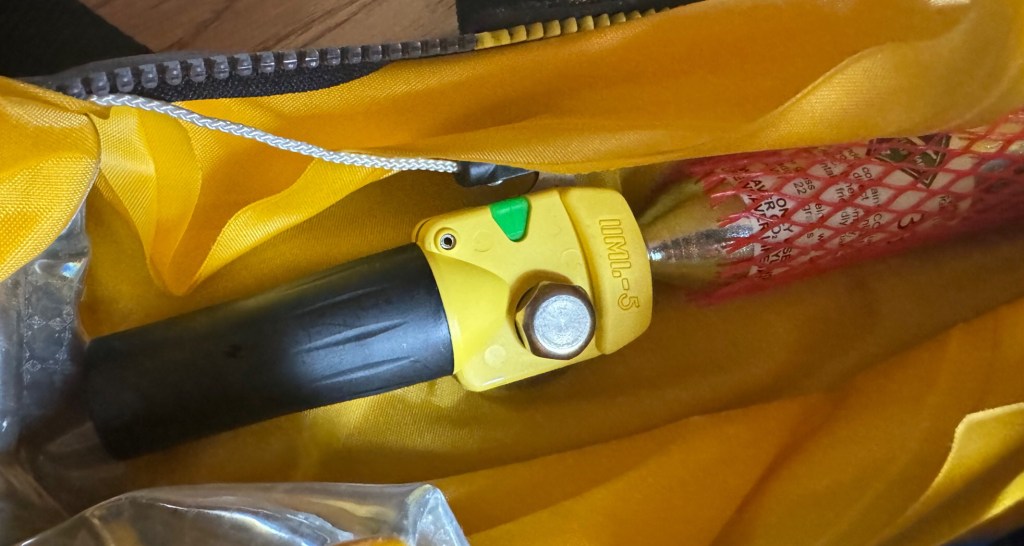
So on rivers we do usually wear light life jackets that would automatically inflate if we fell in the water. Unfortunately I found out this week that they might not work. I read an article on a boaters’ update that told me that the water detector has a relatively short life of just a few years and then need replacing. I also discovered that they can set themselves off where there is condensation in the air over winter.

So I checked our life jackets and found that both water detectors were out of date, and one also needed a new compressed gas bottle.

The good news is that replacing these is neither difficult or expensive, but it was still quite a shock to find that things we were confidently thinking could save our lives may well have failed when we needed them.

We have been boating for many many years but we are very much still learning. Every day is a school day, and this lesson could well save a life.

What have you learnt this week?

Five reasons a house is better than a boat. And five reasons a boat is better than a house

We have spent the week travelling the Leeds and Liverpool canal across West Lancashire, finishing up in Reedley Marina, near Burnley. We have moored in a marina because it is a safe place to leave the boat while we spend ten days back up in Scotland. Despite spending more than half the year living on our narrowboat, we still own a house for the winter months and have returned to get a few jobs done. I have a dental appointment, a blood test and a big birthday to celebrate.

Narrowboat Thuis in Reedley Marins

Arriving back at the house has made me think of the five things I prefer, living in bricks and mortar to on the water:

1. A house is so much bigger. On a boat we have to think carefully before acquiring anything because the space is so limited

2. Our house has a bath. The shower on the boat is great and after a day’s boating the water is toasty warm, but I do like a long soak in the evening.

3. When things break it is usually less catastrophic. There are things I need to fix around the house but they are not critical. When I reversed the narrowboat into a wall this week, the rudder was knocked from the “cup” it sits in and the whole boat became unsteerable. Fortunately my son Martin was with us, and jumped into the canal to reseat it.

4. We have a car in the drive. When we are on our long cruises we don’t use our car because it is simply too difficult to keep moving the car to be near the boat. This may be better for the environment, but it does make things more difficult when we need to get anywhere away from the canal.

5. The full fibre broadband to our house is super fast. We do like to have fast internet, for browsing or streaming. On the boat we have three different mobile networks on our phones and the wifi router to try to make sure we have good access, but sometimes in cuttings and out of town, it can be a problem.

There are also good reasons that living on a narrowboat is better than living in a house.

1. Life on a boat is simpler. We don’t have so much “stuff” and we have learnt that we don’t need it. We shop locally. We talk about simple things such as where we are going tomorrow, and what to have for tea.

2. The views are stunning. Our house is on a Main Street with road noise. Our boat can be in a different mooring every day, Last week we passed through some pretty run down industrial canals in Blackburn and Burnley, but we still found one of the prettiest moorings between the two towns, on an embankment, next to a golf course, with incredible views across to the Pennines.

3. Exercise is part of our lives. We don’t have to think about needing to go to the gym or for a run. After 21 locks, we are pretty exhausted and it feels good.

4. The dogs are more settled. Lulu in particular, runs around the house sniffing at walls and barking at pigeons. On the boat she just jumps onto the sofa next to Mandy, and cuddles.

5. The community on the canals and rivers is more friendly. We have good neighbours in Scotland, but travelling along, locking together or just meeting people on the towpath, everyone wants to help, everyone has a story to tell. By nature I am pretty antisocial, but not when we are on the boat.

I guess we are very lucky to have the house and a narrowboat. But if I had to choose, I would choose living on a boat. It is a good life.

What do you need if you have an empty pound?

On a canal, the length of water between two locks is called a “pound”. On a lock flight this might be three or four boat lengths long. Sometimes it might be shorter. There is a pound on the Staffs & Worcester canal that is just a few feet long (there is a side pound where all the water goes when you empty the top lock). There are “long pounds” on canals that are very flat. For instance last week we had a forty mile pound on the Bridgewater.

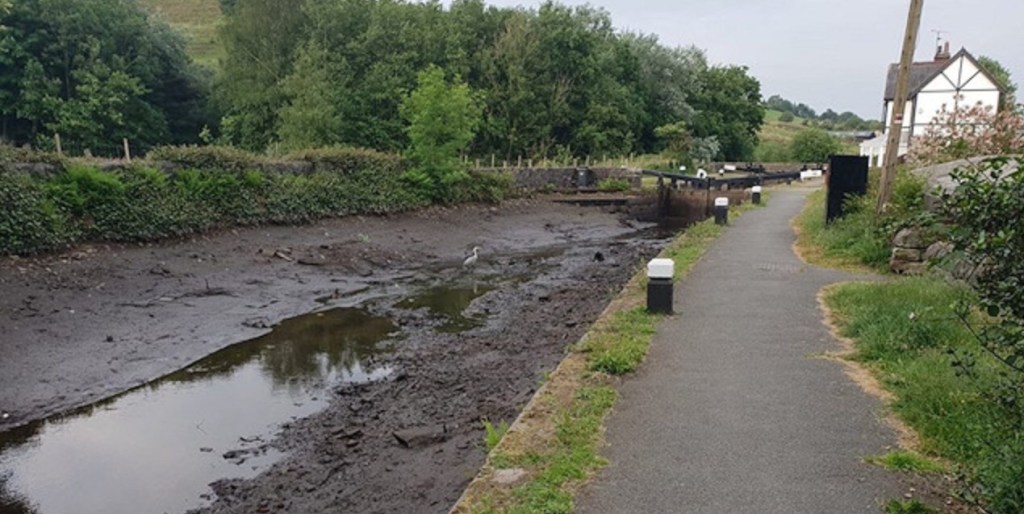
Once or twice a year we find a pound is empty. Last year there was a mile long empty pound near Gloucester after a hire boater went through the bottom lock one evening and left all the paddles up. The year before we grounded in a pound overnight on the Aylesbury canal because of leaky lock gates. This week we have faced three separate empty pounds. The first was about a mile long in Wigan, caused by vandals. The second was about half a mile on the Rufford arm, caused by a lazy boater leaving paddles up. The third was a short planned “dewatering” by the Canal & River Trust (CRT) in order to inspect blocked culverts.

So what do you need when faced by an empty pound? The first and most obvious thing is a lot of water. Somehow you need to fill the canal back up to at least four feet in depth. If you think the canal is maybe twenty feet wide, and the pound is maybe half a mile long, that is an awful lot of water. You have to bring that water down from higher in the canal, maybe using bywaters that go around some locks, and sometimes by opening paddles on the locks themselves.

The second thing you need is time. You need to fill that water without draining the pounds higher up. For this reason, CRT prefer the work to be done by their staff rather than boaters. A short pound may take just an hour or two to fill, but the Wigan and Rufford problems this week took a day each.

The third thing you may need is special equipment. On our boat we carry a windlass to open lock paddles, a CRT key to open water points and swing bridges, and an anti-vandal key to open the handcuff locks used to prevent bad people causing trouble. CRT staff can remove other padlocks and open special paddles to let in water from other sources such as rivers and reservoirs. Again this has to be done very carefully to prevent flooding.

By far the most important thing you need is patience. There is no point getting cross about what has happened. It won’t help. There is no point trying to get through before the water has fully filled, because you will get stuck. Instead, we just wait it out, and look for the best. In Wigan I found a nice local butcher that I would have missed. In Rufford we just moored up and watched a couple of films.

If you are in a hurry on a narrowboat, you have chosen the wrong lifestyle. We are lucky enough to be retired. For us, narrowboating is not just about the wonderful places we go. It is about the journey to get there – however long that takes.

Why I love Kerala

I have just returned from a two week trip to India, seeing many sights across the country and meeting old friends. I enjoyed every moment but I have to say that my favourite few days were in Kochi, Kerala. I have never been to Kerala before, although many people have told me how wonderful it is. Kerala state is the pointy bit at the bottom of India and much of it is made up of jungle and rivers. Trivandrum is the capital but many tourists (like me) go to Kochi instead.

Th lunch we were given after our backwaters trip

I think there are three reasons why I loved it so much – the beauty, the peace and the history.

It is very very beautiful. I went on a backwaters tour, walked around Kochi a lot, frequented the very cheap ferries between the islands, and used quite a few tuk tuks (auto rickshaws). It seemed as if around every corner I would see a fresh “wow” view.

So very lovely

Saying it is peaceful may seem a little odd. The narrow streets of Fort Kochi are as filled with vehicles blaring horns as every other town in India. But get away from the streets, in the Dutch Palace, or the synagogue, or the Cathedral, or in the backwaters, with our boat pushed along by poles rather than an engine. Suddenly everything seems silent and reflective. I even went to a modern art event called Biennale, set in a series of old spice warehouses, and I felt so relaxed just sitting quietly, looking at the exhibits.

Our driver
One of the many exhibits at the Biennale

As for the history, Kochi was one of the first Indian areas visited by western countries. The Roman Empire traded at Muziris, a port believed to be a couple of kilometres north of Kochi. The Dutch, the Portuguese and the English all ruled over the town at one time or another, often working jointly with the local maharaja. Just before Indian independence, a new island – Willingdon – was dredged from the sea, making a port that large ships can now visit, for the trade in spices, particularly pepper. I was able to explore many of these sites. I even popped into Kochi Chamber of Commerce which was near my hotel, and one of the gentlemen there gifted me a copy of a history book celebrating a hundred years of the chamber. India is not just about seeing the famous tourist sites. It is also about exploring and talking to people you meet.

The famous Chinese fishing nets in Kochi.
A statue I found hidden in the merchant navy headquarters on Willingdon island.

I was only in Kerala for three days, but I think I have fallen in love. What a magnificent state. And so much more to explore if I ever return.

Blog at WordPress.com.

Up ↑