There are a number of questions we get asked all the time by non-boaters. How often do you fill up with water? Where do you get your electricity? How does the Internet work on a boat? Is it very cold in he winter? Where does washing up water go? Do you need a licence to drive a narrowboat?
Another common question is whether you are allowed to cruise at night.
The answer is “no” if you are a hire boater because your insurance won’t cover it. But for liveaboards like ourselves the answer is “yes” because it has always been allowed. At the peak of canal traffic, in the 19th century, bargees were paid on taking a load from a to b, however long that took, and so often they would travel all day and all night.
Although it is allowed, these days we see almost no boats travelling at night – maybe two or three in a season. Certainly we have never travelled at night. Even with the headlight, you can’t see very well, and it is annoying to fellow boaters who may be sleeping.
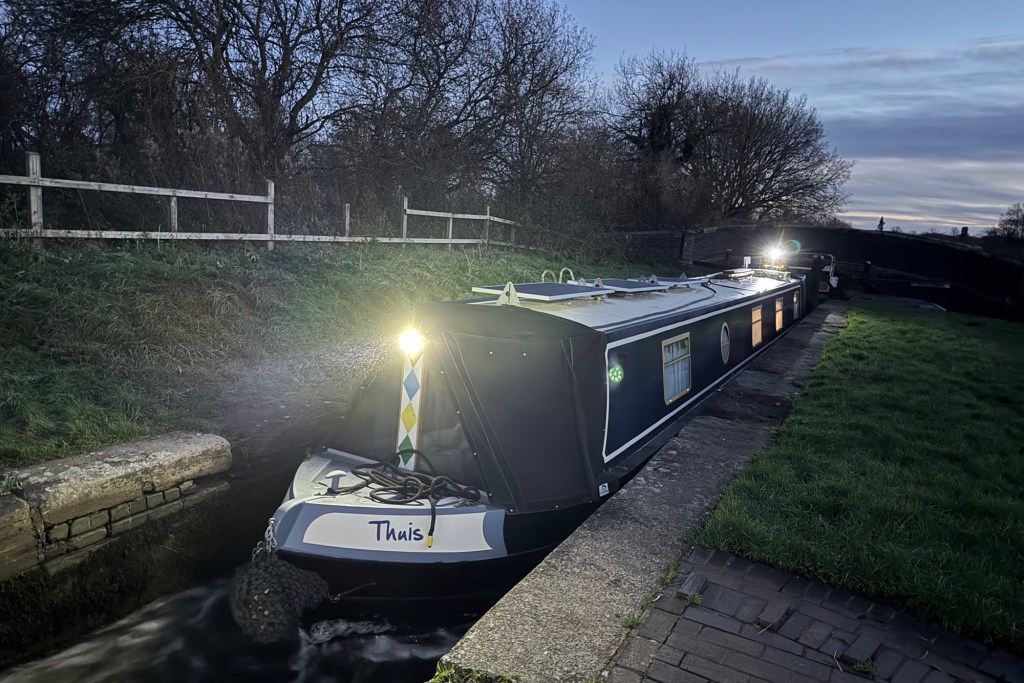
But this time of year the sun sets so early that this week we found ourselves travelling in the dark at just after 4pm. Perhaps we should have moored up as soon as it got dusky, but there was a particular mooring we were heading to, and besides it was an adventure.
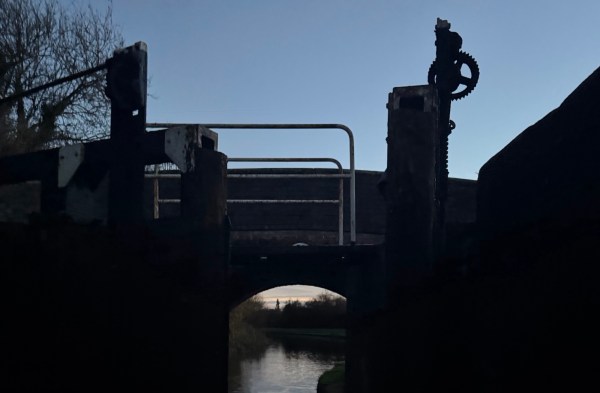
The water looked very beautiful as the sun went down and my eyes acclimatised quite well. Still, I decided to move even slower than usual because seeing obstructions in the canal was very difficult. Surprisingly, locks were less of a problem. The headlight is designed to illuminate tunnels, and a lock is like a tunnel without a roof, so they lit up quite well.
I don’t think we will choose to travel at night again in a hurry, but as Thomas Beecham once said, you should try everything in life once, except incest and Morris dancing. And I love an adventure.






 Pete's Blog